
DURING ACTION BODY LANGUAGE TELLS
During-Action Body Language Tells can provide valuable information about an opponent’s hand through physical gestures, facial expressions, and other behaviors exhibited while making a betting decision. These observations belong to a specific category known as During-Action Tells, which occur from the moment it becomes a player’s turn to act until that player completes the action.
During-action tells include the time a player takes to act, the physical motion of betting, and verbal or physical behaviors that accompany a bet, check, or call. Each provides an opportunity to observe how a player behaves during the decision-making process and while carrying out that decision.
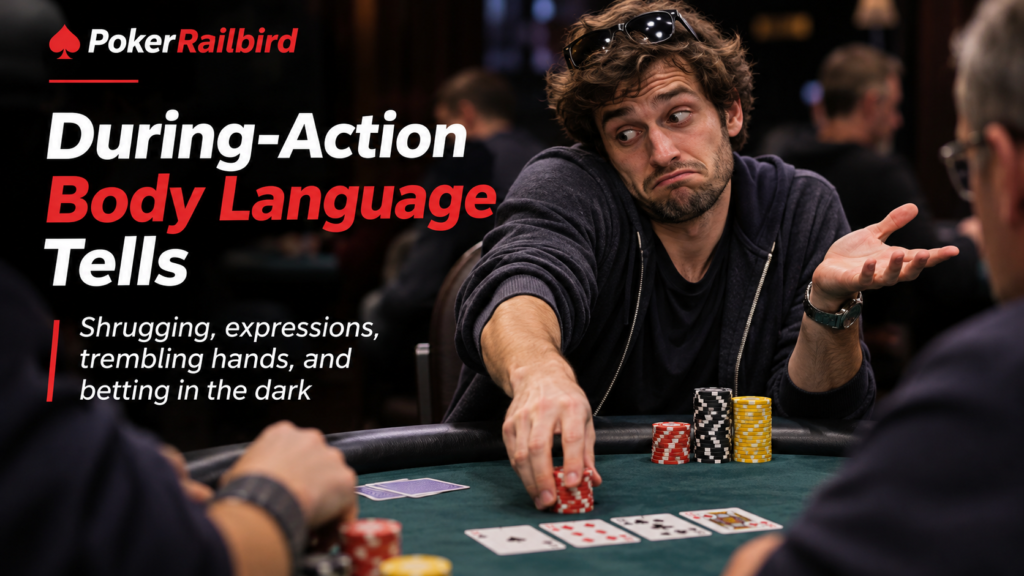
This article focuses specifically on four physical and behavioral tells associated with betting actions. These include gestures suggesting uncertainty, aggravated facial expressions, betting before the next community card is dealt, and trembling hands. Each behavior may provide different information about an opponent’s hand strength, depending on the player and the circumstances.
SHRUGGING AND UNCERTAINTY WHILE BETTING
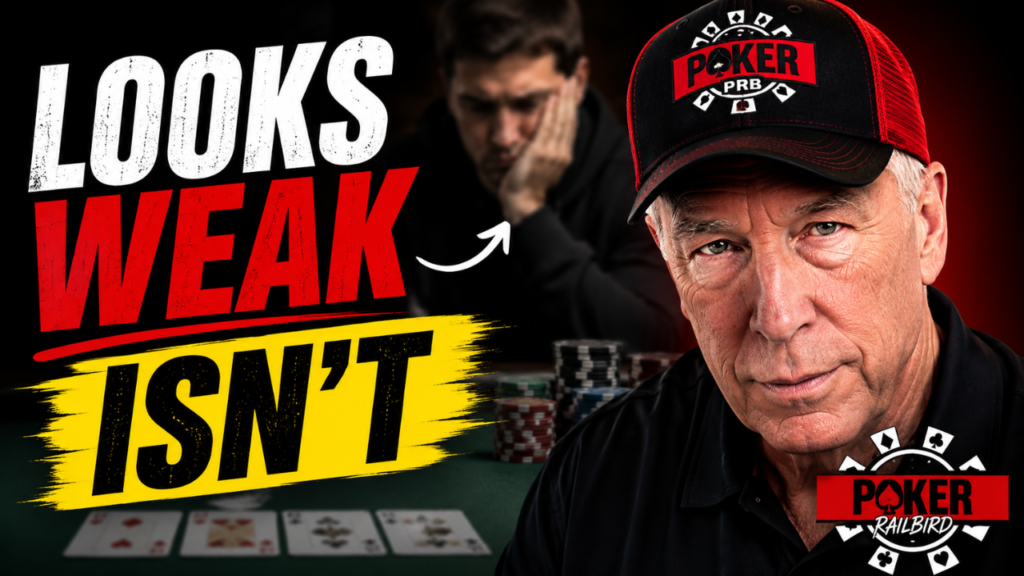
A player who shrugs while betting may appear uncertain about their hand strength or reluctant to commit money to the pot. However, this seemingly hesitant behavior is often associated with strong holdings, particularly among inexperienced players.
Among During Action Body Language Tells, shrugging shows how a physical gesture can suggest weakness when the player actually holds considerable strength.
Zachary Elwood describes players who shrug as they place chips into the pot, almost as though they are saying, “Well, I suppose I’ll bet, but I’m not particularly confident.” In his experience, players who display this behavior often hold very strong hands.
SUBTLE GESTURES OF UNCERTAINTY
Not every expression of uncertainty involves an obvious shrug. Some players make smaller gestures, such as pushing chips forward with a slightly upward-facing palm or making a brief movement that suggests hesitation or resignation.
These gestures can create the impression that the player is uncomfortable with the decision to bet. Yet the apparent uncertainty may reflect an unconscious attempt to appear less threatening while holding a strong hand.
Elwood also observes that this tell is relatively well known among experienced poker players. As a result, beginners more often display obvious uncertainty, as they may be less aware of the information their gestures communicate.
The important distinction is whether the behavior appears naturally associated with the player’s betting action or represents a noticeable departure from their usual mannerisms. A player who unexpectedly shrugs while committing a substantial amount of money may be communicating more confidence in their hand than the gesture initially suggests.
AGGREVATED EXPRESSIONS WHILE BETTING
Some poker players show an irritated or aggravated expression when the action is checked to them, almost as though they are frustrated that no one else has taken the initiative to bet. Interestingly, this behavior is often associated with a medium-strength hand rather than a particularly strong holding.
Among Poker Body Language Tells, aggravated expressions are unusual because they can suggest the approximate strength of a player’s hand, rather than simply indicating strength or weakness.
Zachary Elwood describes this behavior as occurring most frequently in lower-stakes games, particularly in multiway pots. Several players check, and the last player to act responds with a mildly irritated expression or smirk before placing a bet, seemingly communicating, “Well, if nobody else is going to bet, I guess I’ll have to.”
WHAT AN AGGRAVATED EXPRESSION MAY REVEAL
According to Elwood, players displaying this behavior often hold hands such as top pair with a medium kicker or second pair that they believe is likely to be good.
The expression may suggest frustration with the lack of action, but the player’s actual holding is generally respectable without being exceptionally strong. Elwood notes that this is one of the relatively few tells he has consistently associated with medium-strength hands.
A player holding a very strong hand in the same situation may behave differently, remaining composed or appearing disappointed in the hope of encouraging action from an opponent.
The distinction is worth recognizing. An aggravated expression accompanying a bet does not necessarily indicate a bluff or a powerful hand. In the circumstances Elwood describes, it may instead suggest a player who believes they have the best hand but is holding something less than a monster.
BETTING IN THE DARK
Betting in the dark occurs when a player commits to a bet before the next community card or cards are dealt. For example, a player raises preflop, receives one or more callers, and announces a flop bet before the dealer reveals the flop.
Although betting in the dark is a behavioral action rather than a physical gesture, it belongs within our examination of During Action Body Language Tells because it can reveal information about a player’s confidence and the strength of their starting hand.
Zachary Elwood observes that inexperienced players who bet in the dark often hold strong starting hands, such as AA, KK, QQ, or occasionally AK. In his experience, the behavior is more common in limit poker than in no-limit games.
WHY PLAYERS BET BEFOE SEEING THE CARDS
One explanation is that players holding premium starting hands feel confident enough to make an unusual or aggressive betting decision. They may view betting in the dark as a chance to demonstrate strength or add unpredictability to their play.
Elwood also identifies a more defensive motivation. A player holding a strong starting hand may be concerned that an unfavorable flop will discourage them from betting. By committing to the bet before seeing the board, the player avoids having to reconsider that decision when potentially threatening cards appear.
The action can also signal confidence, suggesting the player believes their starting hand is strong enough to justify betting regardless of the next community cards.
Experienced players may occasionally bet in the dark with weaker holdings, particularly when attempting to create uncertainty or influence an opponent’s interpretation of their actions.
The key observation is that betting in the dark, especially when done by an inexperienced player, may indicate greater confidence in the strength of their starting hand than the unusual action initially suggests.
TREMBLING HANDS WHILE BETTING
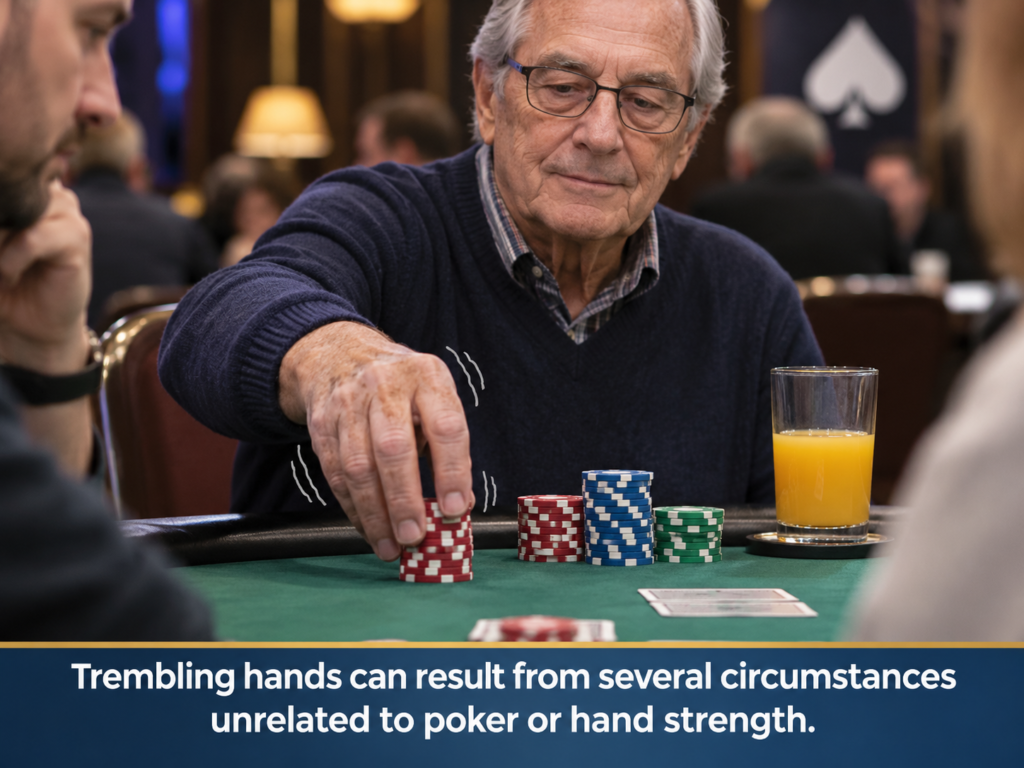
A player whose hands begin to tremble while placing a bet may be experiencing excitement from holding a particularly strong hand. This is one of the more widely recognized Poker Body Language Tells, although its practical usefulness is considerably more limited than its reputation might suggest.
Mike Caro helped popularize this tell, explaining that visible trembling can accompany the excitement or release of tension a player experiences when holding an exceptionally strong hand. The player may feel confident about winning the pot, yet the physical excitement becomes apparent as they handle their chips.
Zachary Elwood generally agrees with this interpretation but questions how frequently the behavior provides useful information. In his experience, obvious trembling associated with very strong hands is uncommon and primarily observed among inexperienced players.
OTHER CAUSES OF TREMBLING HANDS
Trembling hands can result from several circumstances unrelated to poker or hand strength. Nervousness, excitement, low blood sugar, certain medications, and medical conditions can all produce involuntary shaking.
For that reason, the mere presence of trembling hands provides limited information without understanding the player’s normal behavior.
A player whose hands consistently shake while handling chips may be exhibiting an ordinary physical characteristic. However, a normally steady-handed opponent who suddenly begins trembling while making a substantial bet presents a different observation.
Elwood emphasizes that this tell is less useful than its popularity might suggest. Players with even modest experience may be less likely to display the obvious excitement traditionally associated with trembling hands.
The practical value of this observation therefore depends on recognizing an unusual change in a player’s behavior while avoiding assumptions about its cause. Trembling may accompany a very strong hand, but the behavior alone does not establish what the player is holding.
CONCLUSION
Poker Body Language Tells can provide valuable information about an opponent’s hand through physical gestures, facial expressions, and unusual behaviors that occur during a betting action. Shrugging, aggravated expressions, betting in the dark, and trembling hands each offer different clues about a player’s confidence and potential hand strength.
These behaviors do not necessarily communicate the same information. Some are associated with strong hands, while others may suggest medium-strength holdings. Their significance depends on the circumstances and the individual player’s tendencies.
Recognizing changes in an opponent’s normal behavior is particularly important. A gesture or expression that appears insignificant in isolation may become meaningful when it differs from how that player ordinarily acts.
By incorporating these observations into the broader framework of During-Action Tells, attentive players can develop a more complete understanding of the information their opponents may reveal while making betting decisions.