
UNDERSTANDING POKER PLAYER BEHAVIOR
Every player at the poker table communicates information through their behavior. Some of it is intentional. Much of it is not. The way a player handles chips, reacts to winning or losing, interacts with opponents, manages their table image, or responds to pressure all provide clues about their mindset, confidence, and decision-making process. Whether they realize it or not, every player influences the environment around them.
Understanding poker player behavior is about more than recognizing tells. It involves learning why players behave the way they do, how behavior influences perception, and how those perceptions affect decisions at the table. It also requires understanding your own behavior and recognizing the information you may be revealing to observant opponents.
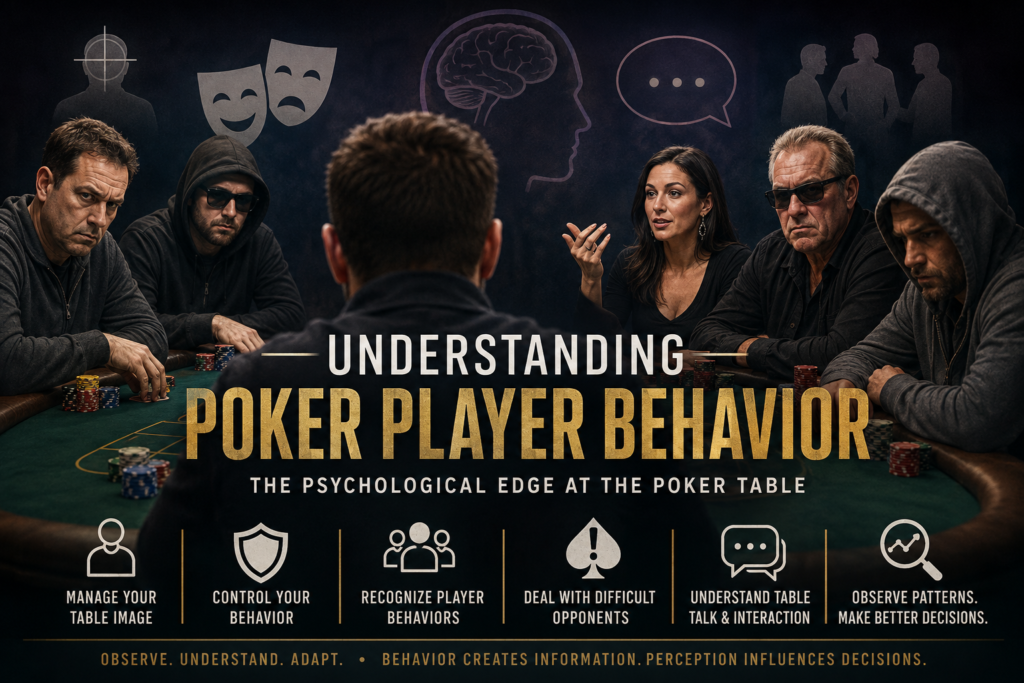
This Hub explores the psychological side of live poker by examining both your own behavior and the behavior of the players around you. From managing your table image and controlling the impression you create, to recognizing bullies, handling obnoxious opponents, understanding table talk, and identifying performative behavior, each article examines a different aspect of the human element that influences poker decisions.
Together, these articles and videos form PokerRailbird’s complete resource on poker player behavior, providing a structured learning path to help you better understand your opponents, better manage your own behavior, and make more informed decisions at the table.
SERIES OVERVIEW
Understanding poker player behavior requires more than learning to recognize individual actions or personality types. Successful players learn to observe behavior in context, understand what drives it, and recognize how it influences decisions at the table. This Hub is organized to build that understanding one concept at a time.
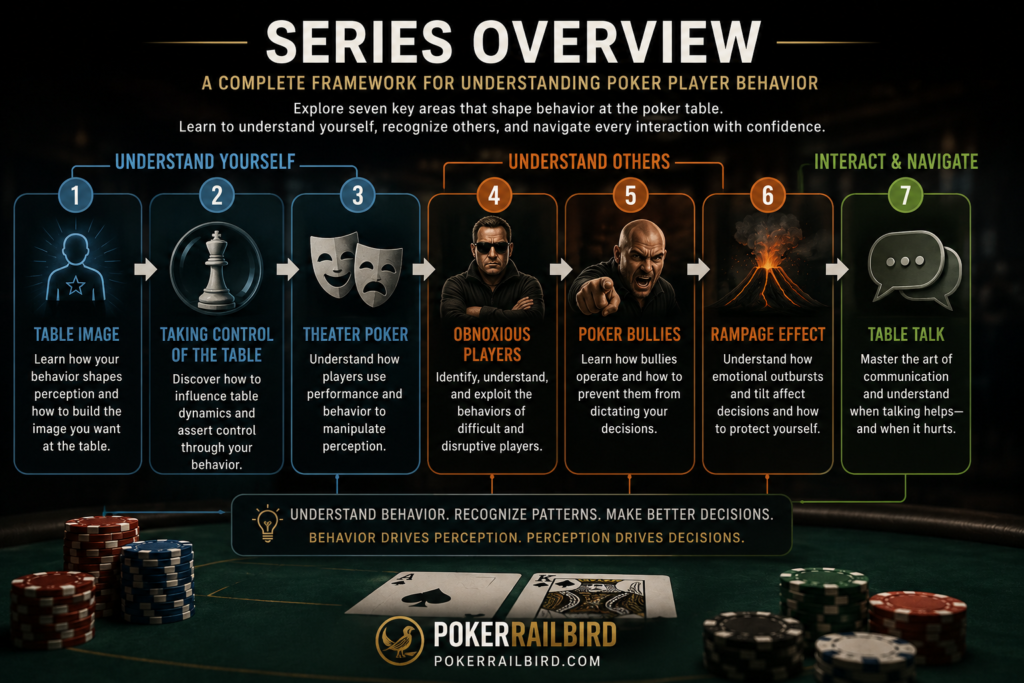
The series begins by examining how your own behavior shapes the way other players perceive you, including the relationship between playing style and table image, the role of deliberate image management, and the use of theater poker. From there, it explores the behavior of your opponents, including obnoxious players, poker bullies, and emotionally driven “rampage” players whose decisions become increasingly reckless. The series concludes by examining table talk and the role communication plays in influencing perception, gathering information, and shaping the dynamics of a poker table.
While each article can be read independently, together they provide a comprehensive framework for understanding poker player behavior. As you progress through the series, you’ll gain a deeper understanding of both your own behavior and that of your opponents, allowing you to make more informed decisions and better navigate the psychological side of live poker.
WHO IS THIS SERIES FOR?
This series is designed for live poker players who want to better understand the human side of the game. While technical skills such as mathematics and strategy are essential, every decision at the table is influenced by the behavior, emotions, and interactions of the players involved. Learning to recognize and manage these factors can provide an important advantage in live cash games.
Whether you’re working to build a more effective table image, understand the motivations behind your opponents’ actions, handle disruptive personalities, or communicate more effectively at the table, this series provides practical insights that can be applied in virtually any live poker environment.

This Hub is especially valuable for players who want to:
- Understand how poker player behavior influences decisions.
- Develop and manage a purposeful table image.
- Recognize common behavioral patterns in opponents.
- Learn effective ways to deal with bullies and obnoxious players.
- Understand when table talk helps or hurts your game.
- Improve your awareness of the psychological dynamics that influence live poker.
WHAT WE'LL DISCUSS
Understanding poker player behavior requires more than recognizing individual actions or personality traits. This series explores the psychological factors that influence behavior at the table and explains how those behaviors affect perception, communication, and decision-making in live poker.
As you work through this series, we’ll discuss how to:
- Understand the factors that shape poker player behavior.
- Build, manage, and influence your table image.
- Recognize how player behavior affects table dynamics.
- Identify common behavioral patterns in both yourself and your opponents.
- Deal more effectively with bullies, obnoxious players, and emotionally driven opponents.
- Understand how communication and table talk influence the flow of a game.
- Recognize when behavior is genuine and when it is intentionally designed to influence perception.
- Develop a more disciplined, observant approach to the psychological side of live poker.
CORE CONCEPTS
Understanding poker player behavior begins with recognizing that every player contributes to the psychological environment at the table. The following principles form the foundation of this series and provide a framework for understanding how behavior influences perception, interaction, and decision-making in live poker.
EVERY PLAYER CREATES INFORAMATION
BEHAVIOR SHAPES PERCEPTION
BEHAVIOR IS OBSERVED AND MANAGED
Whether intentional or unintentional, every action at the poker table communicates information. Betting patterns, table talk, emotional reactions, body language, and general demeanor all contribute to how other players perceive you.
Your table image is not determined solely by the hands you play. It is also influenced by how you behave, communicate, react under pressure, and interact with other players. Perception often becomes just as important as reality.
Successful players learn to study the behavior of others while also managing the information they reveal themselves. Understanding poker player behavior involves both observation and self-awareness.
EVERY TABLE HAS ITS OWN UNIQUE DYNAMICS
BEHAVIOR PROVIDES CONTEXT: NOT CERTAINTY
UNDERSTANDING BEHAVIOR IMPROVES DECISION MAKING
Every poker table develops a unique personality based on the players seated there. Aggressive players, quiet players, talkative players, bullies, and emotional players all influence the pace, atmosphere, and decision-making environment of the game.
No single behavior should ever be interpreted in isolation. Individual actions may have many explanations. Reliable conclusions come from observing consistent patterns of behavior and evaluating them within the context of the situation.
The goal of studying poker player behavior is not simply to recognize interesting personality traits. It is to better understand the psychological factors that influence decisions, allowing you to respond more effectively and make better-informed decisions of your own.
ARTICLES AND ACCOMPANYING VIDEOS
The following articles examine the key concepts that shape poker player behavior in live poker. Each article focuses on a specific aspect of behavior, psychology, or table dynamics while building on the broader framework presented throughout this Hub. Together, they provide a practical guide to understanding your own behavior, recognizing the behavior of your opponents, and using those insights to make better decisions at the table.
Each article is accompanied by a video that expands on the topic and demonstrates how these concepts apply in real-world live poker situations.
TABLE IMAGE AND PLAYER STYLE
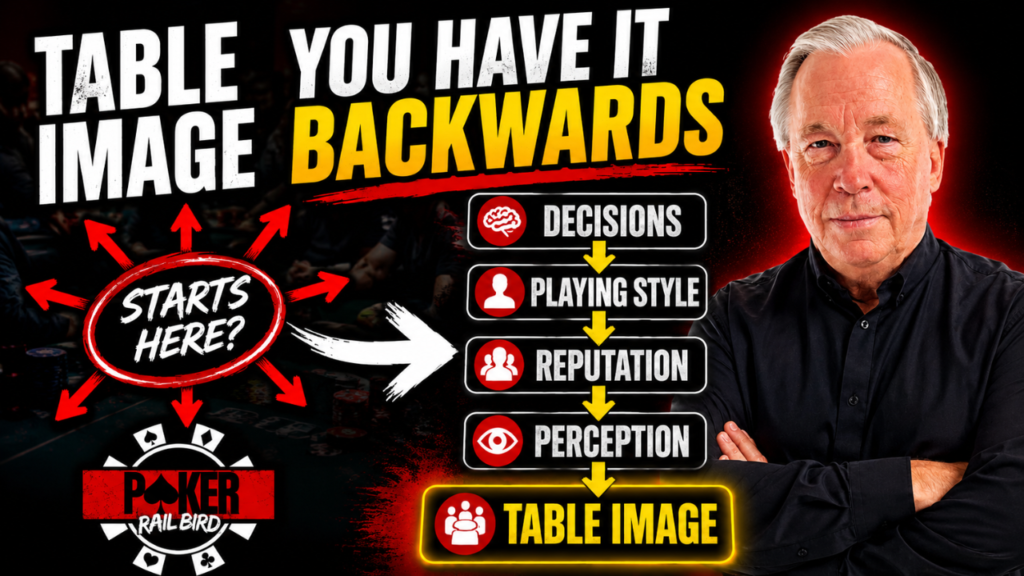
Most discussions about table image in poker begin in the wrong place. They focus on how other players perceive us, how we are viewed at the table, or how we can supposedly create a particular image. Before discussing any of those concepts, however, we must first understand something far more fundamental: playing style.
A player’s style is simply the collection of decisions and behaviors they repeatedly exhibit at the poker table. It is not what they claim to be. It is not what they want others to believe; it is what they actually do.
Every time you choose whether to fold, call, raise, bluff, value bet, check, or apply pressure, you are revealing elements of your playing style. Over time, those decisions form recognizable patterns. Those patterns become your style.
THEATER POKER AND COPYCAT PLAY
Theater poker has risen alongside shows like Poker After Dark, Hustler Casino Live, and the endless highlight reels from the WSOP. These broadcasts are designed first and foremost for entertainment, not education. Big bluffs, junk hands, and dramatic all-ins create suspense, drive clicks, and keep viewers glued to the screen.
But what happens when casual players mistake the show for the game itself? When they see 7♠4♠ drag a huge pot on TV, they don’t see the hundreds of folds and disciplined decisions that never make the cut. They see the drama. They see the exception and confuse it for the rule.
STANDARDIZATION IN POKER
Standardization In Poker is one of the least discussed yet most important concepts in the game.
Most poker players spend a great deal of time thinking about tells. They study body language, watch opponents for unusual behavior, and look for subtle changes in posture, chip handling, eye movement, and speech. Entire books have been written on the subject, and countless hours have been devoted to identifying what various behaviors supposedly mean. Yet despite all of that attention, many players overlook a much simpler question: what information am I giving away?
OBNOXIOUS POKER PLAYERS
Obnoxious poker players can ruin the flow of a game, push your patience to the brink, and even cost you money if you let them. These players talk too much, criticize everyone else’s play, and act like the table is their personal stage. Whether it’s trash talk, ego-driven rants, or relentless needling, their antics aren’t just annoying—they’re strategic distractions.
And make no mistake: they want you off balance.
Some players thrive on disruption. They bait, provoke, and agitate not because it’s fun, but because it works. For the unprepared, these players are tilt traps with chips.

POKER BULLIES
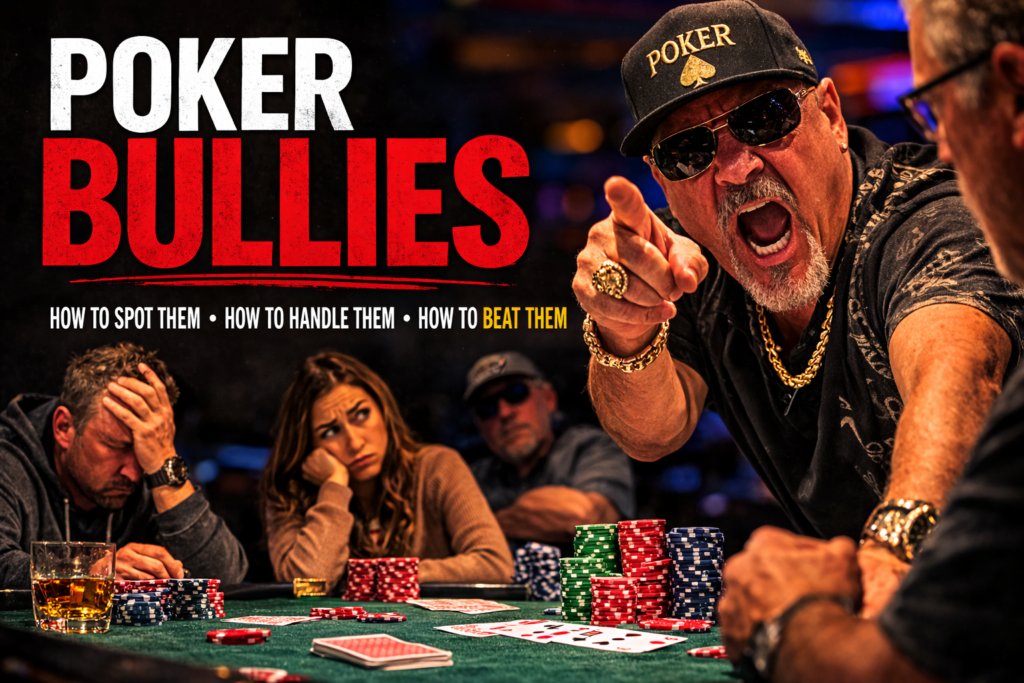
Few player types generate more tension at a poker table than the poker bully.
Most regular players have encountered them. They are loud, aggressive, and determined to dominate every pot. They raise frequently, apply constant pressure, and often try to control the rhythm of the table through intimidation, oversized bets, and relentless chatter.
For newer players, this style can be unsettling. The combination of aggression and psychological pressure often creates the impression that the bully is somehow unstoppable. Pots seem to be pushed their direction again and again, while other players begin second-guessing their own decisions.
THE RAMPAGE EFFECT IN POKER
The Rampage Effect in Poker isn’t about one player. It’s about a mindset that’s reshaping the modern game, a collision between mathematics, ego, and media.
In the YouTube era, poker isn’t just played; it’s performed. Cameras have changed what many players chase. Once upon a time, the measure of skill was long-term profit; today, it’s often short-term visibility. The algorithm rewards volatility, not discipline, and some players have adjusted their strategy accordingly.
In this new environment, a certain archetype has emerged, the high-variance showman.
He plays fast, loose, and fearless. He’s often talented, sometimes brilliant, but rarelypatient. Every decision carries a second motive: the hand itself and the highlight reel. The table becomes a stage, and poker becomes content.
POKER TABLE TALK
Most players think of poker table talk as harmless chatter, something that simply happens in live poker without much meaning behind it. Someone cracks a joke, someone tells a bad beat story, someone asks a question in the middle of a hand. But beneath the surface, poker table talk is far more than casual conversation. It is a subtle battle of psychology, pressure, ego, and misdirection that influences decisions every single
Picture a familiar scene: a player tanks in a big pot, staring at the board as the entire table goes still. Then, out of nowhere, an opponent speaks, maybe a casual comment, maybe a probing question, or maybe a joke meant to relieve tension. Yet the moment the words enter the space, the dynamic of the hand shifts. The silence breaks. The pressure changes shape. And in that instant, the conversation becomes part of the decision-making process. session.
FOCUSING ON YOURSELF
One of the most costly leaks in poker is focusing on yourself instead of the other players. Too many hands are lost, not because of bad cards or bad luck, but because we spend more time staring at our own hole cards, stack size, or “plan,” and less time gathering information from the people we’re actually playing against.
Poker isn’t just a battle between you and the deck; it’s a battle between you and every opponent at the table. The real edge in this game doesn’t come from memorizing charts or praying for big cards. It comes from reading situations, watching patterns, and making mathematically correct decisions based on what other players are doing.
EDUCATING THE OPPOSITION
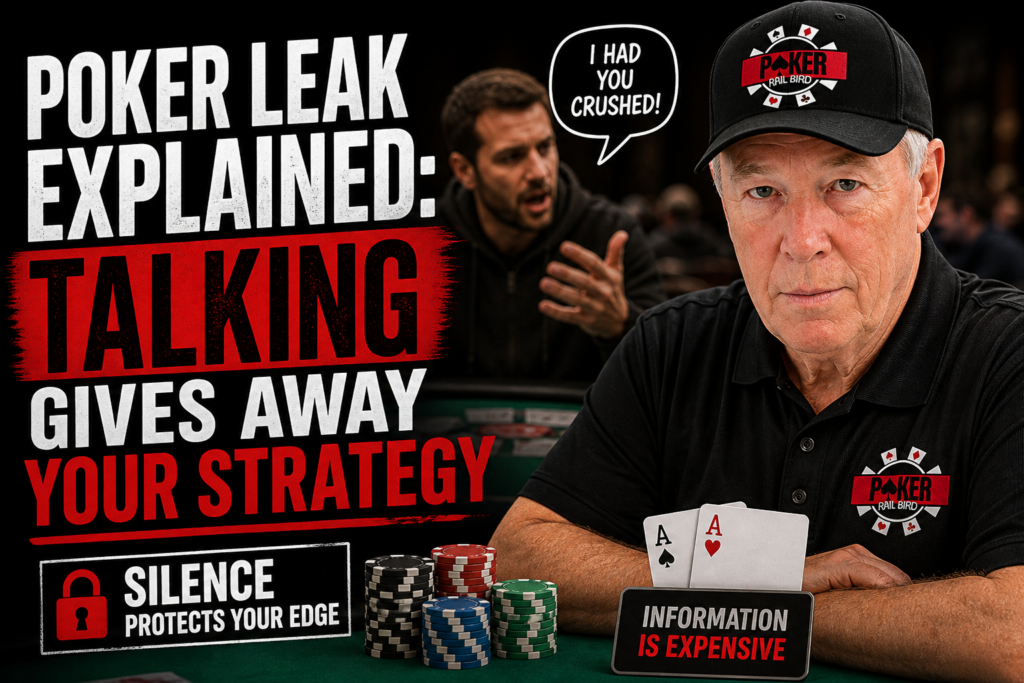
There’s a special kind of leak that doesn’t involve chips, cards, or position, only words.
It’s called educating the opposition, and it happens every time a player can’t resist showing a bluff, explaining a decision, or giving a quick lecture on pot odds after a bad beat.
At first glance, it feels harmless. Maybe even justified. After all, the table should know you made the “right” play, right?
But the moment you start explaining, you’re doing your opponents’ homework for them.
You’re teaching them how you think, how you react under stress, and how to exploit you next time.
Poker isn’t a classroom, it’s an exam.
And every time you talk too much, you hand out the answer sheet.
FREQUENTLY ASKED QUESTIONS
CAN A PLAYER'S BEHAVIOR BE INTENTIONALLY MISLEADING?
Yes. Some players deliberately use conversation, exaggerated reactions, or theatrical behavior to influence how others perceive them. However, many behaviors occur naturally and without conscious intent. The challenge is learning to distinguish between genuine behavior and deliberate performance by evaluating actions within the broader context of the game.
IS TABLE IMAGE SOMETHING YOUR CREATE, OR SOMETHING OTHER PLAYERS ASSIGN TO YOU?
Both. Your behavior, betting patterns, and interactions help create your table image, but your opponents ultimately decide how they interpret those actions. Successful players understand that perception is influenced by both what they do and how others choose to interpret it.
CAN DIFFICULT PERSONALITIES ACTUALLY BECOME A STRATEGIC ADVANTAGE?
In some cases, yes. Obnoxious players, bullies, and emotionally volatile opponents often create opportunities by encouraging others to play emotionally instead of logically. Players who remain disciplined can frequently benefit from the mistakes these personalities create.
DOES TABLE TALK ALWAYS REVEAL INFORMATION?
Not necessarily. Some players use conversation to gather information, while others use it to conceal information, manipulate perception, or simply entertain themselves. The value of table talk depends on its timing, context, consistency, and the individual player’s motivations.
HOW MUCH SHOULD BEHAVIOR INFLUENCE A POKER DECISION?
Behavior should provide context, not certainty. Decisions should continue to be grounded in mathematics, strategy, betting patterns, and the specific situation. Behavioral observations become most valuable when they reinforce other evidence rather than replace it.
CAN YOU IMPROVE YOUR OWN BEHAVIOR WITHOUT BECOMING UNNATURAL?
Absolutely. The objective is not to become robotic or eliminate your personality. Instead, it’s to develop greater awareness of how your actions influence others while learning to present yourself in a more consistent, disciplined, and intentional manner.
RELATED HUB PAGES
Continue expanding your poker knowledge by exploring these related PokerRailbird learning hubs. Each Hub examines a different aspect of the game and is designed to complement the concepts presented throughout the Poker Player Behavior series.
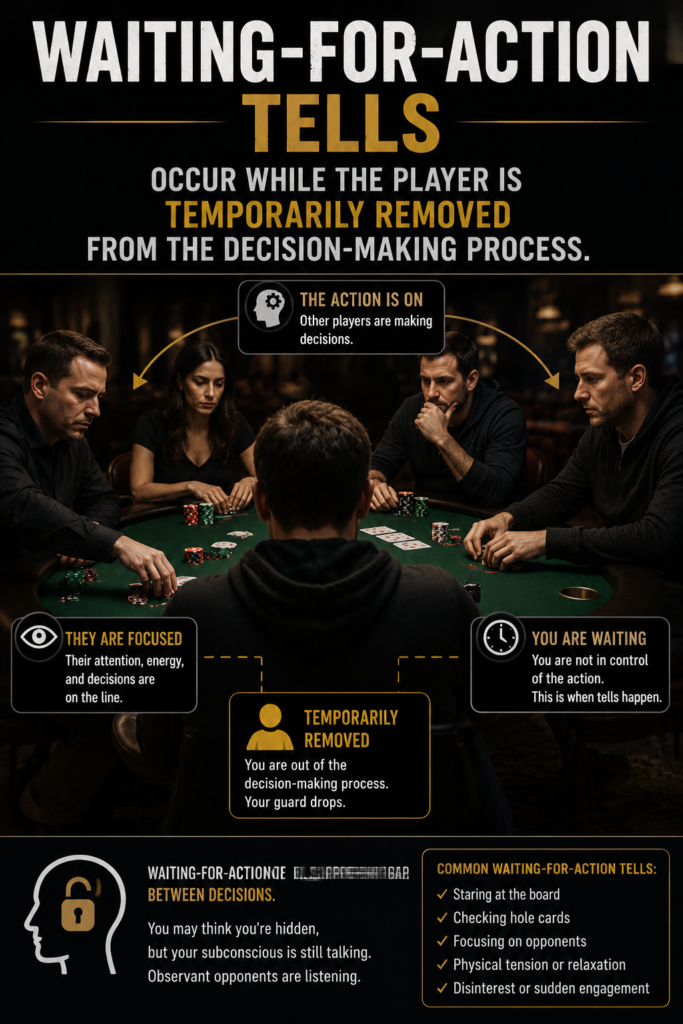
Waiting-for-action tells occur after you’ve acted but before your opponent responds, making them some of the most reliable behavioral observations in live poker. This Hub explores the most common tells of strength and weakness, explains how to interpret them within the proper context.
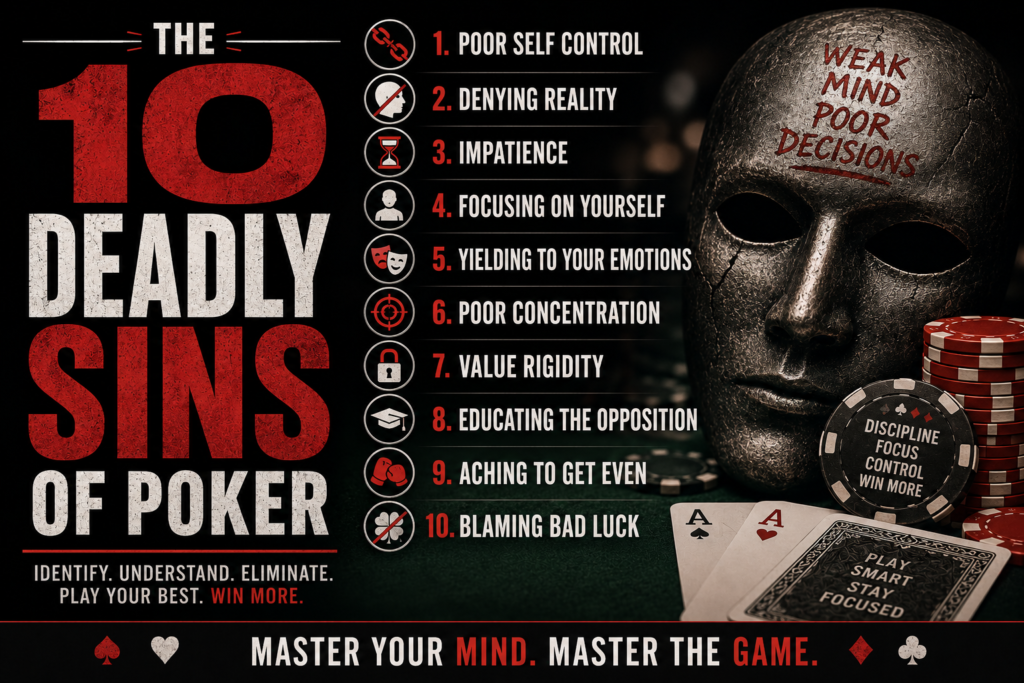
Even technically skilled players lose money when psychological mistakes begin to influence their decisions. This Hub examines the ten most common mental and emotional leaks that quietly undermine discipline, distort decision-making, and prevent players from consistently performing at their best.
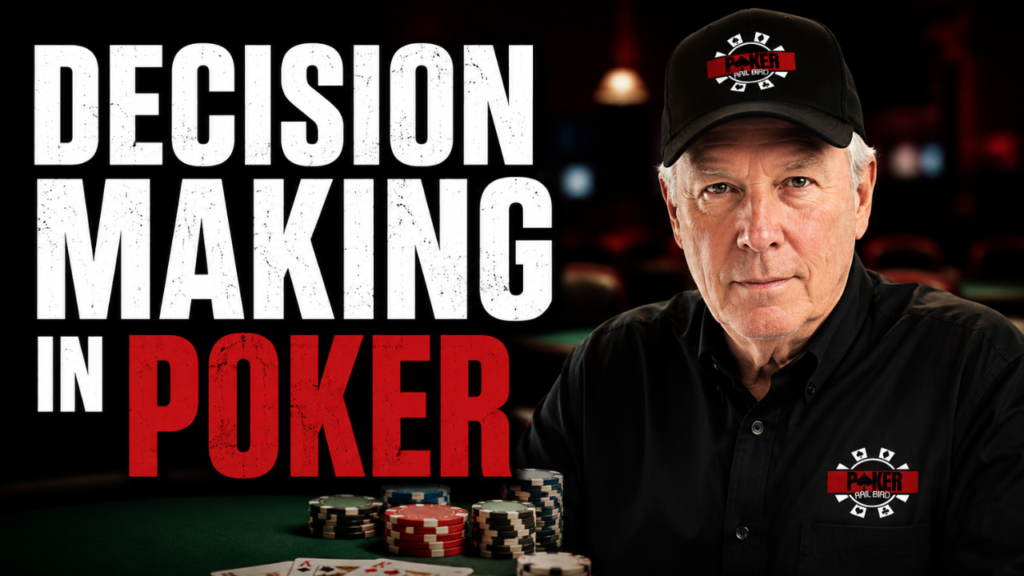
Decision-making in poker is the foundation of long-term success. Every hand presents a series of choices made with incomplete information, uncertain outcomes, and constantly changing circumstances.