

DECISION MAKING IN POKER
HOW WINNING PLAYERS THINK
Decision-making in poker is the foundation of long-term success. Every hand presents a series of choices made with incomplete information, uncertain outcomes, and constantly changing circumstances. While the cards you hold influence those choices, they rarely determine the correct decision by themselves. Position, stack sizes, betting action, player tendencies, table dynamics, and countless other variables all contribute to the quality of every decision you make.
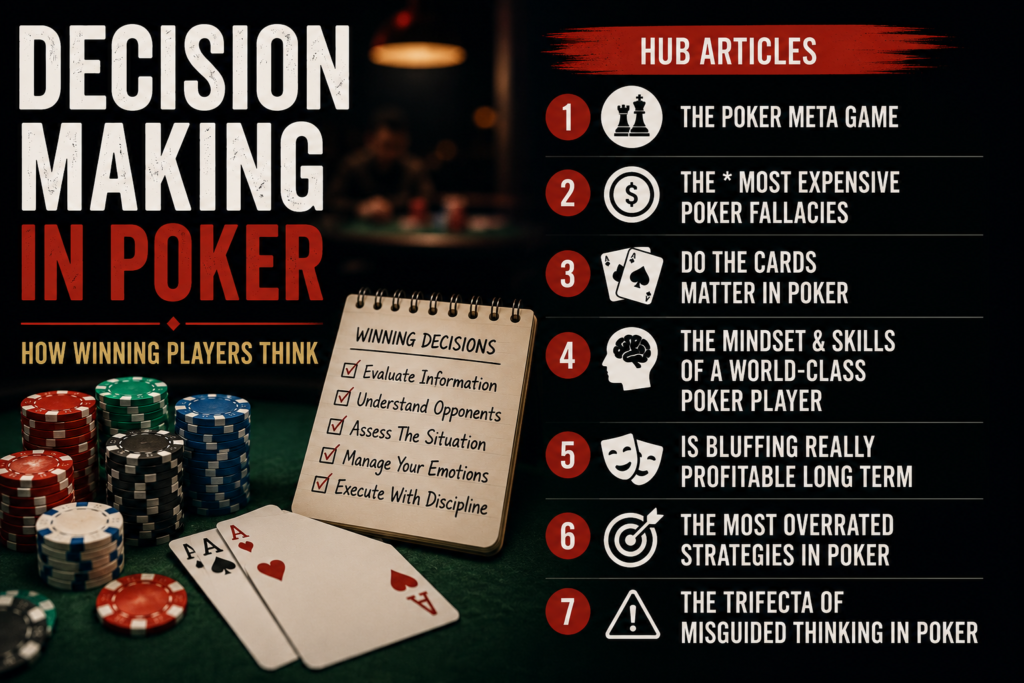
One of the biggest misconceptions in poker is that winning players somehow know the “right” answer before they act. They don’t. Strong players rarely have certainty. Instead, they evaluate the available information more effectively, weigh competing possibilities, manage risk, and make the most profitable decision based on what they know at that moment. Over time, consistently making better decisions produces better long-term results.
At PokerRailbird, we believe poker is not a game of memorizing rules—it is a game of developing better judgment. Rather than relying on fixed strategies or isolated concepts, successful players learn to combine multiple sources of information into one logical conclusion. That thinking process is what separates consistent winners from players who simply react to the cards in front of them.
This Hub brings together PokerRailbird’s complete collection of articles and companion videos devoted to decision making in poker. Together, these resources examine the reasoning process behind profitable decisions, challenge conventional assumptions, expose common thinking errors, and provide practical tools for making better decisions under pressure. Whether you’re reviewing your own play or trying to better understand your opponents, the goal is always the same: improve the quality of your decisions, one hand at a time.
WHAT YOU'LL FIND IN THIS HUB
Every article in this Hub examines a different aspect of decision making in poker, but they all share one objective: improving the quality of your thinking. Rather than presenting isolated tips or rigid strategies, these resources explore how successful players evaluate information, question assumptions, avoid common reasoning errors, and make better decisions under uncertainty. You can read the articles in any order, depending on the area of your game you want to improve, or work through the entire Hub to develop a more complete decision-making process.
WHO IS THIS HUB FOR?
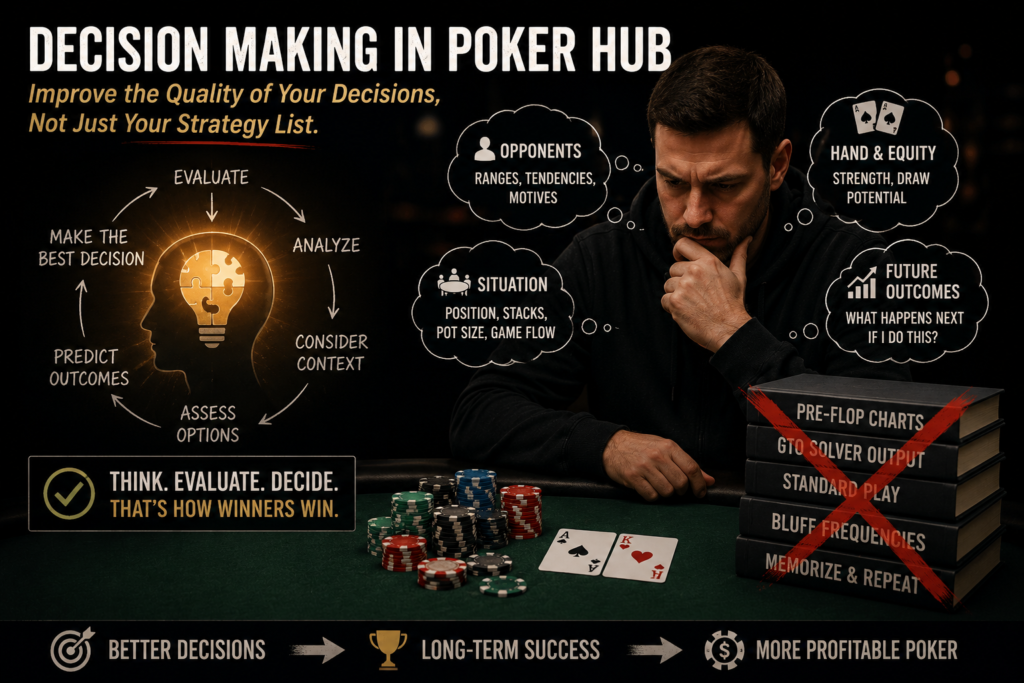
This Decision Making in Poker Hub is designed for players who want to improve the quality of their decisions rather than simply memorize strategies. Whether you’re new to the game or an experienced player looking to refine your thinking, these resources will help you evaluate information more objectively, question common assumptions, and make more consistent decisions under pressure. If you’ve ever wondered why two players facing the same situation arrive at completely different conclusions, this Hub will help you develop a stronger decision-making process and improve your long-term poker results.
WHAT YOU'LL LEARN
Throughout this Decision Making in Poker Hub, you’ll learn how to:
- Evaluate poker situations more objectively.
- Recognize common thinking errors and cognitive biases.
- Challenge conventional poker wisdom.
- Make better decisions with incomplete information.
- Develop a repeatable decision-making process.
- Adapt your thinking to changing situations instead of relying on rigid rules.
- Improve the consistency of your decisions over the long term.
DECISION MAKING POKER RESOURCES
The following articles and companion videos explore the core principles of decision making in poker from multiple perspectives. Together, they explain how skilled players evaluate situations, avoid common thinking errors, and make more consistent decisions over the long term.
THE POKER META GAME
Poker is played on two levels. The first is obvious: cards, ranges, pot odds, bet sizes, and math. The second is invisible but far more powerful. It is the shifting landscape of perception, pressure, emotion, timing, and psychological momentum that surrounds every hand. This hidden layer is the meta-game in poker.
Most players don’t study it. Many don’t even notice it. Yet they are inside it every time they sit down. And that is the key truth that separates good players from great ones: you are in the meta-game whether you realize it or not. There is no opting out. The only question is whether you are an active participant or a passive target.

THE 8 MOST EXPENSIVE POKER FALLACIES
AND HOW THEY QUIETLY DESTROY YOUR WIN RATE

Poker is full of myths. Some are harmless. Others are expensive. Many players lose far more money to flawed thinking than they do to bad cards or tough opponents. They believe they are “due” for a win after a long dry spell. They stay at terrible tables because they’ve already invested hours, and often they convince themselves they’re crushing the game while making the same mistakes over and over again.
These are not minor misconceptions. They are common poker myths that act like silent leaks in your game, draining your bankroll while making you feel like you’re playing well.
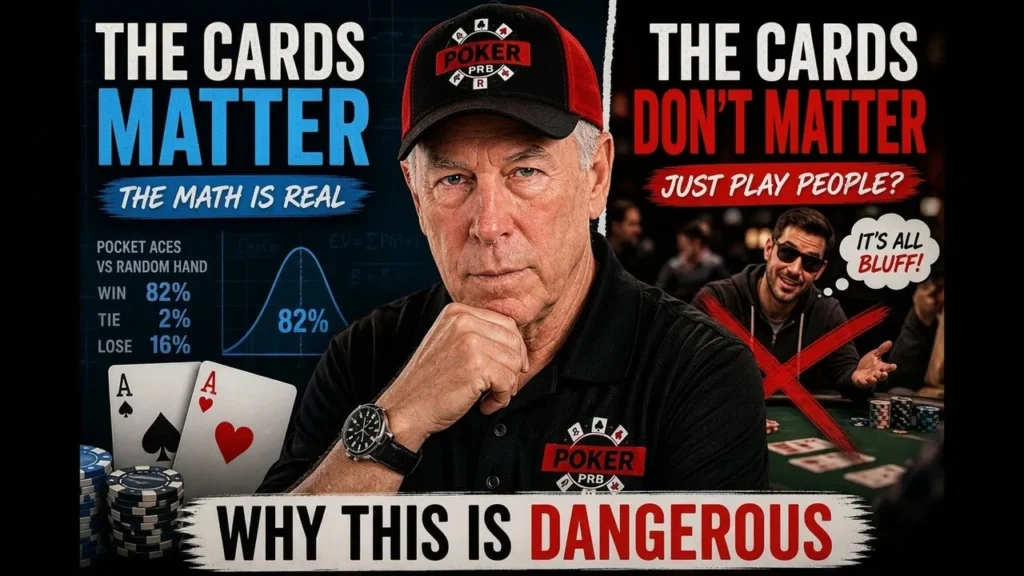
DO THE CARDS REALLY MATTER IN POKER?
Not only do they matter, but they’re also the foundation of every hand.
But that doesn’t mean psychology, timing, and reads don’t play a role.
It means poker is complex.
And when people pretend the cards don’t matter, they’re usually covering for something else.
That’s what this article is about.
THE MINDSET & SKILLS OF A WORLD-CLASS POKER PLAYER

Poker isn’t just a game of cards, it’s a game of discipline, strategy, and psychology. A winning poker mindset is what separates consistent winners from those who struggle to improve.. Some players consistently crush the tables, while others linger in mediocrity, making the same mistakes over and over. What separates winners from losers? It’s not just talent or experiences. It’s having the right mindset and the right skills.
POKER TOOLS-NOT RULES
At Pokerrailbird.com, we champion the philosophy of Poker Tools, Not Rules. This mindset challenges the belief that poker is governed by rigid, one-size-fits-all rules. You’ve probably heard them all: Never limp into a pot, Always raise three times the big blind, Only play certain hands from specific positions. But are these “rules” helping your game, or holding you back?
Poker isn’t a game of fixed formulas—it’s a dynamic, ever-evolving contest of skill, psychology,and adaptability. While strategies like Game Theory Optimal (GTO) and starting hand charts offer valuable guidance, treating them as unbreakable rules can lead to predictable and exploitable play. The best players thrive because they know when to use these tools, and when to toss the “rulebook” aside.
THE MOST OVERRATED STRATEGIES IN POKER

Always raise if you enter.” “Never limp.” “Defend your blinds.” These most overrated poker strategies sound smart on forums but burn chips in live games. Poker strategy myths like “always c-bet” or “never fold top pair” promise certainty, yet ignore context, table dynamics, stack sizes, and opponent tendencies. Consequently, players blindly follow these rigid rules and lose. Poker isn’t a rulebook; it’s a decision engine. You need tools, not commandments.
THE TRIFECTA OF MISGUIDED THINKING IN POKER
In poker, few ideas cause more confusion than Pot Odds vs Pot Committed, and the habit of limping. Players toss these concepts around as if they’re simple rules, but in reality, they’re often just misapplied shortcuts that bleed money from a bankroll.
I call these three ideas the Trifecta of Misguided Thinking. Each one has legitimate strategic value, but when used carelessly, they become dangerous leaks. Recreational players lean on them to justify bad calls, questionable folds, and passive play, and the result is predictable: long-term losses.
LOOSE POKER GAMES: HOW THE MATH CHANGES

Loose poker games frustrate strong players more than almost any other environment in live cash play. When four or five players routinely see every flop, raises are called in multiple spots, and pots swell before the turn, it can feel as though discipline is being punished rather than rewarded. Hands that “should” hold up are cracked more often, and sessions begin to feel volatile and unpredictable.
The natural response for many players is to loosen up. If the table is playing wide ranges, the instinct is to widen your own range and try to outplay the chaos. That reaction feels logical on the surface. In reality, it is often precisely backwards.
WHY BAD PLAYERS ARE HARD TO BEAT: AND HOW TO ADJUST
Most players have experienced a table where the game feels different.
The difference is not in the rules or the cards. It is in how the majority of the table makes decisions. Instead of one or two loose players, there may be four, five, or even six opponents entering nearly every pot. Raises do not narrow the field. Hands routinely go to showdown. Betting does not produce consistent reactions.
For players focused on beating bad poker players, this environment creates confusion. A few undisciplined opponents are highly profitable. But when most of the table ignores structure, math, and position, the game changes mechanically.
SHOULD YOU PLAY TIGHT IN POKER

One of the most common concerns players express about playing tight in poker is the fear that they will never get action.
The reasoning seems straightforward. If you only enter pots with strong hands, opponents should eventually notice. Once they recognize that pattern, the assumption is they will begin folding whenever you bet or raise. If that happens, the logic goes, tight play eliminates profit because no one is willing to continue.
On the surface, this sounds reasonable. In theory, a tight table image should discourage action. When a player rarely raises, those raises may appear stronger. Opponents expect premium holdings and prefer to stay out of the way.
THE "ALWAYS RAISE" POKER RULE
This article examines a single, specific idea: the always raise poker rule as it applies to pre-flop raises from late position in live, full-ring cash games.
The rule is simple.
If you choose to enter the pot from late position, you should always raise.
It is repeated so often that many players stop treating it as a decision at all.
It becomes automatic.
Late position equals raise.
One of the reasons late-position raises get called so frequently in live games is that everyone knows what they represent. In many cases, they are not perceived as strength raises. They are perceived as position raises. When a raise stops conveying strength, it also stops accomplishing some of the very things it is supposed to accomplish.

POST FLOP BET SIZING IN LIVE CASH GAMES

In live cash games, many players default to familiar bet sizes without considering what those sizes actually do. The amount wagered is treated as a routine action rather than a mathematical input. As a result, bets are made that allow opponents to continue correctly, realize equity cheaply, or reach future streets without pressure.
A common pattern is this: a player bets because they believe they are ahead, not because the bet forces incorrect decisions. Being ahead, by itself, has no mathematical value. Value is created only when opponents are put in positions where calling, folding, or raising produces inferior outcomes for them.
IS BLUFFING REALLY PROFITABLE LONG TERM?
Bluffing in poker has always carried an air of mystique. For some, it’s the ultimate weapon, a chance to win pots without a hand. For others, it’s a trap that drains chips faster than bad luck ever could. The truth lies somewhere in between.
This article takes a hard look at bluffing from both sides of the coin: being the bluffer, and being the player on the receiving end. From the bluffer’s perspective, we’ll ask: When is a bluff actually profitable long-term, and when is it just ego disguised as strategy? From the bluffee’s side, we’ll examine why players call, what psychological hooks drive those calls, and how understanding your opponents can turn their curiosity or suspicion into your profit.

MULTIWAY POSTFLOP DECISIONS
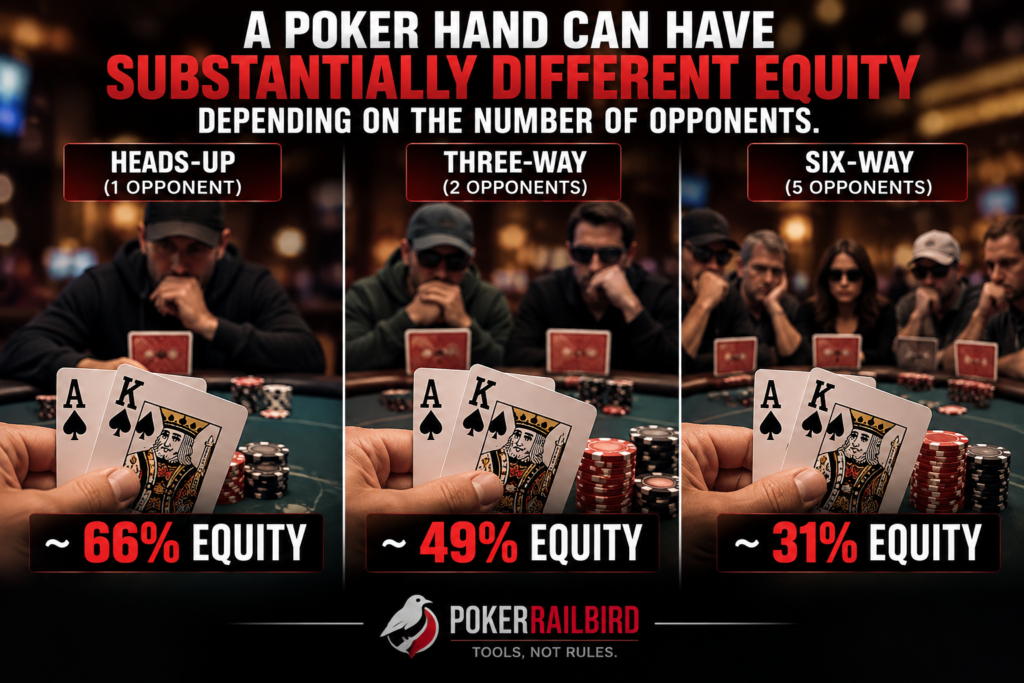
Multiway postflop decisions require you to evaluate a poker hand differently than you would against a single opponent. The cards may be exactly the same, and the board may be exactly the same, but additional players change the decision you face.
This doesn’t mean multiway poker requires an entirely different set of rules. The same fundamental information still matters.
What changes is the context in which you evaluate that information.
FREQUENTLY ASKED QUESTIONS
WHAT IS DECISION MAKING IN POKER?
Decision making in poker is the process of evaluating available information and choosing the action that offers the greatest long-term expected value. Every decision is made under conditions of uncertainty, requiring players to weigh factors such as position, betting action, opponent tendencies, stack sizes, and pot odds rather than relying on any single piece of information.
WHY IS DECISION MAKING IN POKER MORE IMPORTANT THAN THE CARDS?
While the cards determine the situations you face, your decisions determine how profitably you respond to those situations. Two players holding the same hand can achieve very different long-term results because they evaluate information differently and make different decisions throughout the hand.
HOW DO WINNING POKER PLAYERS MAKE BETTER DECISIONS?
Winning players rarely have complete information. Instead, they gather multiple pieces of evidence, evaluate probabilities, question assumptions, and make the most profitable decision based on the information available at the time. Their advantage comes from consistently making better decisions, not from predicting the future.
WHY DO POKER PLAYERS MAKE COSTLY DECISION-MAKING MISTAKES?
Many poor decisions result from emotional reactions, faulty reasoning, cognitive biases, or relying too heavily on conventional poker advice. Improving your decision-making process helps reduce these errors and leads to more consistent long-term results.
CAN A GOOD POKER DECISION STILL LOSE MONEY?
Yes. Poker decisions should be judged by the quality of the decision itself, not by the outcome of a single hand. Even the most profitable decision can lose in the short term because poker contains unavoidable uncertainty and variance.
HOW CAN I IMPROVE MY DECISION MAKING IN POKER?
Improving decision making in poker begins with reviewing your thought process rather than simply reviewing results. Learning to evaluate information objectively, recognize reasoning errors, and adapt to changing situations will improve the quality of your decisions over time.
DOES DECISION MAKING IN POKER IMPROVE WITH EXPERIENCE ALONE?
Not necessarily. Experience is valuable only when players learn from it. Repeating the same thought process without questioning assumptions often reinforces bad habits. Consistent improvement comes from analyzing your decisions, identifying mistakes, and refining the way you think about the game.
RELATED HUB PAGES
As PokerRailbird continues to grow, each Hub Page becomes part of a larger learning system. Explore related poker concepts below to deepen your understanding of live cash game strategy.

The Thinking In Layers Hub Page introduces PokerRailbird’s complete decision-making framework, showing how hand strength, opponent tendencies, table dynamics, perception, and your own mental game work together to produce consistently better decisions.
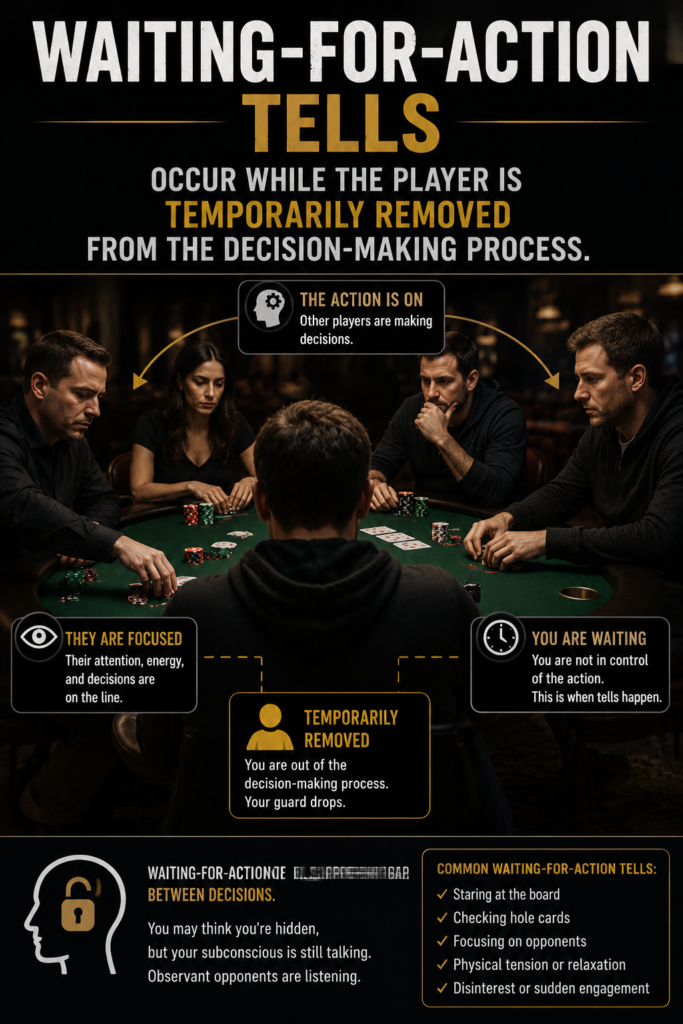
Waiting-for-action tells occur after you’ve acted but before your opponent responds, making them some of the most reliable behavioral observations in live poker. This Hub explores the most common tells of strength and weakness, explains how to interpret them within the proper context.
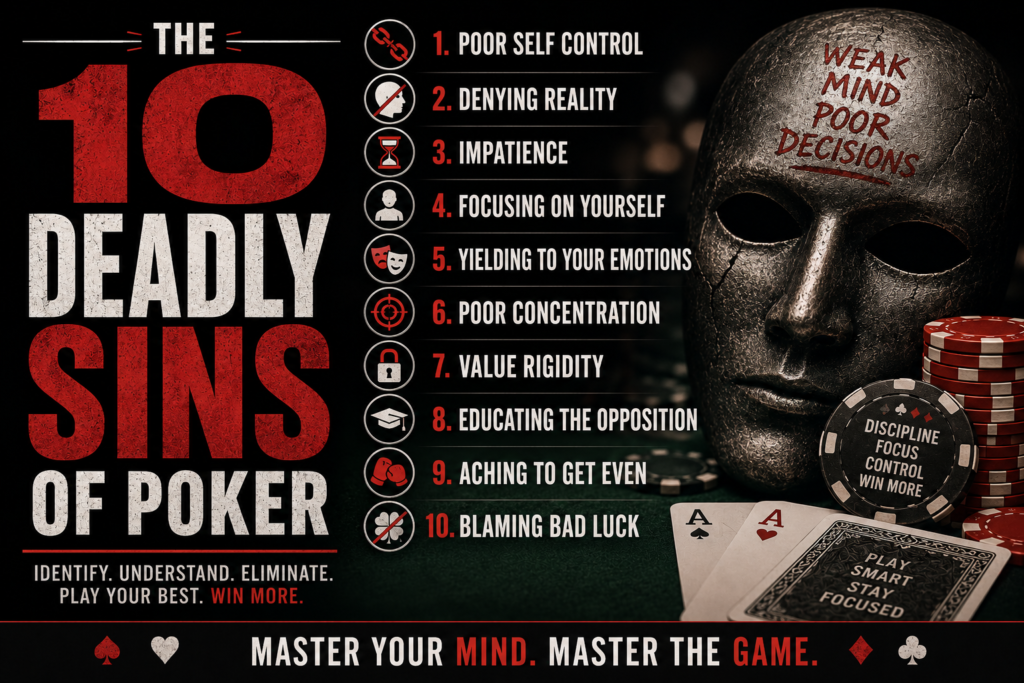
Even technically skilled players lose money when psychological mistakes begin to influence their decisions. This Hub examines the ten most common mental and emotional leaks that quietly undermine discipline, distort decision-making, and prevent players from consistently performing at their best.