THE YOU LAYER
HOW YOUR MINDSET AND EXECUTION DETERMINE YOUR RESULTS
EXECUTION IN POKER
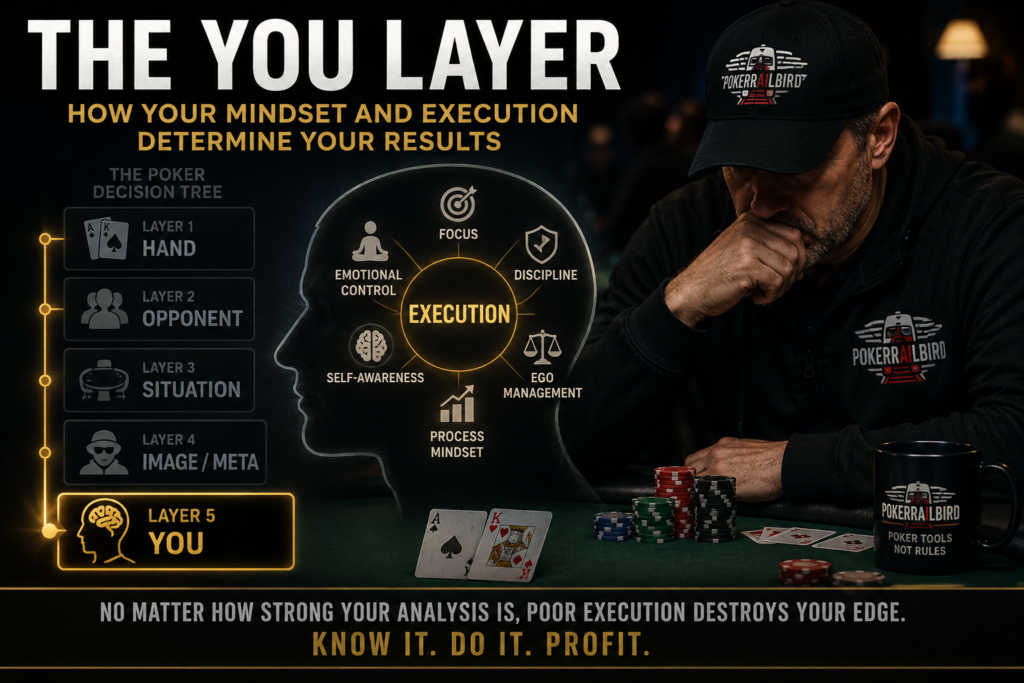
You have mastered the external layers of the Poker Decision Tree. You know how to evaluate your hand (Layer 1), read your opponents (Layer 2), understand the situation (Layer 3), and manage perception and image (Layer 4).
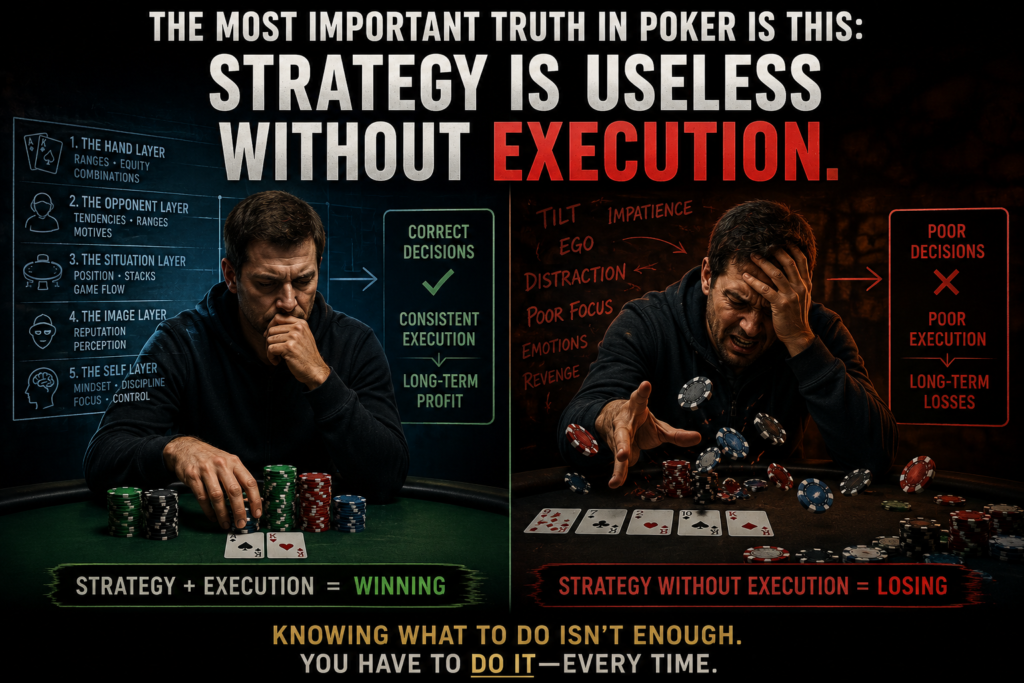
Yet many skilled players still struggle to win consistently. The reason is simple: they fail in Layer 5, The You Layer.
Poker execution is where knowledge meets results. This final layer focuses on you, your mindset, emotional control, discipline, focus, and ability to execute correct decisions under real pressure. No matter how strong your analysis is in the first four layers, poor poker execution in Layer 5 destroys your edge.
This is the internal game. It is the difference between knowing what to do and actually doing it when money is on the line. It explains why two players with identical strategic knowledge can produce dramatically different results.
In this article, we will explore what the You Layer actually means, the most common self-inflicted leaks that hold players back, and how to develop the mental habits and discipline required to turn knowledge into consistent profit.
Mastering Layer 5 is what transforms good poker players into long-term winners.
WHAT "THE YOU LAYER" ACTUALLY MEANS

The You Layer is the internal foundation of the Poker Decision Tree. While the first four layers focus on external factors- your hand, your opponents, the situation, and perception- Layer 5 turns the focus inward to the most important variable at the table: You.
Poker execution is where strategy meets reality. It is your ability to consistently make correct decisions under pressure, maintain emotional control, stay focused, and follow through on what you know is right, even when it feels uncomfortable.
This layer includes several core components:
EMOTIONAL CONTROL AND TILT MANAGEMENT
Your ability to stay composed after bad beats, coolers, or variance. Tilt doesn’t just cost you the current hand; it often destroys the next several decisions as well.
For a more detailed explanation, take a look at the following articles:
Emotional Intelligence In Poker: Avoid Tilt And Make Better Decisions
Value Rigidity: The Poker Mindset Trap That Costs You Chips and Choices
DISCIPLINE AND PATIENCE
The willingness to fold marginal hands, wait for better spots, and avoid playing too many hands out of boredom or impatience.
For additional insight checkout these articles:
The Power Of Patience In Poker
The Paradox Of Patience: Why Waiting Is The Hardest Move In Poker
FOCUS AND CONCENTRATION
Maintaining attention throughout long sessions, especially when you are card dead or the table is slow.
For an in-depth understanding:
Mindfulness In Poker: More Than A Buzzword
Why You Keep Making The Same Poker Mistakes: And How To Break The Cycle
EGO MANAGEMENT
Making decisions based on expected value rather than pride, revenge, or the desire to “look good” at the table.
Additional Reading:
Ego In Poker: How Poker Ego Destroys Strategy, Bankroll & Composure
PROCESS-ORIENTED THINKING
Focusing on making the best decision possible rather than obsessing over short-term results.
Also read the following articles:
SELF-AWARENESS
Honestly recognizing your own leaks, emotional triggers, and mental fatigue so you can address them before they cost you money.
For a more detailed explanation:
Yielding To Our Emotions: Deadly Sin No. 5
Denying Reality: The Moment You Stop Facing The Truth Is The Moment You Start Losing
The You Layer is often the hardest because it forces you to confront your own weaknesses. It is much easier to study ranges and bet sizing than to admit that impatience or ego is leaking your win rate. Yet this layer is the multiplier, or the destroyer, of everything you learned in the first four layers.
Mastering the You Layer means turning intellectual understanding into consistent, profitable execution.
COMMON SELF-INFLICTED LEAKS IN THE YOU LAYER
Even players who understand Layers 1–4 well often fail to win consistently because of leaks in the You Layer. These are self-inflicted problems that have nothing to do with strategy and everything to do with poker execution.
TILT AND EMOTIONAL LEAKS
The most expensive leak for most players. Whether it’s steam tilt after a bad beat, revenge tilt after being bluffed, or long-term tilt from variance, emotional decisions destroy win rates faster than almost anything else. Tilt doesn’t just cost you the current hand, it often poisons the next several decisions.
IMPATIENCE AND LACK OF DISCIPLINE
Boredom tilt and “I haven’t played a hand in 45 minutes” syndrome lead to playing too many hands, forcing marginal situations, and making loose calls. Patience is one of the hardest skills to develop, but it is also one of the most profitable.


EGO-DRIVEN DECISIONS
Hero calls to “prove” you can’t be bluffed, refusing to fold because “I can’t let him get away with that,” or showing hands to look smart. Ego turns mathematically correct folds into expensive calls and correct checks into unnecessary bluffs.
LOSS OF FOCUS AND CONCENTRATION
Mental fatigue, distraction (phones, TV, conversation), or “auto-pilot” mode after long sessions. You stop paying attention to table dynamics, player tendencies, and changing situations.


RESULTS-ORIENTED THINKING
Judging your play based on short-term outcomes instead of decision quality. This leads to overconfidence after wins and despair after losses, both of which distort future decision-making.
POOR SESSION AND BANKROLL MANAGEMENT
Playing too long when tired, moving up in stakes too quickly, or continuing to play after you know you’re not at your best.

These leaks are particularly dangerous because they feel invisible. You can study perfect strategy all day, but if you cannot execute that strategy consistently, your results will never match your knowledge.
HOW TO PROPERLY THINK IN LAYER 5
The You Layer is where knowledge becomes profit. Here is a practical framework you can use to strengthen your internal game and improve your execution.
DEVELOP PRE-SESSION ROUTINES
Create consistent mental preparation before every session. This might include reviewing your goals, reminding yourself of your process, or doing a short breathing exercise to start focused. A strong pre-session routine helps you begin every session in the right mindset.
USE IN-SESSION EMOTIONAL CHECKPOINTS
Train yourself to pause periodically (every 30–60 minutes or after big pots) and honestly assess your emotional state. Ask: Am I tilted? Am I impatient? Am I losing focus? Catching leaks early prevents them from spiraling.Build a Post-Session Review Process
Review your session with a focus on decisions, not results. Ask: Did I make the correct play based on the information available? Where did emotion or ego influence my choices? Consistent review accelerates improvement in the You Layer.
DEVELOP MENTAL RESILIENCE TECHNIQUES
Practice simple tools such as controlled breathing after bad beats, reframing variance as part of the game, and focusing on process over results. These techniques help you recover faster and stay composed longer.
CULTIVATE SELF-AWARENESS
Be brutally honest about your personal leaks. Do you play more hands when bored? Do you call lighter when tilted? Do you lose focus after winning a big pot? Self-awareness is the foundation of improvement in this layer.
FOCUS ON PROCESS-ORIENTED THINKING
Judge your play based on decision quality, not short-term outcomes. This mindset reduces tilt, improves learning, and leads to better long-term results.
The You Layer is not about being perfect. It is about becoming more consistent. Small improvements in emotional control, discipline, and focus compound into significant gains in win rate.
INTEGRATING ALL FIVE LAYERS
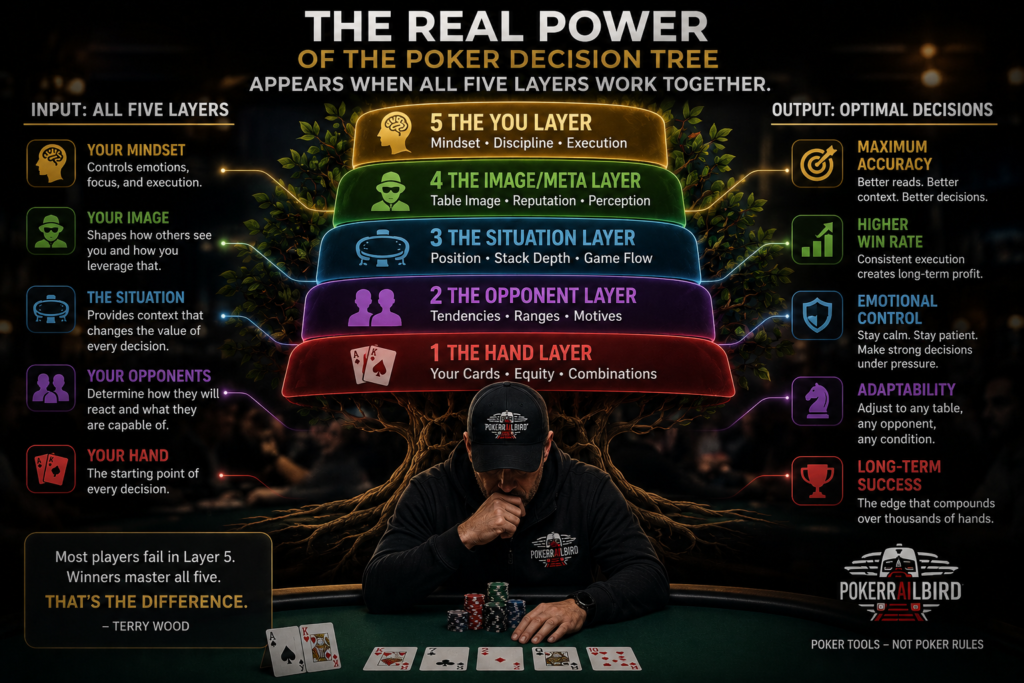
The real power of the Poker Decision Tree appears when all five layers work together. Each layer adds depth, but it is the combination that creates truly elite play.
Layer 1 tells you: What do I have?
Layer 2 tells you: What do they likely have?
Layer 3 tells you: What does the situation demand?
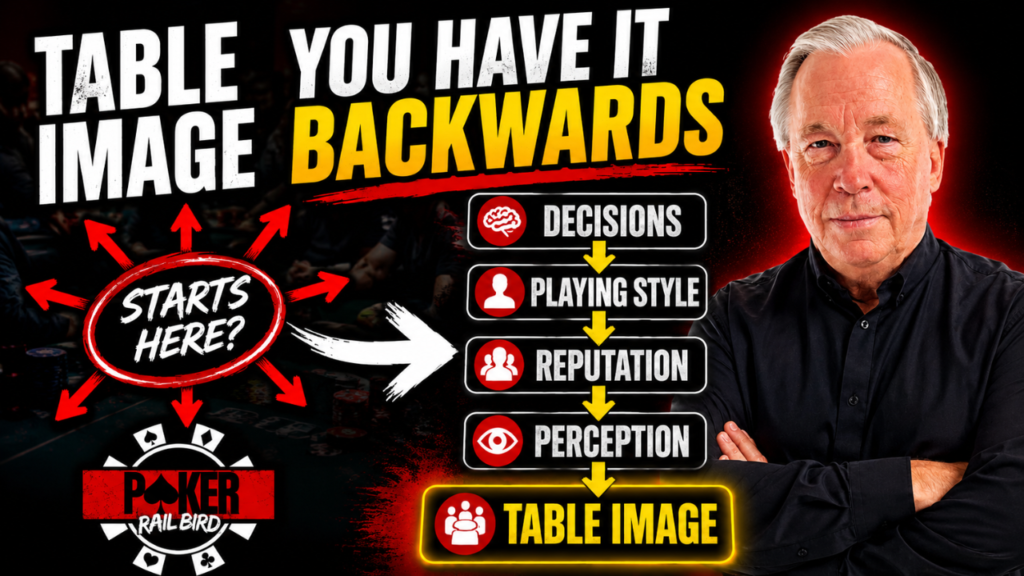
Layer 4 tells you: How are they perceiving me?
Layer 5 asks the final question: Can I execute the correct decision right now?
When these five layers align, you move beyond simply playing poker and start dominating the game.
PRACTICAL INTEGRATION EXAMPLE

You hold top set on a dry board. Layers 1–3 say value bet. Layer 4 shows your tight image will get you paid. But Layer 5 reveals you are slightly tilted from a previous bad beat and tempted to over-bet for revenge.
A player weak in the You Layer over-bets for revenge and either bloats the pot unnecessarily or scares off calls from hands that would have paid a normal bet. A player strong in Layer 5 recognizes the tilt, stays composed, and makes the correct, controlled value bet. Same hand. Same situation. Dramatically different long-term results based on self-mastery.
This integration is what turns good players into consistent winners. You stop leaking money through emotional decisions and start capitalizing on every edge the first four layers identify.
Mastering all five layers means you are no longer just playing the cards, you are playing the complete game at the highest level.
THE COMPLETE POKER DECISION TREE
You have now completed all five layers of the Poker Decision Tree.
The most important truth in poker is this: Strategy is useless without execution.
You can have perfect hand reading, flawless range construction, and deep situational awareness, but if you cannot control your emotions, maintain discipline, or execute correct decisions under pressure, your results will never match your knowledge.
The You Layer is what separates players who know good poker from players who consistently play good poker. It is the final multiplier. Master it, and everything you learned in the first four layers becomes far more profitable. Neglect it, and even the best strategy leaks away over time.
The Poker Decision Tree is now complete. Use it as a framework for continuous improvement. Review your play through all five layers. Identify where you are strong and where you still leak money. Small, consistent improvements in any layer, especially Layer 5, will compound into significant gains.
Thank you for following the series. If these articles and videos have helped your game, I’d love to hear about it in the comments.
The journey doesn’t end here. Poker is a game of endless refinement. Keep studying, keep working on your You Layer, and we’ll see you… at the tables.