
THE PERCEPTION LAYER
HOW TABLE IMAGE AND REPUTATION SHAPE YOUR DECISIONS
PERCEPTION IN POKER
You have learned to evaluate your own hand (Layer 1), read your opponents’ ranges (Layer 2), and understand the situational context (Layer 3).
Now it’s time to consider something more advanced: how others perceive you and how that perception influences every decision at the table.
This is Layer 4 of the Poker Decision Tree: The Perception Layer.
Perception in poker is the cumulative set of beliefs, assumptions, and expectations that opponents form about you based on your actions, showdowns, demeanor, and history. It is not what you think you are doing. It is what others believe you are doing. That gap between reality and perception creates one of the most powerful strategic edges in the game.

While Layers 1–3 focus on the current hand, your cards, your opponents’ ranges, and the immediate situation, Layer 4 expands the view. It recognizes that poker is not played in isolation. Every hand leaves information behind. Previous showdowns, big pots, bluffs, and emotional reactions shape how opponents interpret your future actions.
In live games, especially when you play regularly in the same room, this perception evolves into a longer-term reputation. That reputation can precede you before you even sit down, and it can be surprisingly difficult to change once established.
Your table image and reputation affect fold equity, value extraction, and how opponents respond to your bets and raises. A well-managed perception can make marginal hands profitable. A poorly managed one can turn strong hands into expensive mistakes.
In this article, you will learn what the Perception Layer actually means, the common mistakes players make with it, and how to properly think in this layer so you can use perception as a strategic weapon rather than leaving it to chance.
Mastering this layer completes the external analysis of the Poker Decision Tree and prepares you for the final internal layer: understanding yourself.
WHAT "THE PERCEPTION LAYER" ACTUALL MEANS

The Perception Layer shifts your focus from the immediate hand to something broader and more subtle: how others perceive you and how that perception influences their decisions.
While Layers 1–3 deal with objective information (your hand strength, opponent ranges, and situational factors), Layer 4 examines the subjective beliefs opponents hold about you. Perception in poker is the gap between what you are actually doing and what your opponents believe you are doing.
This layer has two main components:
TABLE IMAGE
This is the short-term, session-based perception opponents form during a single game. It develops from your recent actions, showdowns, betting patterns, demeanor, and emotional control. Table image can shift relatively quickly based on new information. A successful bluff or a big value hand can noticeably change how opponents view you within a few orbits.
REPUTATION
This is the longer-term perception that builds over multiple sessions, especially in rooms where you play regularly. Reputation is more stable and harder to change. Once players label you as tight, loose, aggressive, passive, or unpredictable, that label tends to stick across visits. Changing a well-established reputation usually requires consistent behavior over many sessions.
THE CRITICAL DISTINCTION: PERCEPTION VS REALITY
Your table image and reputation are not necessarily accurate reflections of your actual play. They are based on incomplete information, selective memory, and individual biases. Different opponents often hold different perceptions of you at the same time. The old regular in Seat 2 may see you as a tight player. The tourist in Seat 7 may see you as aggressive. The distracted player in Seat 9 may have no clear opinion at all.
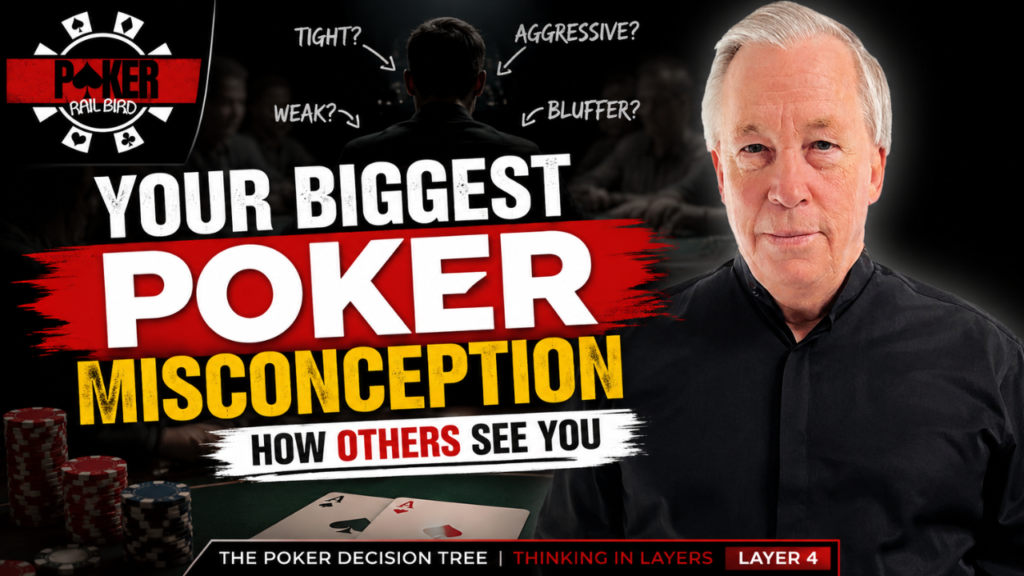
This reality creates both opportunity and risk. When opponents’ perceptions align with your strategy, you gain extra fold equity or get paid off more often. When they misread you, you can exploit those misunderstandings. However, if you ignore how you are perceived, you may make decisions based on assumptions that no longer match the table’s view of you.
Mastering the Perception Layer means learning to see yourself through your opponents’ eyes while continuing to make mathematically sound decisions. It is not about manipulating every opponent or forcing a specific persona. It is about understanding the stories opponents are telling themselves about you and using that awareness to make better choices.
COMMON MISTAKES IN THE PERCEPTION LAYER
Even players who handle Layers 1–3 reasonably well often lose significant value in Layer 4 because they either ignore their table image entirely or misunderstand how perception actually works. Here are the most common mistakes in the Perception Layer:
PLAYING WITHOUT AWARENESS OF YOUR IMAGE
Many players focus only on their cards, opponent ranges, and the immediate situation while remaining completely unaware of how the table currently perceives them. They make decisions based on what they believe is correct, without considering whether their recent actions have changed how opponents will react. This blind spot often leads to bluffs that get called and value bets that get folded to.
ASSUMING EVERYONE SEES YOU THE SAME WAY
A very common error is believing you have one universal table image. In reality, different opponents frequently hold different perceptions of you at the same time. A regular who has played with you for months may see you as tight and disciplined. A new player who just sat down may have no opinion. Another may base their entire view on one memorable bluff or value hand. Failing to recognize these differences leads to misjudged bluffs and value bets
OVERREACTING TO RECENT EVENTS (RECENCY BIAS)
Players heavily overweight recent showdowns and big hands. One failed bluff can cause many opponents to label you as “bluffy” for the rest of the session. One premium hand shown down can suddenly make you appear as a “nit.” This emotional reaction distorts your understanding of your actual image and leads to costly adjustments.
TRYING TO FORCE IMAGE CHANGES TOO QUICKLY
Some players attempt to dramatically shift their image in a single session (for example, going from tight to extremely loose). These sudden changes rarely work and often make you look erratic. Image shifts should be gradual and built on consistent, mathematically sound decisions rather than forced plays.
MAKING NEGATIVE EV PLAYS PURELY FOR IMAGE
This is one of the most expensive mistakes. Bluffing too much, calling too wide, or making other unsound plays just to “look loose” or “look tight” almost always costs money in the long run. Your image should enhance good strategy, never replace it.
IGNORING HOW DIFFERENT OPPONENTS PERCEIVE YOU
Not every player at the table is paying close attention. Some are highly observant and tracking your every move. Others are recreational players focused only on their own cards. Recognizing who is forming a meaningful opinion of you (and who isn’t) is an important part of the Perception Layer.
These mistakes all stem from the same root issue: treating perception as secondary or irrelevant rather than as an active, strategic element that influences every decision at the table.
HOW TO PROPERLY THINK IN LAYER 4
Mastering the Perception Layer means learning to see yourself through your opponents’ eyes while continuing to make mathematically sound decisions. This is where perception in poker becomes a practical tool rather than an abstract concept.
STEP 1: ASSESS YOUR CURRENT PERCEPTION
Start by honestly evaluating how you are currently perceived. Ask yourself:
- What have I shown down recently?
- How have I been playing over the last hour or two (tight, loose, aggressive, passive)?
- Have I been involved in any memorable hands?
- What does my physical demeanor and table talk suggest?
- How have I responded to wins and losses?
The goal is not to guess what you wish your image was. The goal is to understand what it actually is right now.
STEP 2: RECOGNIZE MULTIPLE PERCEPTIONS
Understand that different opponents often hold different views of you simultaneously. Adjust your reads and decisions based on who you are playing against. A regular who has history with you may have a very different perception than a new player who just sat down.
STEP 3: DECIDE WHETHER TO MAINTAIN OR SHIFT YOUR IMAGE
Once you understand your current perception, you have a strategic choice:
- Maintain it if it is working in your favor (for example, a tight image that gives you extra fold equity).
- Shift it gradually when it becomes exploitable (for example, if opponents are calling you down too lightly because they see you as loose).
Shifting an image takes time and consistent effort. Dramatic changes usually backfire and make you look erratic.
STEP 4: INFLUENCE PERCEPTION THROUGH SOUND PLAY
The most effective way to shape your image is through consistent, mathematically correct decisions that naturally project the perception you want. Focus on:
- Hand selection and playing frequency
- Controlled aggression and bet sizing
- Emotional composure and table demeanor
- What you show down and what you do between hands
Never make negative EV plays purely for image purposes. The strongest images are built on a foundation of good poker.
STEP 5: USE YOUR PERCEPTION AS A STRATEGIC WEAPON
Once you understand how you are perceived, you can exploit it:
- A tight image can make bluffs more effective.
- An aggressive image can get you paid off when you have strong hands.
- A composed, consistent image can make opponents hesitant to challenge you.
The best players don’t just play their cards, they play their image.
STEP 6: INTEGRATE LAYER 4 WITH PREVIOUS LAYERS
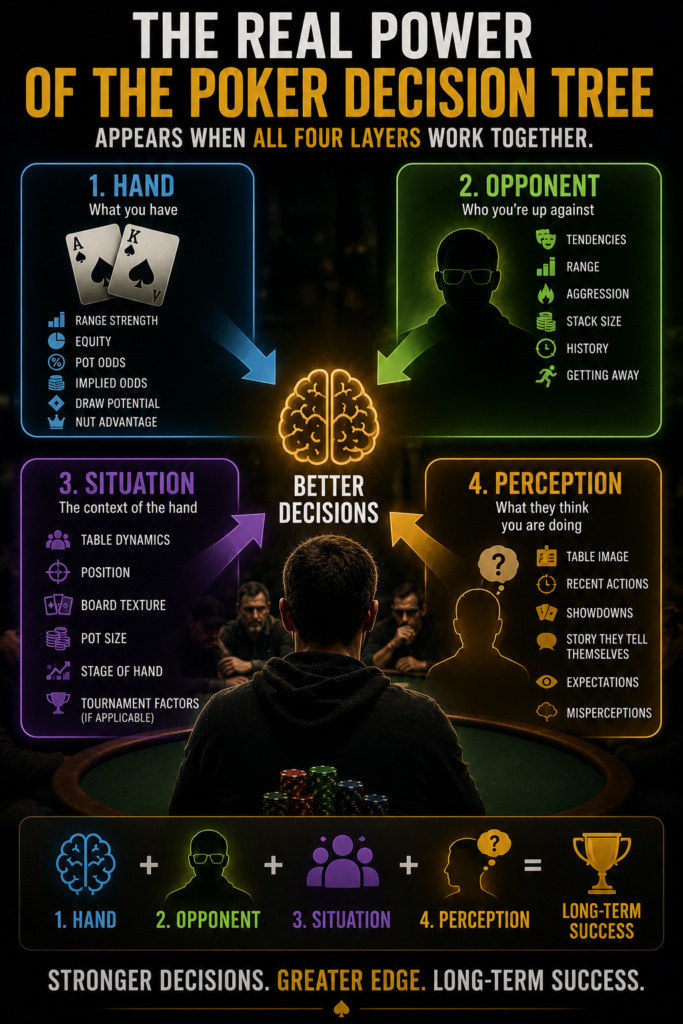
The strongest decisions happen when all four layers work together. Your hand strength (Layer 1), opponent ranges (Layer 2), situational context (Layer 3), and current perception (Layer 4) must all be considered before acting.
INTEGRATING LAYERS 1-4
The real power of the Poker Decision Tree appears when all four layers work together. Each layer adds depth, but it is the combination that creates truly high-level decision-making.
Layer 1 tells you: What do I have?
Layer 2 tells you: What do they likely have?
Layer 3 tells you: What does the situation demand?
Layer 4 asks the crucial follow-up: How are they perceiving me right now, and how does that perception affect their likely response?
When these four layers align, you move beyond simply playing your cards and start playing the full game, including the game inside your opponents’ heads.
PRACTICAL INTEGRATION EXAMPLE
You are in a $1/$3 game and have been card dead for the past 90 minutes, folding the vast majority of hands. You finally pick up A♠A♦ under the gun and raise to $15. A loose-passive regular on the button calls.
The flop comes A♣7♦2♠.
- Layer 1 (Hand): You have flopped top set, an extremely strong holding.
- Layer 2 (Opponent): The button is a loose-passive player who calls too wide and rarely folds top pair.
- Layer 3 (Situation): Deep stacks, dry board, and you have position.
- Layer 4 (Perception): Because you have folded so much, the table perceives you as tight and patient. Your UTG raise carries extra credibility.
Now compare two scenarios:
Without Layer 4 awareness: You bet the flop for value, get called, and continue betting, playing purely based on hand strength and opponent tendencies.
With Layer 4 awareness: You recognize that your tight image gives this bet extra weight. Your opponent is more likely to give you credit for a big hand (AK, QQ+, sets) and may fold weaker aces or pocket pairs that they would call from a more active player.
The cards and situation are identical. The only difference is your awareness of how you are perceived, and that awareness changes how you size bets, when you check, and how you interpret your opponent’s reactions.
This is the essence of the Perception Layer in action.
Mastering the integration of all four layers allows you to make decisions that are not only based on the current reality, but also on how that reality is being interpreted by the people sitting across from you.
CONCLUSION: MASTERING THE PERCEPTION LAYER
Layer 4 of the Poker Decision Tree introduces one of the most powerful, yet often overlooked, aspects of the game: perception in poker.
While Layers 1 through 3 focus on objective reality (your hand, your opponent’s range, and the situational context), Layer 4 examines how those elements are perceived by the players around you. It teaches you to see the game through your opponents’ eyes and to understand that perception often influences decisions more than the cards themselves.
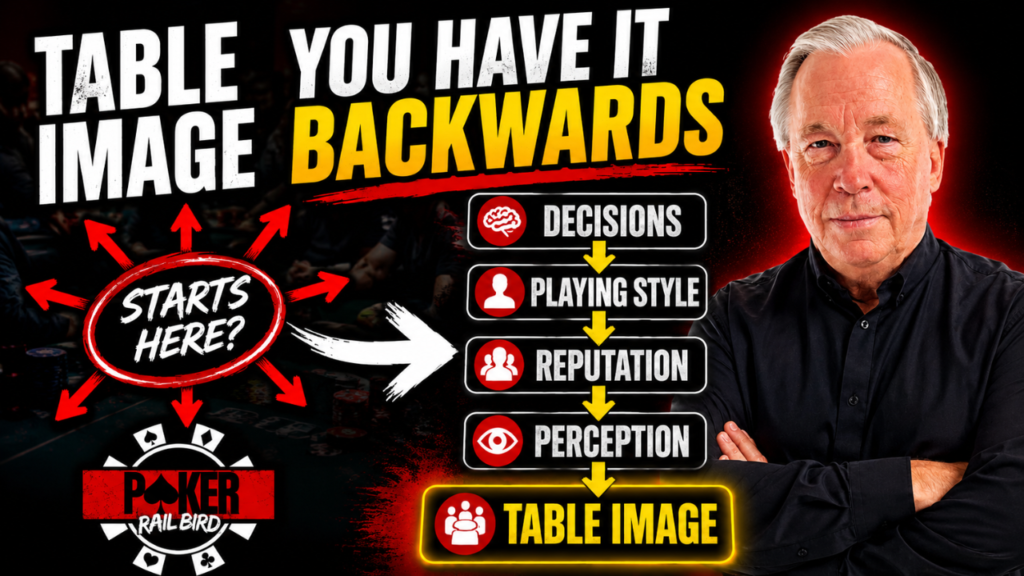
Your table image and reputation are never neutral. You will have them whether you manage them or not. The strongest players treat perception as an active strategic tool rather than an accidental byproduct of their play. They recognize the difference between what they are actually doing and what others believe they are doing — and they use that gap to create edges.
Mastering this layer does not mean manipulating every opponent or constantly trying to fool the table. It means developing awareness of how you are perceived, adjusting when necessary, and capitalizing on the opportunities that perception creates.
For a much deeper exploration of table image, playing style, and reputation, see the companion article: “Table Image & Player Style: Which Comes First?”
The first four layers of the Poker Decision Tree have focused primarily on the external game. In the next and final article, we turn inward to Layer 5: The Self Layer, where we explore how your own mindset, emotional control, discipline, and self-awareness ultimately determine how effectively you can apply everything you’ve learned.
The journey through the Poker Decision Tree is almost complete.