

THINKING IN LAYERS - HUB PAGE
MASTERING THE POKER DECISION TREE
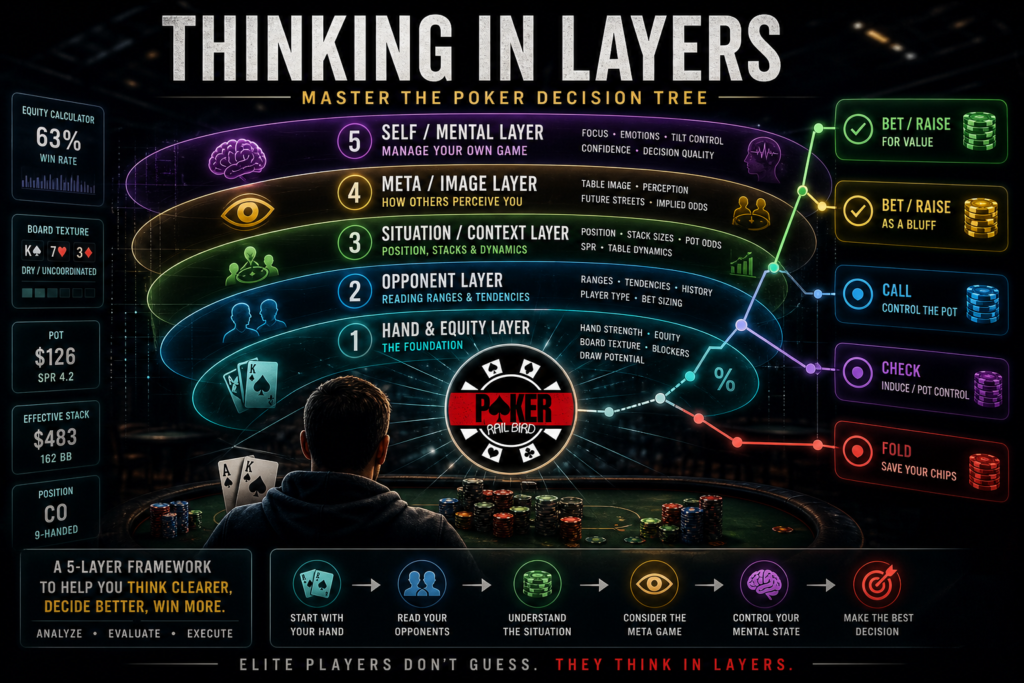
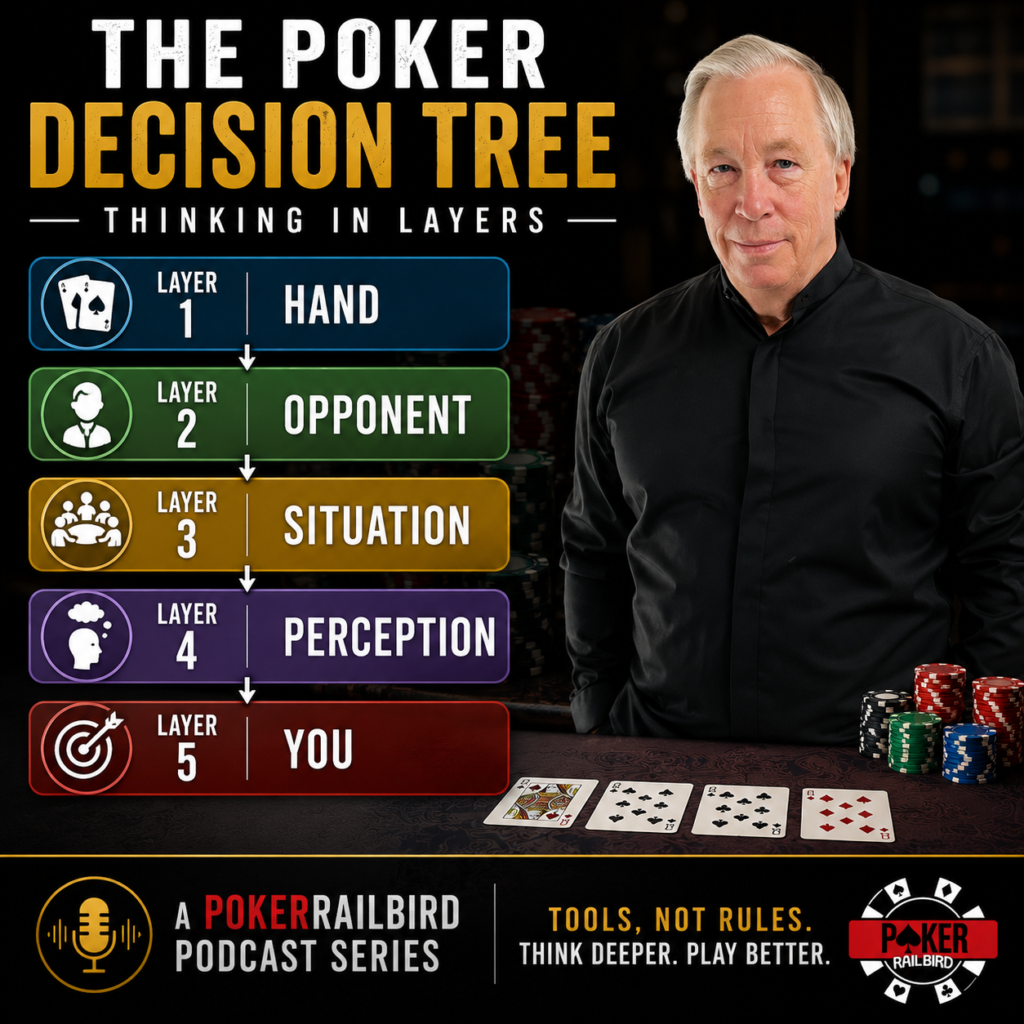
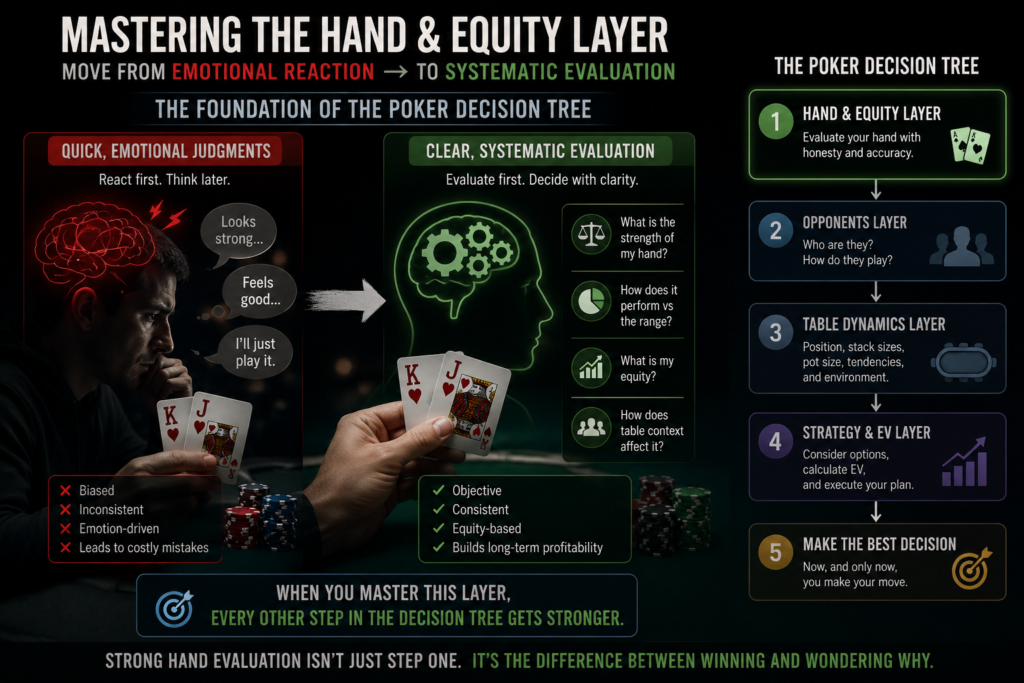
The Poker Decision Tree is a complete 5-layer framework that teaches you how elite players actually think at the table. Instead of making quick, one-dimensional decisions based on gut feel, this series breaks down every hand into five progressive layers, starting with your own hand and equity, then moving through your opponents, the situation, meta-game/image factors, and finally your own mental and emotional state.
Whether you’re a serious student of the game or an experienced player looking to reach the next level, mastering the Poker Decision Tree will give you a clear, structured thinking process you can use in real time. Each article builds upon the last, creating a powerful system for better decision-making and long-term results.
WATCH THE POKER DECISION TREE VIDEO SERIES
Prefer to learn by watching? Start with the complete Poker Decision Tree playlist, or jump directly to any layer below.
ARTICLE ONE: THE HAND AND EQUITY LAYER
The Foundation of Poker Decision Making
This is where every great poker decision begins.
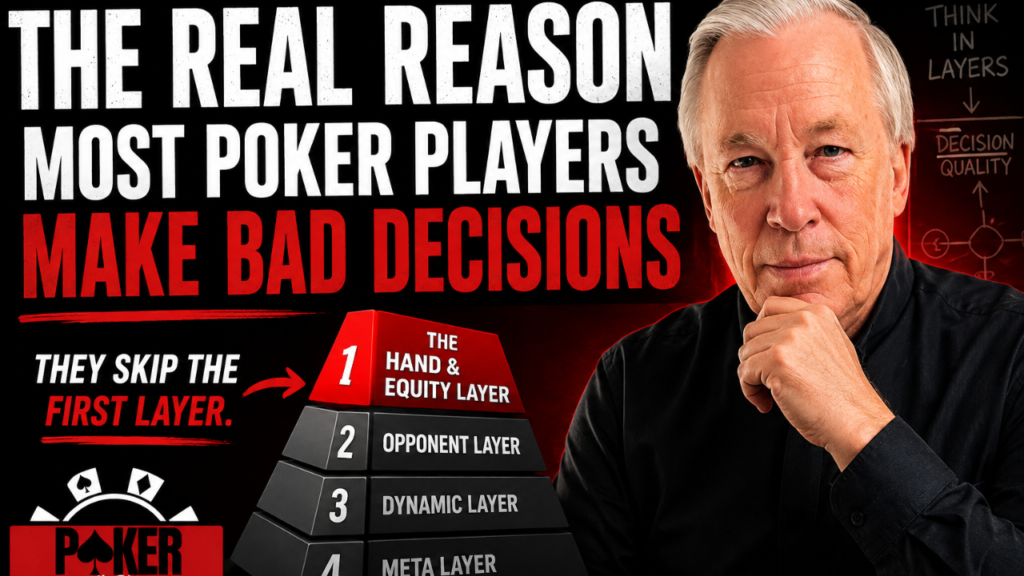
In Layer 1, we discuss how to objectively evaluate your hand’s true strength, equity, playability, and relative value on every street. You’ll discover why hand strength is relative, not absolute, why top pair is often overvalued, and why speculative hands like suited connectors are frequently undervalued.
This article gives you a practical pre-flop and post-flop checklist to stop guessing and start making accurate assessments of your hand before considering your opponents or table dynamics. Mastering Layer 1 is the essential foundation for the entire Poker Decision Tree.
ARTICLE TWO - THE OPPONENT LAYER
READING RANGES, TENDENCIES AND PLAYER TYPES
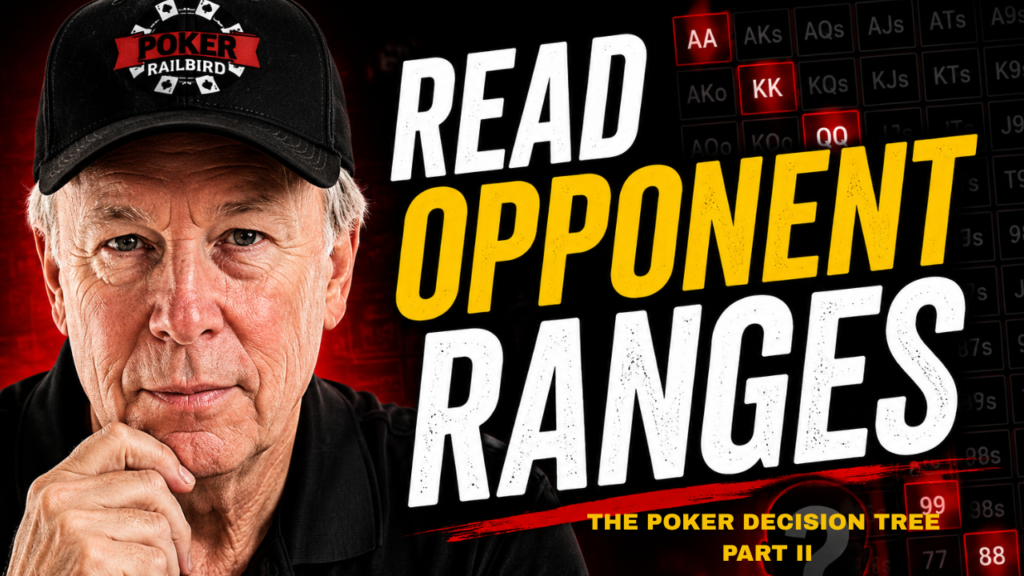
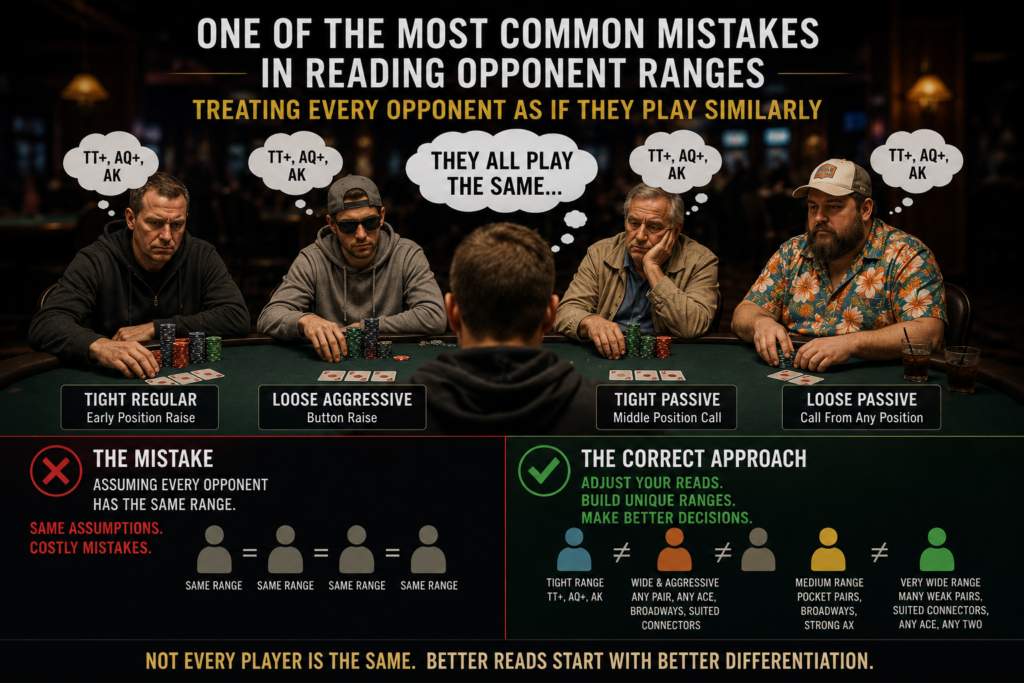
Now that you can accurately evaluate your own hand in Layer 1, it’s time to shift focus outward. This article discusses how to build and narrow realistic opponent ranges, identify player types (TAG, LAG, Rock, Calling Station), analyze bet sizing, and track tendencies.
You’ll learn how to combine your hand evaluation with opponent information to answer the critical question: “What do they likely have, and what is the best action?” Mastering reading opponent ranges is where poker stops being mostly about cards and starts becoming a game of information and exploitation. This layer dramatically increases your edge at the table.
ARTICLE THREE: THE SITUATION AND CONTEXT LAYER
POKER POSITION AND STACK SIZES
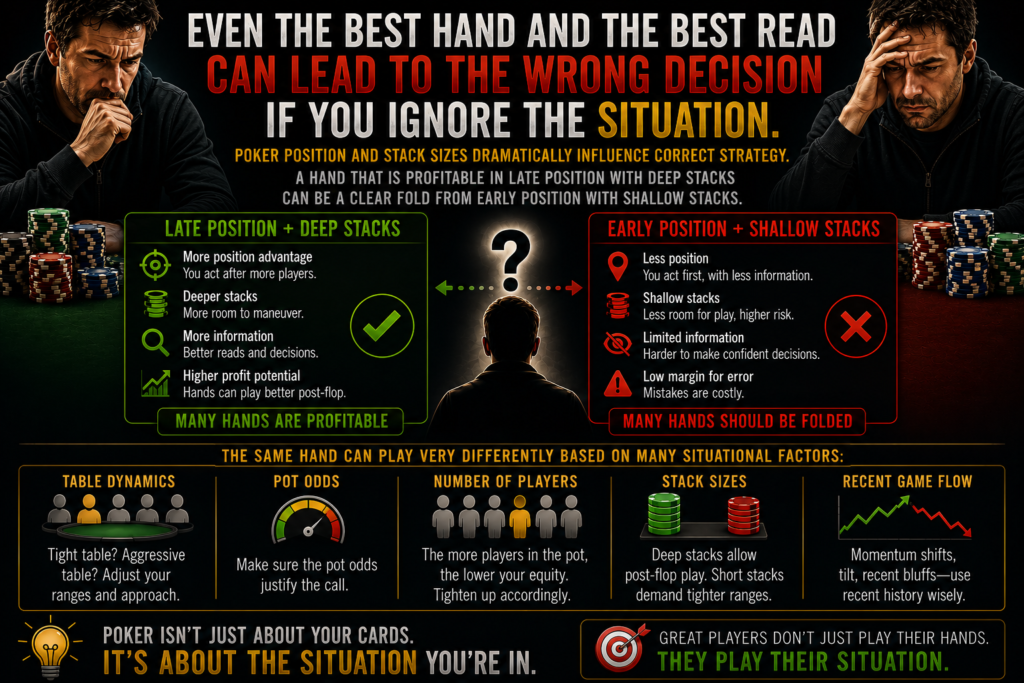
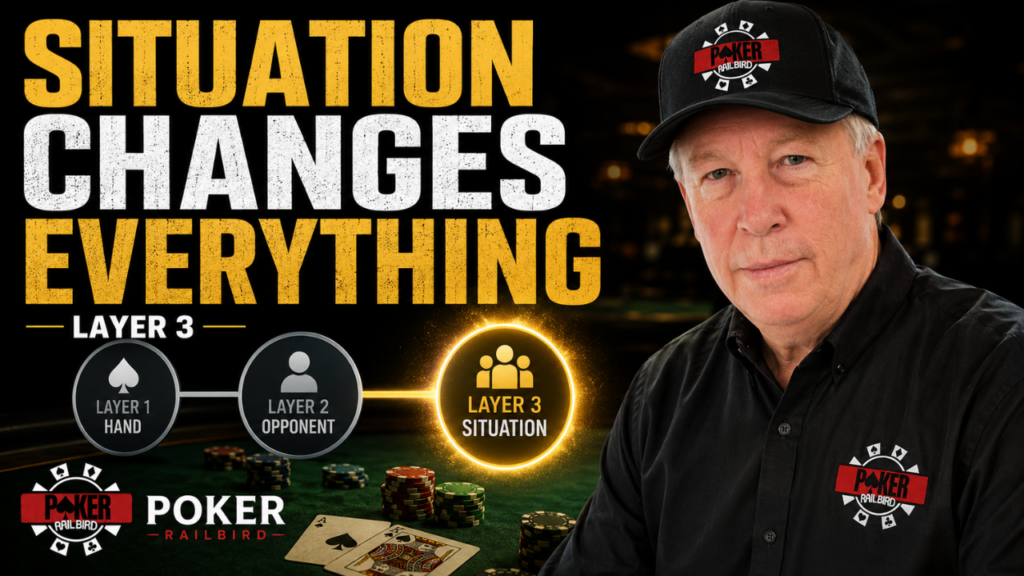
You’ve covered Layer 1 (hand evaluation) and Layer 2 (reading opponent ranges). Now it’s time for Layer 3. This layer focuses on poker position and stack sizes, plus the broader context of every hand.
This article shows you how to analyze position, stack sizes, SPR, table dynamics, pot odds, board texture, and game flow. These factors often matter more than your actual hand strength.
You’ll learn why the same hand can require completely different actions depending on the situation. You’ll also see how to re-evaluate the context on every street.
Mastering Layer 3 turns good strategic thinking into consistently profitable decisions.
ARTICLE 4: THE PERCEPTION LAYER
HOW TABLE IMAGE AND REPUTTION SHAPE YOUR DECISIONS
You have learned to evaluate your own hand (Layer 1), read your opponents’ ranges (Layer 2), and understand the situational context (Layer 3).
Now it’s time to consider something more advanced: how others perceive you and how that perception influences every decision at the table.
This is Layer 4 of the Poker Decision Tree: The Perception Layer.
Perception in poker is the cumulative set of beliefs, assumptions, and expectations that opponents form about you based on your actions, showdowns, demeanor, and history. It is not what you think you are doing. It is what others believe you are doing. That gap between reality and perception creates one of the most powerful strategic edges in the game.

ARTICLE 5 - THE YOU LAYER
HOW YOUR MINDSET AND EXECUTION DETERMINE YOUR RESULTS
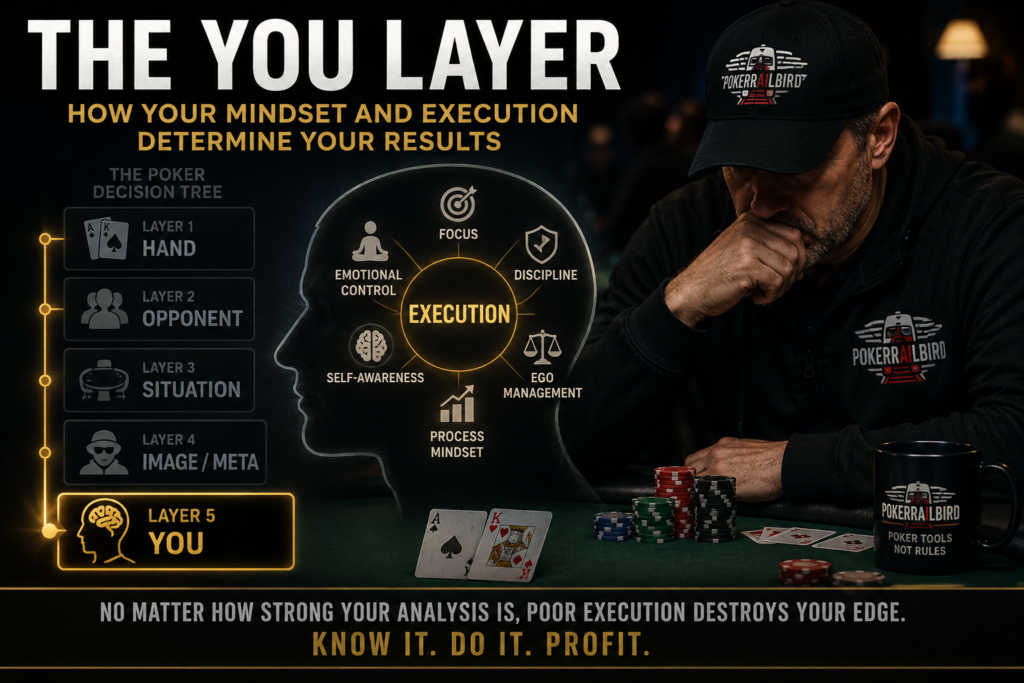
The final layer of the Poker Decision Tree is the one most players overlook: you. Every decision at the table ultimately passes through your ability to execute it. Discipline, emotional control, focus, confidence, and consistency determine whether good strategy becomes profitable poker or costly mistakes. While the first four layers define the correct decision, The You Layer determines whether you actually make it. Mastering poker execution is what transforms knowledge into long-term results.
FREQUENTLY ASKED QUESTIONS
WHAT IS A POKER DECISION TREE?
The Poker Decision Tree is a structured decision-making framework that helps players evaluate every hand by working through five sequential layers: Hand & Equity, Opponent, Situation, Perception, and You. Rather than relying on instinct or isolated concepts, it provides a repeatable process for making better poker decisions.
WHY ISN'T HAND STRENGTH ALONG ENOUGHT?
Hand strength is only one part of a poker decision. The same hand can be played very differently depending on your opponent, position, stack sizes, betting history, table dynamics, and your own table image. The Decision Tree helps you evaluate all of these factors before acting.
IS THE POKER DECISION TREE ONLY FOR EXPERIENCED PLAYERS?
No. While experienced players often recognize these concepts individually, the Decision Tree organizes them into a logical framework that beginners and advanced players alike can use to improve consistency.
SHOULD I USE THE POKER DECISION TREE IN TOURNAMENTS?
Yes. The framework applies to both cash games and tournaments, although factors such as stack sizes, payout structures, and blind pressure become more significant in tournament play.
SHOULD i STUDY THE LAYERS IN ORDER?
Yes. Each layer builds on the previous one. Starting with Hand & Equity creates the foundation for evaluating opponents, situations, perception, and your own decision-making.
HOW IS THIS DIFFERENT THAN GTO?
The Poker Decision Tree is a practical decision-making framework rather than a game theory model. It helps players organize the information available during a hand so they can make more informed decisions in real-world live poker situations.
RELATED HUB PAGES
As PokerRailbird continues to grow, each Hub Page becomes part of a larger learning system. Explore related poker concepts below to deepen your understanding of live cash game strategy.
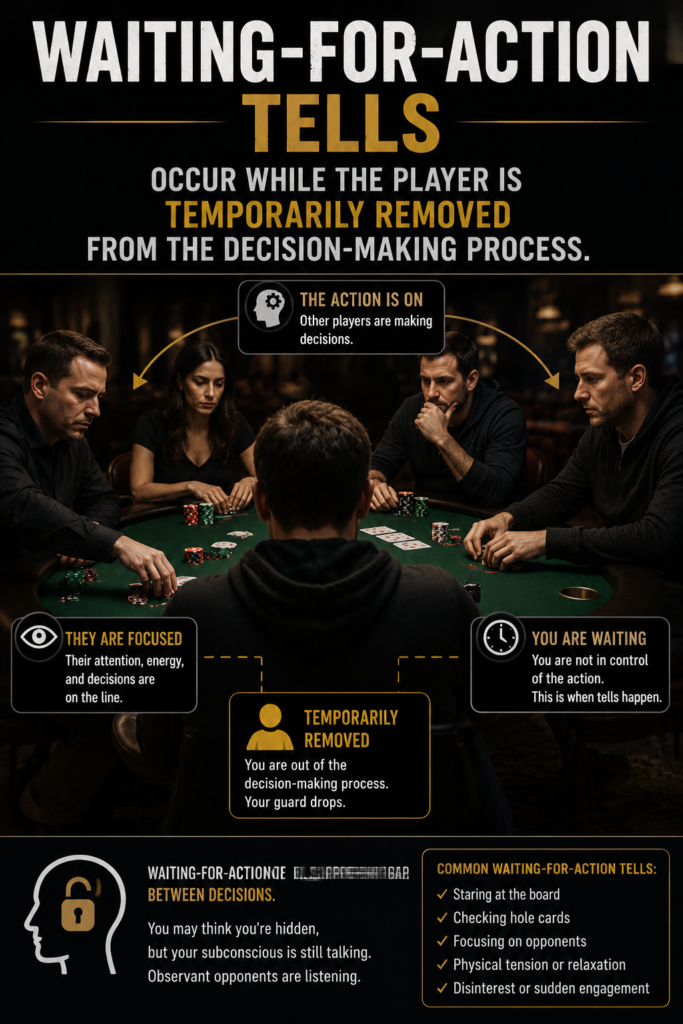
Waiting-for-action tells occur after you’ve acted but before your opponent responds, making them some of the most reliable behavioral observations in live poker. This Hub explores the most common tells of strength and weakness, explains how to interpret them within the proper context.
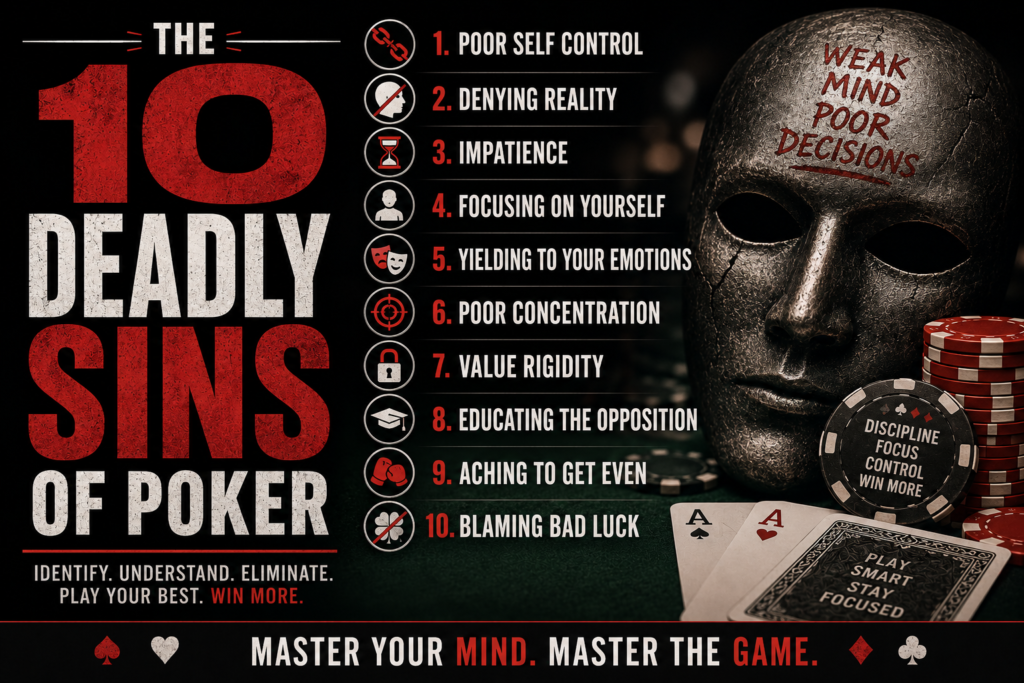
Even technically skilled players lose money when psychological mistakes begin to influence their decisions. This Hub examines the ten most common mental and emotional leaks that quietly undermine discipline, distort decision-making, and prevent players from consistently performing at their best.
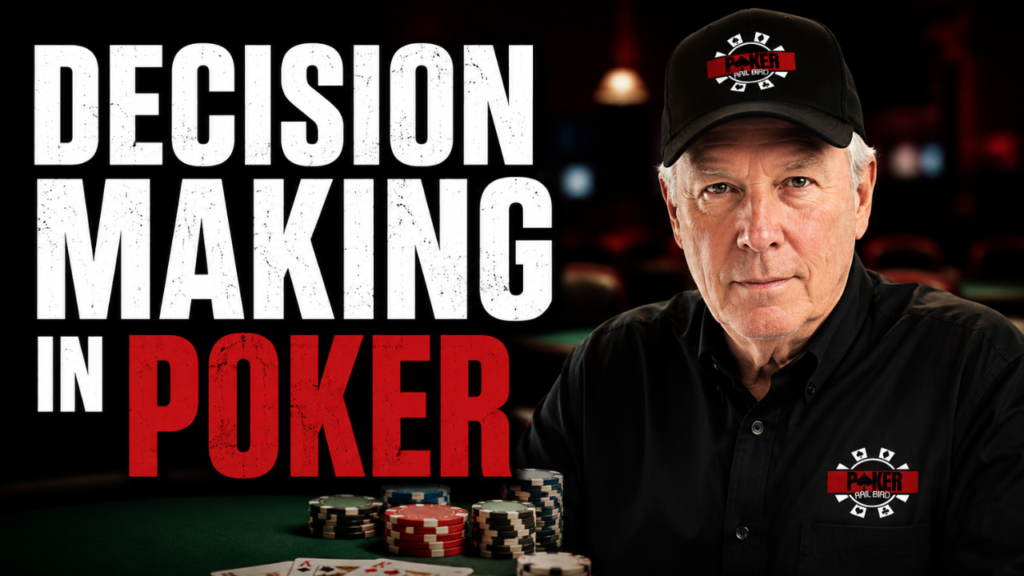
Decision-making in poker is the foundation of long-term success. Every hand presents a series of choices made with incomplete information, uncertain outcomes, and constantly changing circumstances.
CONNECT WITH US
Lorem ipsum dolor sit amet, consectetur adipiscing elit. Ut elit tellus, luctus nec ullamcorper mattis, pulvinar dapibus leo.