
DEADLY SINS OF POKER
MENTAL MISTAKES THAT COST YOU MONEY
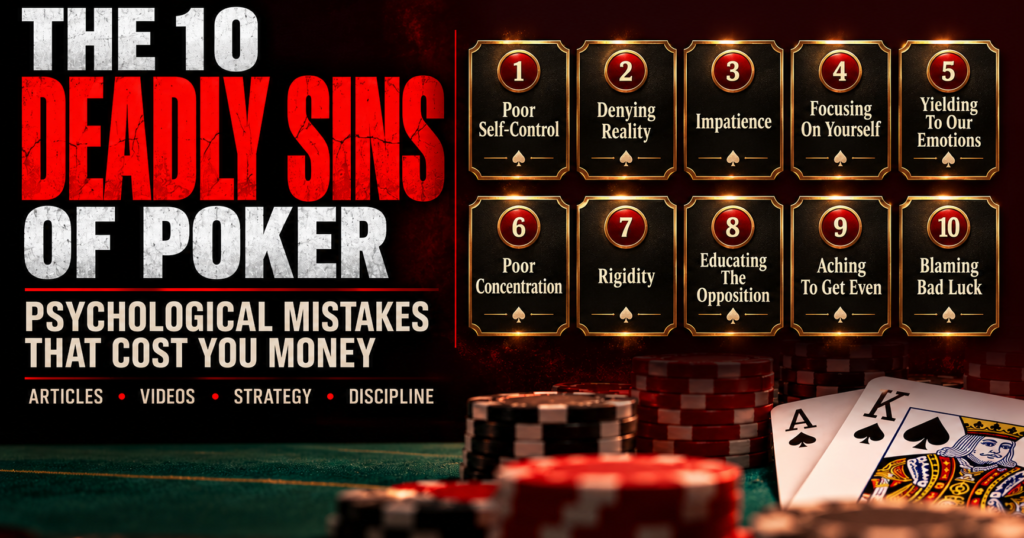
The Deadly Sins of Poker are ten psychological and behavioral mistakes that can undermine a player’s judgment, discipline, and decision-making at the poker table. These mistakes affect players at every skill level, including those who understand poker math, strategy, and sound decision-making.
Poker requires more than knowing what to do. It requires applying that knowledge under constantly changing circumstances. Impatience, emotional reactions, poor concentration, rigid thinking, and a refusal to accept reality can disrupt that process. When these behaviors influence our decisions, even a solid understanding of poker strategy may not prevent costly mistakes.
Some of these tendencies are easy to recognize, while others develop gradually and become established habits. Their consequences can extend beyond individual hands, affecting how we evaluate opponents, interpret information, manage our emotions, and respond to the inevitable challenges of live poker.
In this ten-part PokerRailbird series, we examine each of the 10 Deadly Sins of Poker, exploring the thinking and behavior behind these mistakes, how they influence decisions, and what players can do to recognize and address them. Each subject includes a detailed article and companion video that practically examines the psychological factors that affect performance in live Texas Hold’em cash games.
THE DEADLIEST SIN IN POKER: POOR SELF-CONTROL
Long before bad calls and busted bluffs, most players lose the hand in their own minds. This article explores how poor self-control leads to unnecessary risk, emotional mistakes, and long-term losses, and why mastering yourself is the first step to mastering the game.

DEADLY SIN NO. 2 - DENYING REALITY

Denial in poker is the silent saboteur. It’s what happens when we refuse to accept the truth about a hand, a player, a session, or even ourselves. We tell ourselves that bet wasn’t that bad, that we weren’t tilted, that we didn’t chase, that this game isn’t too tough. But underneath all that rationalizing is one simple fact: we know better. This is the second most destructive sin in poker because it targets the foundation of your decision-making. When you’re in denial, you can’t think clearly. You’re protecting your ego instead of protecting your stack.
DEADLY SIN NO. 3 - IMPATIENCE IN POKER
Poker impatience is one of the most common and costly mental leaks in the game. Unlike tilt, which is explosive and emotional, impatience creeps in slowly. It whispers to you during long stretches of folding trash hands. It nudges you when everyone else seems to be raking pots with garbage. And before you even realize what’s happening, you’re playing hands you shouldn’t, chasing outcomes you don’t believe in, and stepping outside the structure that once gave you an edge.
DEADLY SIN NO. 4: FOCUSING ON YOURSELF IN POKER
Poker isn’t just a battle between you and the deck, it’s a battle between you and every opponent at the table. The real edge in this game doesn’t come from memorizing charts or praying for big cards. It comes from reading situations, watching patterns, and making mathematically correct decisions based on what other players are doing. et, time after time, players fall into this deadly habit of self-focus: falling in love with a hand, choosing a “lucky” seat instead of a strategic one, or staring down their cards as if the ink might change.
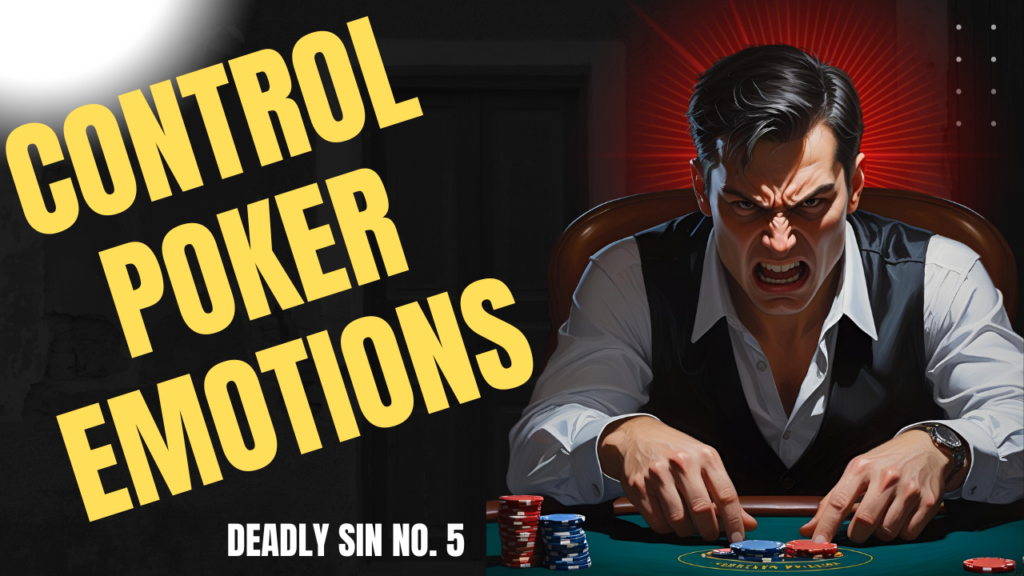
DEADLY SIN NO. 5: YIELDING TO OUR EMOTIONS
Controlling Poker Emotions is not a slogan. It’s the line between steady profit and slow, invisible bleed.
Anger, ego, and “revenge” lines distort judgment. After a bad beat, risk feels cheaper and justice feels urgent. That’s how stacks disappear. Machismo pushes shot-taking, picking fights with the toughest player at the table, or playing bigger stakes than your bankroll allows. A different face of the same leak looks polite: skipping thin value to seem “generous.”.
DEADLY SIN NO. 6: POOR CONCENTRATION IN POKER

Poor concentration in poker, more than any other flaw, undermines the game’s core: it’s not just about cards, but decisions made in a storm of distractions.
You’re not just calculating odds. You’re watching hands, reading players, listening to table talk, managing your image, and tracking your own betting patterns, all while trying to anticipate your opponents’ next moves. And yet, despite this complexity, most players treat concentration like an afterthought. They look at their phone mid-hand. They sip drinks, crack jokes, and float in and out of the game mentally.
DEADLY SIN NO. 7: RIGIDITY - THE DOUBLE-EDGED SWORD OF POKER
In poker, rigidity means falling back on autopilot, the same routines, the same bet sizes, the same plays, no matter the situation. At its worst, it makes you predictable, easy to read, and easy to exploit. But here’s the twist: rigidity isn’t always bad. In fact, it can be a strength until it turns into a trap.
Rigidity gives you structure. It keeps you grounded in your process, following the decision tree instead of being swayed by chaos or emotion.

DEADLY SIN NO. 8 - EDUCATING THE OPPOSITION

There’s a special kind of leak that doesn’t involve chips, cards, or position, only words.
It’s called educating the opposition, and it happens every time a player can’t resist showing a bluff, explaining a decision, or giving a quick lecture on pot odds after a bad beat.
At first glance, it feels harmless. Maybe even justified. After all, the table should know you made the “right” play, right?
But the moment you start explaining, you’re doing your opponents’ homework for them.
You’re teaching them how you think, how you react under stress, and how to exploit you next time.
DEADLY SIN NO. 9 - ACHING TO GET EVEN
“The dumbest words in poker are, ‘I’ve got to get even.’”
Getting even in poker is one of the most dangerous emotional traps a player can fall into. The moment those words cross your mind, you’ve already shifted from logic to emotion, from discipline to desperation. It’s not just about losing money; it’s about losing control. Every poker player, at some point, feels that burning urge to make things right, to fix a bad session, to punish the deck, or to reclaim dignity from a rough beat. But the truth is brutal: the harder you chase, the faster you sink.

DEADLY SIN NO 10: BLAMING BAD LUCK

The psychology of luck is one of the most misunderstood forces in poker. We call it fate, fortune, or variance, but most of the time, it’s a convenient lie we tell ourselves when things go wrong.
According to the dictionary, luck is “success or failure apparently brought by chance rather than through one’s own actions.”
That word apparently is doing a lot of heavy lifting.
In poker, “luck” has become the most convenient lie ever told. It’s the story we whisper to ourselves when the cards turn against us, the excuse we use to soften the blow of a bad night, and the reason we stop looking inward.