

POKER MATH
ODDS, PROBABILITIES AND STRATEGY
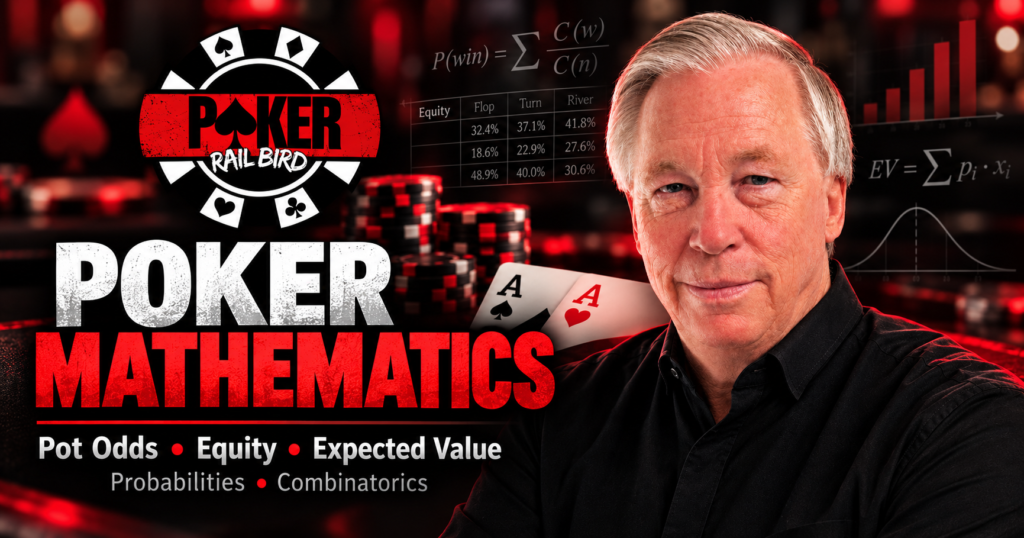
Poker mathematics is the foundation of sound poker decision-making. Every call, bet, raise, or fold involves probabilities, potential rewards, and financial consequences. Understanding these relationships allows players to evaluate their decisions through mathematical reasoning rather than intuition or guesswork.
The essential elements of poker mathematics include pot odds, hand probabilities, expected value, combinatorics, and equity. Together, these concepts help determine whether a particular decision is mathematically profitable over the long term. Mathematics establishes the numerical foundation for evaluating a poker decision. Player behavior, betting patterns, and the circumstances of each hand provide additional information that may influence the final decision.
This Poker Mathematics HUB brings together PokerRailbird’s articles, instructional videos, and practical tools covering the mathematical principles of Texas Hold’em. From calculating drawing probabilities and evaluating pot odds to understanding hand combinations and expected value, these resources examine how mathematics influences decisions in live cash games.
The objective is to develop a working understanding of the numbers behind poker decisions and how to apply that knowledge at the table.
FOUNDATIONS OF POKER MATHEMATICS
POKER MATH: THE UNDERLYING FORM OF POKER

Poker is a game of skill, psychology, and strategy, but at its core lies a fundamental truth: math drives everything. Understanding the mathematical underpinnings of the game is not an optional skill for serious players; it’s the engine that powers long-term profitability. Whether you’re calculating pot odds to justify a call, estimating hand probabilities to make better decisions, or using combinatorics to identify hand ranges, math provides the foundation for every informed decision at the table.
POT ODDS AND HAND PROBABILITIES
In poker, understanding pot odds and hand probabilities is essential for making winning decisions. It’s easy to fall into the trap of playing by feel, chasing a draw, calling a big bet, or folding a winning hand, simply because it “seems right.” Yet every time a player acts without knowing the math, they risk making a costly mistake. Winning poker is not built on guesswork or intuition alone. It’s built on understanding the mathematical foundation that drives every decision at the table.
MASTERING EXPECTED VALUE IN POKER
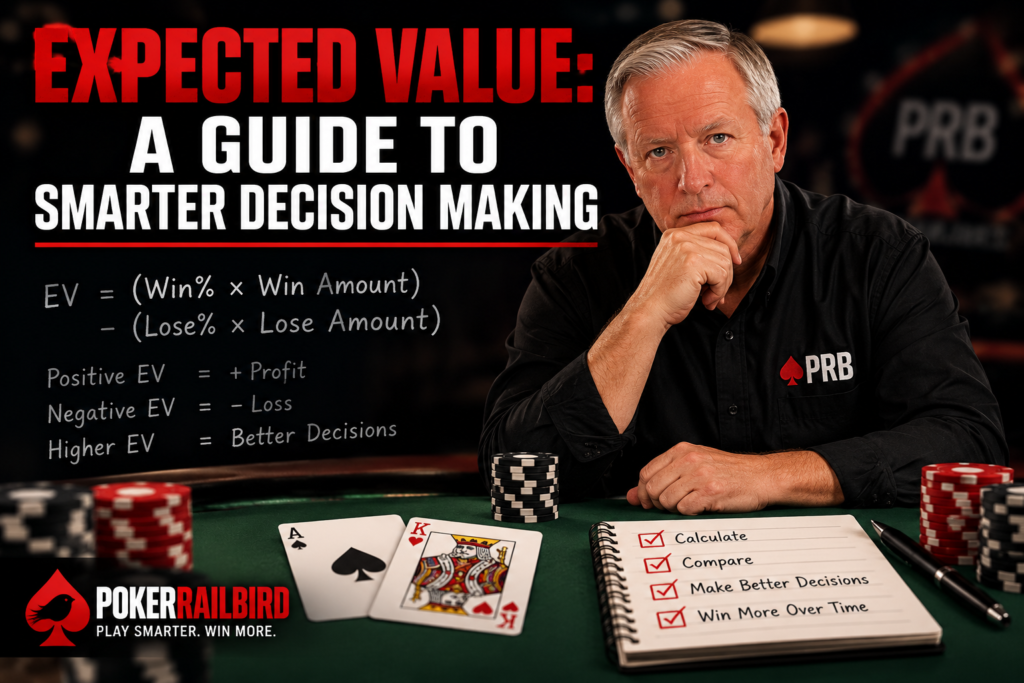
In poker, every decision you make impacts your long-term profitability. Whether it’s calling a bet, folding a hand, or going all-in, the key to consistent success lies in understanding and applying Expected Value (EV). EV is more than just a mathematical formula; it’s a tool that separates skilled players from the rest.
By calculating the potential outcomes of a play and weighing their probabilities, you can make decisions that are profitable over time, even when individual hands don’t go your way. In this article, we’ll explore the concept of Expected Value and how it shapes professional poker strategy.
PLAYING THE HAND: THE MATH STREET BY STREET
Poker decisions are not made in isolation. They evolve from street to street, and the math that governs those decisions evolves with them.
Yet most players do not think this way. They treat hands as static objects, something they have rather than something that must be continuously re-evaluated as new information enters the hand. This disconnect between how poker actually works and how it is commonly played is where many long-term leaks originate.
HAND PROBABILITIES: DRAWS AND COMBINATIONS
THE INFAMOUS ACE/KING: WHAT DOES THE MATH SAY?
Ace-King in poker is one of the most misunderstood hands in the game. It looks powerful, feels premium, and often triggers aggressive action pre-flop, but it’s not a made hand. It’s a drawing hand with great potential and equally great pitfalls.
To the inexperienced player, Ace-King can feel like an automatic green light to shove chips into the pot. And to be fair, against weaker opponents or in short-handed formats, it often holds up well. But in full-ring games, multi-way pots, and against tight ranges, its limitations become very clear.
STRAIGHT DRAWS AND SUITED CONNECTORS
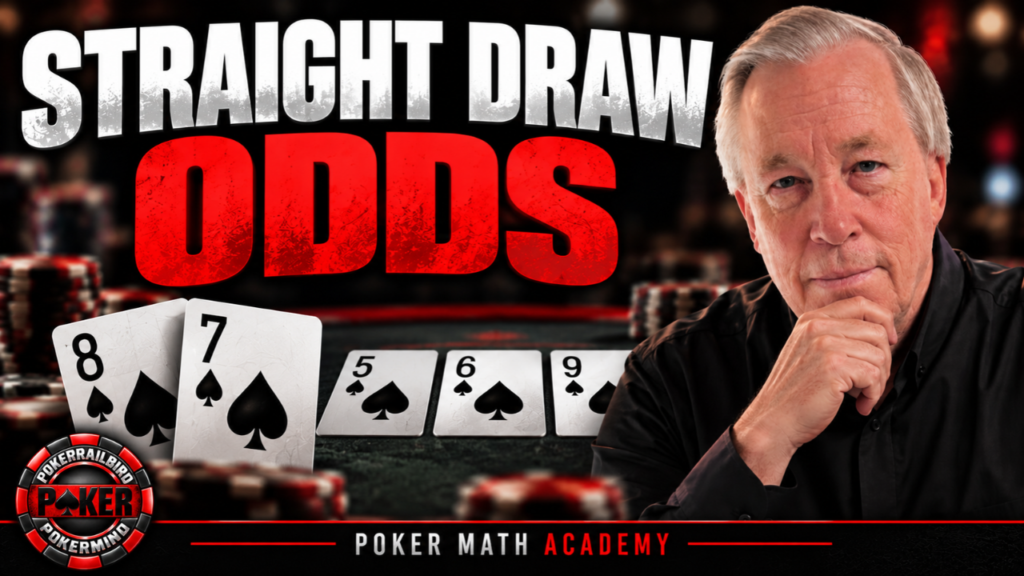
Straight draws and suited connectors are key hands that can significantly impact your game. Approximately 50% of all hands you are dealt will contain some form of straight draw, and about 4%, or 1 in 28, will be suited connectors of some kind. Understanding the four major types of straight draws can give you a strategic edge at the table. These types include Connectors, One-Gap Connectors, Two-Gap Connectors, and Three-Gap Connectors. Each of these categories offers unique potential for building strong hands.
GHOST OUTS IN POKER

Ghosts Outs In Poker: what you’re about to read is not found in most poker books, training videos, or coaching sessions. In fact, we’ve never seen this concept formally broken down anywhere. That doesn’t mean it’s wrong; it means most players are still making costly decisions without it.
This is not a replacement for traditional out-counting or pot odds math. It’s an enhancement. A filter. A layer of clarity over assumptions that many players take for granted. We’re calling them ghost outs, and they can haunt your decision-making if you’re not aware of them.
BLOCKERS: WHAT THEY REALLY ARE!
Poker blockers are one of the most powerful yet misunderstood tools in strategic play. Most players hear the term, nod as if they understand it, and then apply it incorrectly at the table. The result is predictable: mistimed bluffs, bad calls, and assumptions that simply do not match the math.
A blocker is any card you hold that changes the range of hands your opponents can have. Sometimes the effect is dramatic, removing specific hands completely. Other times, the effect is subtle, only shifting the probability of certain holdings. Knowing the difference determines whether you win a pot or donate your stack.

BETTING MATHEMATICS AND EXPECTED RETURNS
FOLD EQUITY AND IMPLIIED ODDS
Success depends on more than just the cards you hold. Strategic decision-making, supported by math, can significantly impact your results. Every serious poker player must grasp two key concepts: fold equity and implied odds. Mastering these concepts can give you a competitive edge, helping you maximize winnings and minimize losses.
Fold equity is your potential to make an opponent fold when you bet or raise. This concept becomes crucial, especially when your cards aren’t the strongest. Forcing your opponent to fold allows you to win pots without revealing your hand. Knowing when and how to use fold equity can dramatically improve your game, particularly against cautious or tight opponents.
REVERSE IMPLIED ODDS: WHAT YOU NEED TO KNOW
Reverse implied odds describe the additional money you may lose on later streets when your hand improves but still is not the best hand.
They are essentially the opposite side of implied odds.
Implied odds consider the additional money you may win on later streets if you improve your hand. Reverse implied odds consider the additional money you may lose if you improve but remain behind.
STACK TO POT RATIO IN POKER: WHY IT MATTERS
Stack-to-Pot Ratio describes a poker hand’s financial structure by comparing the money remaining in the effective stack to the size of the pot.
Knowing only one of those numbers can be misleading.
A $500 pot may sound large, but the decisions that remain differ greatly when the effective stack is $400 versus $4,000. In both situations, the pot is the same size. What changes is the amount of money still available to be wagered relative to that pot.
POST FLOP BET SIZING IN LIVE CASH GAMES
In live cash games, many players default to familiar bet sizes without considering what those sizes actually do. The amount wagered is treated as a routine action rather than a mathematical input. As a result, bets are made that allow opponents to continue correctly, realize equity cheaply, or reach future streets without pressure.
A common pattern is this: a player bets because they believe they are ahead, not because the bet forces incorrect decisions. Being ahead, by itself, has no mathematical value. Value is created only when opponents are put in positions where calling, folding, or raising produces inferior outcomes for them.

APPLYING POKER MATH IN LIVE CASH GAME
LOOSE POKER GAMES: HOW THE MATH CHANGES
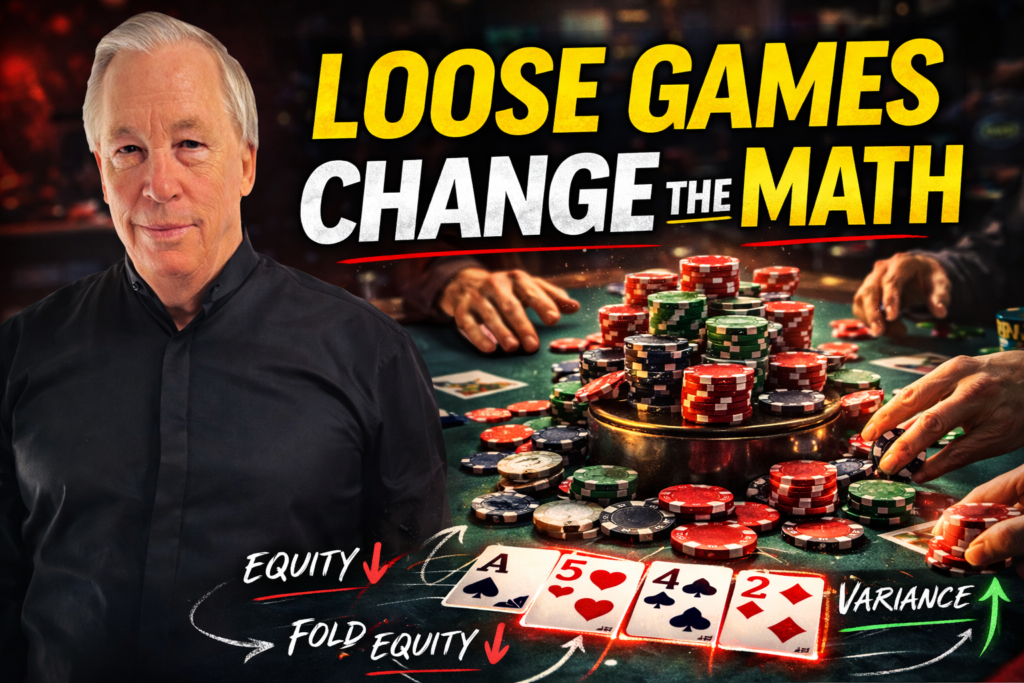
Loose poker games frustrate strong players more than almost any other environment in live cash play. When four or five players routinely see every flop, raises are called in multiple spots, and pots swell before the turn, it can feel as though discipline is being punished rather than rewarded. Hands that “should” hold up are cracked more often, and sessions begin to feel volatile and unpredictable.
The natural response for many players is to loosen up. If the table is playing wide ranges, the instinct is to widen your own range and try to outplay the chaos. That reaction feels logical on the surface. In reality, it is often precisely backwards.
THE HIDDEN COST OF POKER VARIANCE
In many live cash games, particularly those in which five or six players routinely see the flop, the structured dynamics that typically govern optimal poker strategy begin to break down. Raises frequently fail to thin the field, marginal hands continue without hesitation, and most pots develop into multiway situations that often reach showdown.
In these environments, the correct strategic adjustments are well understood. Hand selection tightens, positional awareness becomes critical, and decisions focus on pot odds, equity calculations, and probability rather than impulse or participation. Marginal spots are avoided in favor of situations with a sound mathematical foundation.

THE LITTLE POKER MISTAKES: THAT COST YOU THE MOST
Costly poker mistakes are easy to recognize when they cost you hundreds of dollars in a single hand. A terrible river call, an unnecessary all-in, or a poorly timed bluff can leave an immediate and painful reminder that something went wrong. Those are the mistakes players remember, discuss, and often review after the session is over.
But not every expensive poker mistake comes with a dramatic pot or an obvious moment of regret. Some cost $20. Others cost $40 or $50. They may be questionable pre-flop calls, unnecessary bets, speculative post-flop calls, automatic straddles, or other seemingly minor decisions that barely register before the next hand begins.
POKER MATH ACADEMY: THE COMPLETE SERIES
The Poker Math Academy is a nine-part video series examining the mathematics behind Texas Hold’em. Each lesson addresses specific mathematical concepts, from starting-hand probabilities and combinations to drawing odds and their application in live cash games.
Watch the complete series in sequence to develop a broader understanding of the numbers behind poker decisions.
POKER MATH CALCULATORS
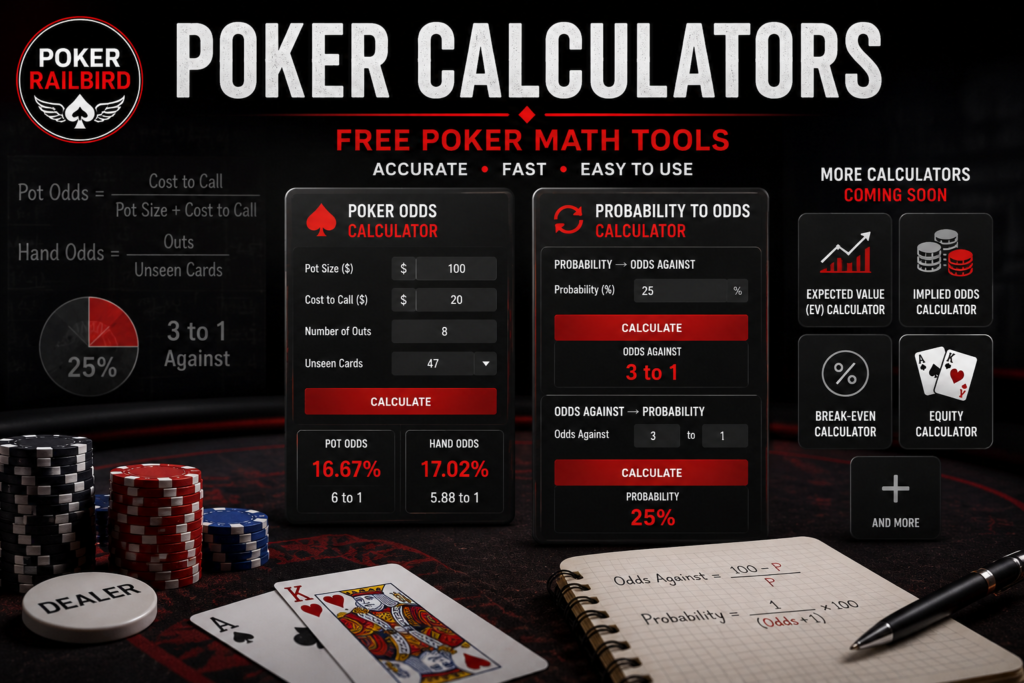
Poker mathematics becomes more useful when you can apply the numbers to actual decisions. PokerRailbird’s calculators allow you to work through mathematical situations, compare pot odds with hand probabilities, and evaluate the relationships between the pot, the cost of calling, and your chances of improving.
Use these tools alongside the articles and videos in this HUB to practice the calculations involved in live cash-game decisions.