
THE GTO MYTH
WHY SOLVERS FAIL IN LIVE GAMES
Over the past few years, as GTO myths have spread through live poker rooms, we’ve watched a growing trend: more and more players are attempting to imitate solver-driven strategies without understanding the conditions that make those strategies work. The result has been predictable and costly. We’ve seen players force balanced ranges in multiway pots, fire solver-approved bluffs into calling stations, and follow charts that collapse the moment a human opponent makes an unexpected move.
A REAL EXAMPLE OF GTO FAILURE IN LIVE PLAY
One moment stands out clearly. At the Beau Rivage, a player arrived with the full GTO bravado—balanced frequencies, solver sizing, relentless c-bets, and an obvious commitment to “perfect play.” Within a few hours, he was down two thousand dollars. Not because the math betrayed him, but because the environment never matched the model. The table was loose, emotional, unpredictable, and deeply unbalanced. He tried to impose equilibrium on people who were playing anything but equilibrium poker.
Scenes like this are not rare. We have watched countless players treat GTO as if it were a complete strategy, a universal truth, or the final evolution of poker. Promoters and influencers reinforce this belief by presenting GTO as the end-all solution to the game, ignoring the nuance, context, and human elements that solvers cannot capture. In the middle of this surge in solver enthusiasm, a set of persistent GTO myths has taken hold, creating more confusion than clarity and more losses than learning.
This article was written to address that misunderstanding directly. GTO is valuable. It is elegant. It is mathematically sound. But it was never designed to replace human judgment, live reads, pattern recognition, or adaptive strategy. Its value lies in its proper use, not its blind application.
What follows is a clear, honest examination of where GTO works, where it fails, and how real players—those sitting in live cash games with imperfect opponents—can use theory as a tool rather than a rule. This is not a rejection of GTO. It is a clarification of its role, and a reinforcement of the truth that poker has always been, and will always be, a human game.
THE GTO ILLUSION
GTO myths have shaped modern poker thinking more than any other idea in the last decade. For many players, Game Theory Optimal strategy seemed to promise a perfect solution to the game. It appeared scientific, balanced, and unbeatable. Solvers created the feeling that if you followed the charts and executed the “correct” frequencies, you could not be exploited.
However, this belief created a powerful illusion.
When players study solvers, they see a world of perfect balance. Every action is calculated. Every bluff is weighted and very call is justified by math. It feels clean and controlled. It feels like truth. As a result, many players walk into live cardrooms confident that GTO is the answer’s answer — the ultimate blueprint.
But that version of poker doesn’t exist at real tables.
Live poker is not played by solvers. It is played by humans. And humans make emotional, inconsistent, and often irrational decisions that break the assumptions behind many common GTO Myths. Some players fold hands they should call. Others call in spots where folding is mandatory. Many raise for reasons that have nothing to do with balance, math, or equilibrium. Momentum shifts influence behavior. Frustration pushes marginal hands into the pot. Boredom turns weak holdings into speculative calls. Personality clashes override range logic.
Live poker is shaped by reactions, emotions, and human tendencies — elements no solver can model and no equilibrium can predict.
GTO - THE PERFECT STRATEGY CRACKS
Because of this, the entire foundation of a solver-based strategy begins to crack.
In theory, GTO assumes that both players make optimal decisions. In practice, your opponents rarely do. As soon as a human deviates — even slightly — the expected value of strict GTO lines shifts. The equilibrium collapses. And the “unexploitable” strategy becomes exploitable in the real world.
This is the heart of the GTO illusion:
a perfect strategy cannot survive in an imperfect environment.
.
Real poker is fluid, dynamic, and deeply human. It rewards adaptation, not adherence. It demands pattern recognition, not theoretical balance. And it punishes players who rely on solver-approved lines without understanding the motives, tendencies, and emotional states of the people sitting across from them.
To understand why GTO fails in live games, we must first understand what the GTO movement got right — and why that success created a belief system that doesn’t hold up when the chips hit the felt.
.
WHAT THE GTO MOVEMENT GOT RIGHT
Before we examine why GTO falls apart in real live poker, it’s important to understand what the GTO movement actually contributed. These ideas did not rise to popularity by accident. Solvers changed the way players think about the game, and many of those changes were positive. The problem is not that GTO is wrong — the problem is that players often apply it in the wrong environment, largely because GTO myths have shaped how many players interpret solver outputs.
GTO brought discipline to the modern game. It forced players to think in terms of ranges instead of individual hands. It emphasized balanced decision-making, mathematical precision, and consistent strategy. For many players, this was a major improvement over the old-school mindset of guessing, gut feelings, and emotional decision-making.
Solvers also clarified the structure of optimal heads-up play. They showed the value of balanced bluffs, calculated aggression, and proper bet sizing. Concepts like minimum defense frequency, range advantage, and equity distribution became common knowledge. These ideas helped players stop relying solely on intuition and start thinking more strategically — but they also created room for several GTO myths to form when players tried to apply heads-up concepts to full-ring live games.
In addition, GTO provided a framework for understanding the limits of human exploitation. It showed that if you play in a highly predictable or overly passive way, you become easy to target. Solvers demonstrated the importance of not folding too much, not calling too much, and avoiding extreme patterns that strong opponents can exploit.
These contributions made poker more structured and more strategic. They raised the overall level of play. They gave players a language to describe complex ideas. And they helped eliminate many of the massive leaks that were once common in low- and mid-stakes games. But as useful as these contributions are, many players eventually misinterpreted them, giving rise to several persistent GTO myths that distort what solvers were actually designed to teach.
GTO NEEDS A CONTROLLED ENVIRONMENT
However, there is a critical point that many players missed:
GTO’s strengths exist primarily in controlled environments — not chaotic ones.
The more the environment deviates from equilibrium, the weaker strict GTO becomes. Live poker is full of those deviations. Players do not think in balanced ranges. They do not bluff at correct frequencies. They do not fold when the solver expects them to. And they are rarely defending the “minimum defense frequency” against your bets.
.
This is why the strengths of GTO must be understood in context.
The theory is valuable.
The math is sound.
And the discipline it teaches is real.
But the application must match the reality of the opponent.
When the environment is stable and predictable, solvers shine.
When the environment is chaotic and the players are human, solvers fail.
Understanding this difference is the key to seeing where GTO goes right… and where it goes terribly wrong.
THE CORE PROBLEM
GTO ASSUMES PERFECT OPPONENTS
One of the most damaging GTO myths is the belief that your opponent plays perfectly. Everything a solver outputs — whether it’s a bluff, call, or raise frequency — rests on the assumption that both players operate with flawless, machine-like precision. This entire structure depends on equilibrium, where each player responds correctly to the other’s decisions.
However, the moment theory meets reality, that assumption collapses.
Live opponents do not behave like solvers. They don’t use balanced ranges, and they don’t make decisions because a model assigns them a percentage. People act on emotion, impulse, frustration, curiosity, ego, or fear. None of these variables exist inside solver logic.
This one fact breaks the foundation of GTO the moment the cards enter play.
A solver’s model assumes opponents:
- Avoid calling simply because they’re bored.
- Refrain from raising purely out of ego or frustration.
- Make folds based on range logic, not fear or discomfort.
- Do not chase marginal hands out of tilt.
- Interpret board texture and combos correctly every time.
- Avoid sticking to personal rules like “top pair can’t be folded.”
- Make decisions independently of whatever happened the last hand.
- Do not level themselves into disastrous plays.
- Recognize their draws and understand their equity.
- Maintain emotional stability without fatigue, irritation, or intimidation influencing decisions.
Real players do all of those things. Every session. Every orbit. Every table.
Because of this, the moment an opponent drifts from optimal play — which is constant in live games — solver-based advice falls out of alignment with reality.
HERE'S WHY THAT MATTERS
- When someone folds too frequently, solver bluff frequencies are set too low. In that environment, increased bluffing becomes the profitable adjustment.
- If a player calls far too often, the opposite is true. Bluffs lose value and strong hands should be value-bet relentlessly.
- Aggressive players who raise excessively punish solver-style calls, making a tighter calling range mandatory.
- Against opponents who rarely bluff in big pots, solver-recommended hero calls become expensive errors, and disciplined folds outperform theoretical calls.
This leads to a simple but critical truth:
Any strategy built on perfect responses collapses when it encounters imperfect behavior.
Solvers expect rational, disciplined decision-making. Live poker provides the opposite.
Human play is fluid and unpredictable. Actions shift based on emotion, momentum, fatigue, ego, or fear. A player running hot behaves differently than one who just took a bad beat. The live environment is unstable, and because of that instability, equilibrium-based strategies lose their footing.
GTO does not fail because the math is incorrect.
It fails because live opponents do not match the model the math depends on.
.
THE TEN FUNDAMENTAL GTO ASSUMPTIONS
THAT FAIL IN REAL GAMES
To understand why strict solver-based play struggles in live environments, we must look at the hidden assumptions behind GTO strategy. Solvers do not operate in the real world; they exist in controlled simulations with fixed rules and perfect behavior. Many of the most common GTO myths come from the belief that these assumptions carry over to live games. They don’t. And it’s precisely these GTO myths that cause players to make decisions based on theory instead of reality.
Below are the ten core assumptions that collapse the moment theory meets human opponents.
THE ASSUMPTION OF BALANCED OPPONENTS
BLUFFING AND VALUE RATIOS REMAIN CONSTANT
THE "NEVER LIMP" RULE APPLIES UNIVERSALLY
GTO expects opponents to use balanced ranges at every decision point. However, most live players lean heavily in one direction. Some are extreme calling stations. Others fold too often. Many raise only with obvious strength. Because live players rarely maintain anything close to balance, equilibrium strategies lose accuracy immediately.
Solvers rely on precise bluff-to-value ratios. In real games, those ratios fall apart. Players bluff too little, bluff too often, or bluff only in emotionally charged moments. When opponents don’t bluff at expected frequencies, entire solver-approved ranges must shift.
GTO outputs generally recommend raising or folding, not limping. But full-ring live games often involve five or six players seeing a flop. In these multiway environments, limping becomes a strategically valid choice with certain hands. The assumption that limping is always incorrect simply doesn’t hold up at most casinos.
PLAYERS UNDERSTAND THEIR OWN RANGES
CONTINUATION BETTING WORKS THE SAME WAY IN MULTIWAY POTS
UTG OPENING RANGES TRANSLATE TO LIVE GAME
Solvers assume a clear understanding of personal ranges. Live players often cannot identify their own value hands, bluffing hands, or middling hands. Many mix hands unintentionally. Some misread their holdings entirely. Without range clarity, solver-based reasoning breaks down.
GTO outputs are overwhelmingly designed around heads-up situations. Yet most live pots are multiway. Continuation bets that are correct heads-up become losing plays when three or more players enter the pot. When more players call preflop than GTO anticipates, the theory quickly loses traction.
Solvers often recommend opening almost all pocket pairs from early position. That approach fails when four callers enter the pot with speculative holdings. These opponents create reverse implied odds that solvers do not model effectively. This is why hands like 22–66 lose money UTG in real games.
MINIMUM DEFENSE FREQUENCY APPLIES UNIVERSALLY
STACK DEPTH STAYS AROUND 100 BIG BLINDS
Theoretical models assume players defend the correct amount to prevent automatic profit for an aggressor. In real games, players fold far more often than MDF requires. Because of that tendency, bluffing frequencies must change dramatically. Relying on solver frequencies without accounting for excessive folding leads to missed EV.
Most solver outputs assume 100BB stacks. Live games rarely follow that structure. Stacks frequently range from 150BB to well over 300BB. Deep-stack dynamics create unique leverage situations that solvers treat very differently in theory than humans do in practice.
COLD CALLING RANGES ARE DISCIPLINED
EMOTIONAL STABILITY IS CONSTANT
Solvers model cold calls with strict discipline. Live players often call with broadway junk, offsuit trash, dominated aces, or any suited combination. These loose preflop calls distort ranges so dramatically that solver recommendations can become inaccurate within a single action.
Perhaps the most unrealistic assumption is emotional stability. Solvers never tilt, get tired, feel pressured, or react to loss. Real players do all of that. Decisions influenced by anger, fear, insecurity, ego, or momentum change expected outcomes in ways solvers cannot predict
These ten assumptions form the backbone of solver equilibrium. Once any of them break — and all of them break constantly in live games — GTO strategy becomes misaligned with reality. Live poker requires fluid adjustments, not rigid adherence.
The deeper we go into real-table dynamics, the more the flaws become visible. The next section examines those flaws through practical, unavoidable examples every cash game player has seen.
CONTINUATION BETTING IN MULTIWAY POTS
Continuation betting is one of the clearest examples of how solver-based reasoning collapses in live games. In theory, the solver expects a raise-call dynamic where the preflop raiser follows through with a bet on many boards. These continuation bets (c-bets) work well in a controlled heads-up environment because the solver assumes disciplined ranges, balanced calls, and predictable responses.
However, live poker rarely presents that environment.
Most live games see multiple players calling preflop. Limping chains, wide cold-calls, and speculative hands enter the pot far more often than solver simulations predict. When three, four, or five players see the flop, the core assumptions behind solver c-bet frequencies break immediately — and this is where many GTO myths begin to mislead players into auto-betting boards that no longer favor their range.
This is where many players lose money without realizing why.
.
MOST LIVE GAMES SEE MULTIPLE PLAYERS CALLING PREFLOP!
THE PROBLEM: GTO OVERESTIMATES FOLD EQUITY IN LIVE GAMES
Solvers assume the preflop raiser will often have fold equity on the flop. Live players, especially at low to mid stakes, tend to call far more frequently. Most players want to see turns and rivers. They want to “peel one.” They want to see if their hand improves.
Because of this, a solver-approved c-bet loses value the moment the pot becomes multiway.
A SIMPLE EXAMPLE: ACE/QUEEN ON A DRY BOARD
Imagine raising with A♠Q♠ in a full-ring game.
In theory, a board like K♦ 7♣ 3♣ is a reasonable c-bet candidate. A solver sees:
- Range advantage for the preflop raiser
- Two overcards
- A hand with future equity
- Players defending correctly
But in live play, the reality is different:
- Two callers entered preflop with hands the solver folds
- One of them often has a king
- The other may have any two suited cards
- Backdoor draws get peeled
- Bottom pair gets called “to see one more”
- Gutshots stay in far more than expected
Your fold equity, which drives the profitability of the c-bet, drops dramatically.
Because of this, checking becomes superior in many live spots.
THE HIDDEN COST OF AUTO C-BETTING
LIVE PLAYERS DON’T FOLD: THEY CHASE
When players auto-c-bet simply because GTO suggests it, they create three major problems:
- They burn money by betting into made hands and sticky players.
- They build larger pots with marginal equity, putting themselves in difficult turn and river spots.
- They become predictable, making their ranges easy to exploit.
GTO expects opponents to fold the bottom of their range at certain frequencies. Live players don’t fold the bottom — they chase it.
The Denial Factor
Another issue is that solver c-bets often deny equity against balanced calling ranges. But live players call with ranges so wide that many “denial” bets lose value. Denying equity against a solver’s range works. Denying equity against 8♣5♣, Q♦8♦, K♥2♥, and A♣4♣ is far less profitable.
The Practical Takeaway
C-betting in multiway pots is one of the most misapplied solver ideas in live poker. The solver sees a narrow, disciplined calling range. Live players bring hands that the solver never includes — and call far too often for the solver’s output to hold up.
Because of this, disciplined checking becomes a powerful exploit.
And as we’ll see in the next case study, this misalignment between solver assumptions and live dynamics appears again in early-position raising ranges.
Early-position ranges offer another powerful example of how solver thinking falls apart in full-ring games. In theory, solvers recommend opening a wide range of pocket pairs from under the gun. The model sees these hands as profitable because it assumes tight calling ranges, disciplined 3-betting, and heads-up or short-handed play.
However, these assumptions rarely hold true in live environments.
The Disconnect: GTO Assumes Fewer Callers
A solver expects:
- One caller
- Or a 3-bet from a balanced range
- Or folds from players with marginal holdings
Live games consistently present the opposite:
- Multiple callers with speculative hands
- Loose cold-calls from players behind
- Minimal 3-betting
- Calling ranges that include hands solvers never consider
This mismatch turns many theoretical UTG opens into losing plays.
Pocket Twos Example — A Perfect Illustration
Consider opening 2♦2♣ from under the gun in a nine-handed cash game.
The solver views this as a small but positive EV open in many lineups.
In live play, the outcome changes rapidly:
- The UTG raise is called by players who would fold in solver simulations
- Mid-position callers enter with hands like Q♣J♣, A♦5♦, 9♠8♠, or 7♣6♣
- The button may call purely for position
- The blinds often complete with even wider ranges
Suddenly you are playing a five-way pot with the weakest possible made hand.
The situation worsens because pocket twos rarely improve.
If the flop misses you — which happens 88% of the time — you are left with:
- No overpair potential
- Minimal bluffing opportunities
- Zero ability to handle raised action
- Reverse implied odds against larger pocket pairs
- A pot that was inflated preflop without a plan for postflop play
The solver never intended pocket twos to operate in this environment.
THE REVERSE IMPLIED ODDS TRAP
RAISING VS LIMPLING-WHY GTO MISFIRES HERE
One of the biggest leaks comes from players following solver-approved UTG ranges without recognizing how live players respond. When speculative callers enter the pot with suited connectors, suited aces, or gapped hands, they create dangerous reverse implied odds for small pairs.
You win small pots when you’re ahead.
You lose large pots when you’re behind.
This is the exact reverse of profitable poker.
Strict GTO discourages limping.
Yet live games often include five or more players seeing the flop regardless of preflop action. In these spots, a limp-behind scenario might lose less than a raise, and a fold might outperform both.
The idea that “pocket pairs should always open UTG” is rooted in solver outputs that do not match the calling tendencies of real opponents.
Why This Matters for Your Entire Strategy
Players who follow solver-based UTG charts assume the environment will behave like the solver models. When it doesn’t, their opening ranges become miscalibrated, their postflop strategies suffer, and their overall win rate drops.
This is yet another area where GTO logic becomes misaligned with live dynamics — and where exploitative adjustments outperform theoretical ranges.
In the next section, we’ll examine another major problem: how solver bluffing frequencies collapse against call-heavy live opponents.
THE BLUFFING PROBLEM
The next major flaw in solver-based strategy appears in bluffing frequencies. Solvers require specific bluff-to-value ratios to remain balanced. These ratios are mathematically sound inside simulations, where both players defend at equilibrium. However, strict adherence to solver bluffing frequencies becomes a losing strategy when opponents call far more often than the solver expects.
This is one of the most common ways GTO myths fail in live games.
Why Solvers Bluff So Often
In theory, bluffing at precise frequencies prevents an opponent from folding too much. The solver mixes strong hands with bluffs to create a balanced, unpredictable range. This balance ensures that the opponent cannot exploit any action you take.
But solver bluffing frequencies depend entirely on the assumption that the opponent:
- Folds at the correct rate
- Understands their defense ranges
- Can recognize over-bluffing
- Adjusts strategically to punish imbalance
Live players rarely do any of these things.
The Reality: Live Opponents Call Too Much
Most live players call far more often than solver models assume. They call because they’re curious, stubborn, optimistic, tilted, or simply unwilling to believe you. Many call because folding feels emotionally uncomfortable. Others call because they “don’t believe the story,” regardless of how credible it is.
In this environment, solver bluff frequencies burn money.
BLUFFING THE DRY BOARD
Imagine firing a solver-approved c-bet on a dry board like K♣ 6♦ 3♠ after raising preflop with a standard opening range.
In theory, the solver mixes in bluffs to keep its betting range balanced.
But in live play, several factors work against you:
- K-x hands appear in calling ranges far more frequently than solver models predict
- Middle pairs and weak pairs peel “just to see one”
- Backdoor draws get called more often than expected
- Float calls occur with wide ranges, even out of position
The balance that a solver protects becomes irrelevant when opponents refuse to fold at the expected frequency — a perfect example of how GTO myths convince players that solver bluffing frequencies will work equally well in multiway, loose-passive live environments.
Turn and River Bluffs Fail for the Same Reason
Further aggression becomes even less effective in live environments. On later streets, solvers rely on:
- A willingness to fold medium-strength hands
- Correct hero-call frequencies
- Balanced defending ranges
However, many live opponents:
- Hero-call far too often
- View top pair as an automatic call
- Don’t fold pairs they “paid to see”
- Interpret aggression as weakness
- Call because they want to avoid being bluffed
These tendencies destroy the expected value of solver-approved bluffs.
The Practical Adjustment
When opponents call too often, the correct strategy is simple:
- Value-bet more often
- Bluff much less, if at all
- Widen your value range
- Shrink your bluffing range
This is the opposite of what solvers recommend, and it highlights how quickly GTO-based strategies break when opponents deviate from theoretical defense patterns.
The Bottom Line
Bluffing frequencies that protect you in a solver simulation often cost money in live games. The imbalance is not the solver’s fault — it’s the environment’s. When opponents do not fold at equilibrium, solver bluffs become unnecessary risks that chip away at long-term profit.
In the next section, we’ll examine a related issue: what happens when solvers recommend raising marginal hands in situations where real opponents rarely fold.
THE RAISING PROBLEM
Solvers frequently recommend raising marginal hands in early or middle position to maintain balanced ranges. The theory behind these raises is sound inside simulations. A solver mixes weaker holdings into its opening range to apply pressure, deny equity, and prevent opponents from knowing exactly where it stands.
However, this logic becomes a liability in live games where opponents do not react like solvers.

WHY SOLVERS RAISE MARGINAL HANDS
THREE REASONS TO RAISE PREFLOP:
THIN THE FIELD
GATHER INFORMATION
TAKE THE LEAD
In a perfect model, raising marginal hands accomplishes three key goals:
- It gathers information by forcing opponents to reveal range strength.
- It takes the lead, allowing the raiser to control the action and represent strength.
- It thins the field, reducing the number of opponents and improving postflop playability.
These are legitimate strategic purposes.
But they rely on opponents behaving in specific, predictable ways.
Live poker does not provide that environment.
THE PROBLEM: LIVE OPPONENTS DO NOT FOLD ENOUGH
In theory, players behind you should fold the bottom of their range at consistent frequencies. However, live players often do the opposite. They call with:
- suited junk
- broadway combinations
- weak aces
- middle pairs
- gapped connectors
- any two suited cards
- and hands the solver folds 100% of the time
As a result, raises that are profitable in solver simulations become marginal or losing decisions in real nine-handed games.
How many times have you seen the preflop raiser do one of two things:
- Continuation bet, get raised, and fold;
- Not continuation bet, and fold to a raise — on a somewhat dry board?
I see this countless times each session. Both of these.
Does it not make one wonder just what they are raising with?
This demonstrates a fundamental truth:
Many players raise preflop with hands they have no plan as to how to play them postflop.
And this leak gets amplified when players attempt to mimic solver frequencies in environments where the solver assumptions do not hold.
A Practical Example: Ace/Jack off suit in Early Position
Take a solver-approved raise with A♦J♣ from early position.
In theory:
- You apply pressure
- You block some strong hands
- You represent a strong range
- You create favorable SPRs
- You force correct folds
In live play:
- AQ, AJ, AT, KQ, KJ, and QJ appear in calling ranges
- Suited connectors enter the pot freely
- Middle pairs call without hesitation
- The flop often becomes multiway
- Positional disadvantage grows
- Your “blocker” logic carries far less weight
- Postflop calling stations make bluffing unprofitable
The EV of the raise deteriorates rapidly.
WHY RAISE SIZE CONSISTENCY MATTERS
Another misconception arises when players change their raise size based on hand strength. This creates more problems:
- Raising bigger with premium hands explodes your range face-up
- Raising smaller with weak hands invites disaster
- Variable sizing gives observant opponents easy exploitation
The truth is simple:
Hand strength should not determine raise size.
Your raise sizing should remain consistent to conceal your range.
Why This Matters More in Live Games
In simulations, raising marginal hands with mixed frequencies creates balance. In live games, these raises often accomplish none of the intended goals:
- They do NOT gather reliable information
- They do NOT effectively thin the field
- They do NOT take the lead when five callers see the flop
As a result, theoretically correct raises become structurally flawed.
THE BLOCKER MYTH
ONE OF THE MOST MISUNDERSTOOD GTO CONCEPTS
Blockers are another area where solver strategy often fails in live environments. Many players believe that simply holding an Ace makes it less likely that an opponent holds an Ace. This belief is widespread — and fundamentally wrong.
What Blockers Actually Affect
Blockers influence:
- Postflop card distribution
- Future runouts
- Combinatorial range construction
- Heads-up decision points
Blockers do NOT influence:
- What was dealt to other players preflop
- The range composition of loose callers
- Multiway pots where opponents refuse to fold
In other words:
Blockers change what can come — not what has already been dealt.
The Mathematical Reality — What Few Players Know
Preflop, in a nine-handed game:
- 18 cards are dealt to the table
- That’s 34.6% of the deck
- That means roughly 1.38 of each rank is in players’ hands — on average
- There is a 62% probability that someone else holds the same rank as you
This destroys the casual misconception that:
- “I have an Ace, so fewer Aces are out there.”
- “I can bluff because I block top pair.”
Holding an Ace does not significantly reduce the probability that someone else holds one.
Especially in multiway pots.
When Blockers Actually Matter
Blockers are valuable:
- In heads-up scenarios
- During 3-bet/4-bet bluff construction
- Against thinking opponents
- When ranges are narrow and disciplined
Blockers lose value:
- In multiway pots
- Against loose players
- Against calling stations
- When opponents ignore theory
- When people refuse to fold top pair
- When ranges are extremely wide
THE TAKEAWAY
Raising marginal hands because “the solver says so” is one of the most costly GTO myths in live poker. Solvers rely on consistent, disciplined responses that real opponents simply do not provide. When fold equity vanishes, calling ranges widen, and emotional play takes over, solver-driven preflop raising loses its entire foundation.
Understanding the three true reasons to raise, keeping your raise sizes consistent, and recognizing when blockers matter — and when they don’t — gives you a real-world strategic edge that strict GTO cannot provide.
In the next section, we’ll examine the most important advantage solvers will never have: the human element.
THE HUMAN ELEMENT
WHAT SOLVERS WILL NEVER UNDERSTAND
At the core of every GTO model is an assumption that collapses instantly in real poker: solvers do not model human beings. They cannot simulate ego, fear, tilt, confidence swings, or the millions of small emotional and psychological triggers that influence live decision-making.
Many GTO myths break down because they underestimate just how unstable and human live poker truly is.
SOLVERS ASSUME LOGIC. hUMANS PLAY POKER
Solvers expect every decision to follow a structured, balanced tree. Real players do not behave that way. External emotion leaks into almost every action at the table. A live player may call simply because they’re curious, raise out of irritation, fold to avoid anxiety, or chase because they’re stuck and need to “win some back.”
These are not theoretical errors — they are human behaviors.
Solvers don’t (and can’t) model the fact that people:
- Call out of curiosity
- Raise because they’re irritated or tilted
- Fold because they “don’t want to deal with it”
- Chase losses with reckless aggression
- Protect wins by tightening up
- Change style after getting stacked
- Call down because they “don’t believe you”
- Loosen up when bored
- Freeze under pressure
- Overplay top pair to “prove” something
- Stop bluffing when losing
- Start bluffing when tilted
None of these tendencies appear in solver outputs.
All of them appear in live poker.
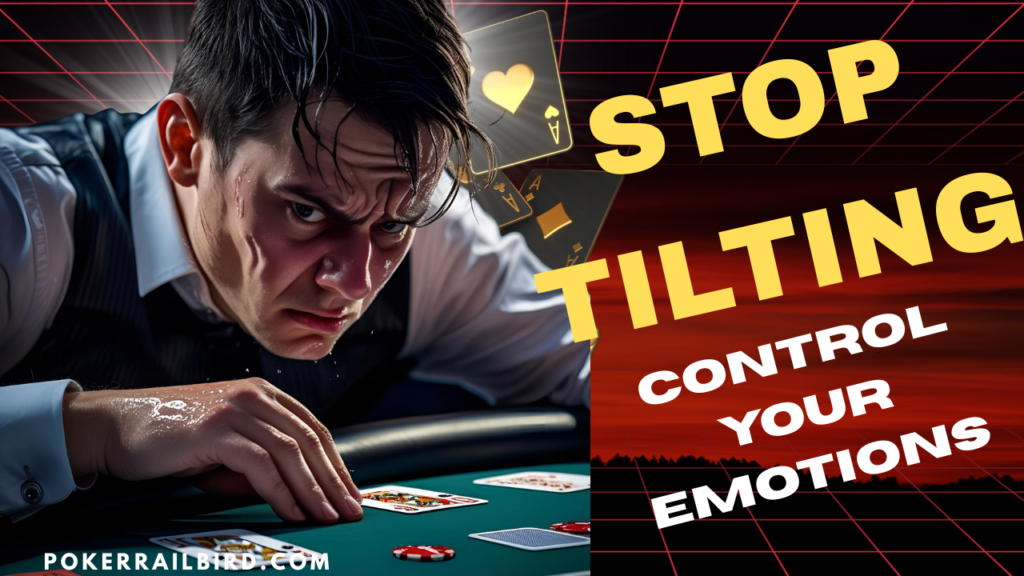
TILT IS NOT MODELED - BUT IT DRIVES LIVE DECISIONS
Tilt has no place in a solver’s world, yet it is everywhere in a casino. A player on tilt might:
- Bluff too often
- Call without a plan
- Overplay mediocre hands
- Jam rivers in desperation
- Abandon strategy entirely
Tilt reshapes ranges more than any card can.
Solvers cannot predict tilt.
Most humans cannot avoid it.
EGO AND PRIDE DISTORT RANGES MORE THAN EQUITY DOES
Poker is not just a mathematical contest — it’s an identity contest. Some players refuse to fold certain hands. Others refuse to be bluffed. Some attack aggressively to assert dominance, while others play safer to protect their ego.
Ego changes ranges in ways that solvers do not account for.
A solver cannot feel pride, frustration, or disrespect. People do.
Fear Creates Over-Folding — A Hidden Goldmine
Fear is an invisible force that dramatically alters live play. A fearful player will:
- Fold second pair instantly
- Avoid big pots altogether
- Passively check-call strong hands
- Shut down when pressured
- Under-bluff every street
- Decline profitable bluffs out of anxiety
Solvers assume opponents defend correctly.
Fear prevents that from happening.
This is why many solver-approved bluff frequencies lose money in live games.
CONFIDENCE SWINGS MATTER - AND THEY CAN CHANGE EVERYTHING
Confidence is another dynamic solvers never model. After winning several pots, a player may raise wider, bluff more often, or attempt hero calls. After losing a few pots, the same player may fold everything but premiums.
Confidence alters frequencies moment by moment.
Solvers assume stable ranges.
Humans do not have stable ranges.
Player-to-Player Dynamics Influence Decisions Deeply
Live poker involves relationships and rivalries, conscious or subconscious. Some players target specific opponents, avoid certain others, or adjust based on personality rather than cards.
A solver assumes every opponent is the same.
Live poker reminds us that every opponent is different.
A player may:
- Chase one opponent
- Avoid another
- Hero-call specific players but not others
- Bluff the timid
- Freeze against aggression
- Attack weakness but respect strength
These dynamics shift decision-making constantly.
The Social Layer of Live Poker — Another Missing Variable
Live poker is a social arena filled with tension, talk, banter, intimidation, and subtle psychological exchanges. Everything from a comment to a glance can alter a decision. These social factors simply do not exist in theoretical simulations.
Solvers cannot model:
- Table talk
- Pressure
- Group dynamics
- Verbal confidence
- Social image
- Emotional discomfort
But you can see all of it — and use it.
Live Reads Override Theory Every Time
Most powerful of all, live reads provide information that no solver can ever process. Physical tells — breathing, posture, hand tremors, hesitation, chip handling, eye movement, voice tone — reveal more about a player’s range than any mixed frequency ever will.
A solver cannot see a shaking hand.
It cannot hear nervousness.
A solver cannot feel discomfort.
It cannot sense hesitation.
You can.
And when you can read a player’s confidence, discomfort, or certainty, the solver’s recommended action becomes irrelevant.
PLAYER TYPES VS SOLVER ASSUMPTIONS
Although solvers assume every opponent plays the same mathematically perfect strategy, real live poker is built on drastically different player styles. At any given table, you may face loose-passive callers, loose-aggressive bulldozers, tight-passive folders, tight-aggressive professionals, unpredictable gamblers, and full-blown maniacs. Each player type reacts very differently to pressure, aggression, bet sizing, texture, and perceived strength.
A solver treats all of these styles as a single opponent profile — one perfectly balanced, rational, equilibrium-driven player. Live poker provides the opposite. Those different styles change frequencies, alter EV, distort ranges, and create strategic opportunities that solvers cannot model. This is yet another reason why real-game decisions must be based on people, not on theoretical perfection.
For a deeper breakdown of these player styles, you can explore the full PokerRailbird series on TAGs, NITs, LAGs, Loose/Passive players, and Maniacs. Understanding player styles is a far more powerful advantage in live poker than relying solely on equilibrium charts.
Solvers model logic.
Humans play poker.
Every decision in live poker is filtered through emotion, tilt, ego, fear, fatigue, personality, momentum, and real-time social pressure. These factors distort ranges so dramatically that GTO equilibrium becomes inaccurate the moment human behavior enters the equation.
This is why strict solver thinking breaks down.
This is why solvers remain tools, not truths.
And this is why live poker — real poker — rewards those who understand people more deeply than percentages.
In the next section, we’ll combine everything learned so far and reveal where solver thinking does provide value, and where it should be abandoned entirely.
EXPLOITATIVE PLAY
THE REAL WINNING STRATEGY
GTO offers structure, but it does not win the most money in live poker. Exploitative play does. The solver imagines a world filled with perfect opponents, perfect frequencies, perfect defenses, and perfect counter-responses. Real tables are nothing like that. They are filled with personalities — loose, tight, emotional, passive, aggressive, unpredictable, tilted, stubborn, scared, bored, distracted, fatigued, or confident.
Exploitative poker starts by reading the room, not by reading the chart.
Before you enter a pot, you should already know who calls too often, who folds too often, who melts under pressure, and who cannot resist chasing any kind of draw. Every player carries a set of tendencies with them, and every one of those tendencies can be converted into profit.
READING THE ROOM
Live poker is a psychological landscape. The first and most important task is simply observing how people play today, not how they played last week or how they imagine themselves playing. Exploitative poker means noticing who is protecting a win, who is stuck and pressing, who is tired, who is steaming, and who is afraid to risk chips. This level of human awareness directly contradicts one of the core GTO myths — the belief that strategy should remain the same regardless of emotional state or table dynamics.
This information shapes every decision you make, and it allows you to take lines that GTO would never permit. When you understand the limits of GTO myths, you unlock decisions solvers could never justify — but humans fold to every day.
at loose tables - TIGHTEN UP
WHEN THE TABLE IS TIGHT - LOOSEN UP
Loose tables are the hallmark of low- and mid-stakes live poker. Players enter pots with ranges so wide a solver could not model them. Multiway pots become the norm. Bluffing becomes nearly impossible. Fold equity evaporates. Marginal hands that look profitable in theory get crushed between callers. This is one of the most damaging GTO myths — believing solver outputs will hold up in a loose, chaotic environment.
In these games, the winning adjustment is simple: tighten up.
Play fewer hands.
Raise fewer speculative holdings.
Lean into big value.
The more hands opponents play, the more hands they call with — and the more they pay you when you make something strong. Trying to rely on GTO myths in these pots is a direct path to losing money. You cannot GTO your way through a calling-fest. You simply let the table make mistakes and collect the profit.
The opposite adjustment applies when the table is scared, disciplined, or overly selective. Tight players fold too often in all phases of the hand. They hate marginal situations, they defend their blinds reluctantly, and they rarely take stands without real strength. This is another area where GTO myths fall apart — solvers assume balanced defense, but tight players defend almost nothing.
Against them, you expand your range and apply consistent pressure.
You steal blinds, 3-bet lighter, c-bet more frequently, and pick up the uncontested pots they continually surrender.
Tight tables reward controlled aggression far more than any solver mix ever could. While equilibrium suggests moderation, exploitative play says: “Take everything they are willing to give you.” Ignoring these GTO myths and playing the player — not the solver — is what turns tight tables into profit machines.
TARGETING PLAYERS WHO HATE PRESSURE
VALUE BETTING THE CALLERS
Some opponents crumble the moment chips start flying. They dislike big pots. They fold even medium-strength holdings when confronted with multi-street aggression and often they avoid decisions that feel uncomfortable. You see it in their posture, their timing, their breathing, and their hesitation. This is where GTO myths become especially misleading — solvers assume fearless defense, but real opponents often freeze under pressure.
These players are extremely profitable targets.
You increase your c-bet frequency, attack turns more often, raise their weak leads, and pressure them on every card that appears threatening. These opponents hand you the pot because they are not emotionally built to defend it. Solvers cannot see fear; you can. And this is exactly why clinging to GTO myths misses the essence of live poker: human reactions dictate the strategy, not theoretical models.
he calling station is one of the most predictable, profitable characters in live poker. These players call because they want to see cards. They call because they’re curious. Sometimes they call just because they don’t like folding. They call because they’re bored. Some call because they “don’t believe you.” This alone exposes one of the biggest GTO myths — the belief that opponents fold at anything close to solver frequencies.
Against them, bluffing is self-inflicted damage.
Value betting is your biggest weapon.
You bet your strong hands early and often, choose sizes they will call, and avoid fancy lines. Solvers balance ranges. Calling stations don’t. This gap between theory and reality is exactly why relying on GTO myths in these spots leads to unnecessary losses. The simplest, most straightforward value lines often generate the highest EV possible against these players.
AVOIDING FANCY LEVELS AGAINST LEVEL-ONE THINKERS
One of the biggest mistakes GTO-oriented players make is trying to “out-think” opponents who are barely thinking at all. Many recreational players operate on a single dimension: “I have a pair,” or “I think he’s bluffing.” They’re not analyzing ranges. They’re not defending frequencies. Nor are they thinking about blockers or board coverage.
You cannot out-level someone who isn’t on the ladder.
Exploitative poker means abandoning advanced bluffs and sticking to lines that punish level-one thinking, not attempt to outsmart it.
THE ART OF DEVIATING FROM THEORY
Exploitative poker thrives on deviation — not randomness, but informed deviation. You fold hands GTO would call, raise hands GTO would mix, check hands GTO would bet, and bet hands GTO would check. Every deviation is intentional. Every adjustment responds to a human tendency, not a mathematical requirement. Understanding where GTO myths mislead players is exactly what allows these deviations to become profitable instead of reckless.
This is not undisciplined play. It is disciplined adaptation. The moment you break free from GTO myths, every adjustment becomes sharper, more accurate, and more grounded in how real opponents actually behave.
MATHEMATICAL CORRECTNESS IN EXPLOITATIVE STRATEGY
Despite its adaptability, exploitative poker is not a license to play loosely or creatively without discipline. Every exploitative adjustment must still be mathematically correct, rooted in EV, and supported by the structural realities of the table. Tightening up at loose tables and loosening up at tight tables is not only prudent—it is mathematically correct. These adjustments align your hand ranges with pot odds, implied odds, reverse implied odds, fold equity, and range advantage in ways that maximize long-term profitability.
Exploitative play is not randomness. It is not “mixing it up.” It is deviation powered by data: player tendencies, table dynamics, stack sizes, position, and probability. The decisions may be flexible, but the foundation is rigid. You never take a line that is mathematically incorrect just to appear unpredictable. You exploit precisely because the math supports the adjustment—not because the solver says to mix frequencies.
FOLD EQUITY IS CONTEXTUAL
Fold equity is not a constant. In theory, it’s predictable. In live poker, it fluctuates wildly based on stack depth, personalities, number of players in the pot, recent outcomes, perceived tilt, and your table image. Sometimes a tiny bet generates massive fold equity; other times, no number on any chip in the rack will make someone fold.
Solvers assume consistent fold equity.
Exploitative players measure it moment to moment.
EXAMPLES OF PURE EXPLOITATION
- When a tight player 3-bets, assume strength. Fold everything except the top of your continuing range. Their 3-bet frequency is so narrow that continuing with marginal hands becomes a losing play.
- When a loose-passive player suddenly raises, you assume strength and get out of the way unless you have the top of your range.
- When a calling station checks the river, you value bet thinner than theory suggests.
- When a LAG bluffs too often, you widen your calling range dramatically and punish the imbalance.
- When someone refuses to fold draws, you tax them relentlessly.
Every one of these lines violates solver doctrine.
Every one of them prints money in live poker.
Exploitative poker is not about ignoring GTO — it’s about surpassing it. Theory gives you the baseline. Human behavior gives you the truth. The trick is knowing when the model applies and when reality does not cooperate.
In the next section we examine how to use GTO the right way:
as a diagnostic tool, not a rulebook — a framework to understand what is possible, not a belief system to follow blindly.
HOW TO USE GTO THE "RIGHT" WAY
GTO is not the enemy of good poker. It’s not wrong, and it’s not flawed math. It is simply incomplete. Where most players run into trouble is not the theory itself but their understanding of what it’s meant to do. Many of the most dangerous GTO myths arise from treating solver outputs as universal truth, rather than as conditional solutions to a narrowly defined model. Solvers describe a world of perfect opponents, perfect responses, and perfect equilibrium. Live poker is a world of imperfect humans. The gap between those two worlds is where players either lose money or learn to use GTO the right way.
Before you can apply theory correctly, you must understand the conditions where GTO actually works. Solvers are built for environments with disciplined ranges, rational counter-strategies, consistent defense frequencies, and minimal emotional interference — typically heads-up play, online mid- to high-stakes games, and short-handed formats with highly skilled regulars. In these settings, GTO provides a stable baseline. It prevents you from overfolding, protects you from being exploited, and offers a strong structural framework for decision-making.
But these conditions almost never exist in live full-ring cash games. Once you introduce multiway pots, emotional volatility, inconsistent tendencies, unpredictable sizing, fear, ego, tilt, and the randomness of human behavior, solver outputs lose connection to reality.
GTO AS A DIAGNOSTIC TOOL - NOT A DOCTRINE
This is why GTO cannot be treated as a rulebook. It’s not designed to control chaos. It cannot account for fatigue, intimidation, boredom, momentum, table dynamics, or player tendencies. Used correctly, GTO serves as a diagnostic tool — a reference point that shows what “perfect” play would look like so you can measure how far your opponents have drifted from it. The purpose of studying GTO is not to imitate equilibrium but to identify deviations from it. Those deviations are where the money comes from. Theory reveals the baseline; human opponents reveal the opportunities.
GTO is not a complete strategy. It must be adapted, interpreted, and applied through human judgment. Real strategy grows from the personalities at the table, the emotional atmosphere, the patterns you observe, and the pressures shaping each decision. Solvers provide outputs without context, precision without perspective, and recommendations without awareness. They do not read body language, sense hesitation, recognize tilt, or evaluate emotional pressure — you do. This is where many GTO Myths collapse: players assume solvers account for human behavior when they do not.
When used properly, solvers reveal the structure of the game — how ranges behave, how bluff/value ratios shift, how bet sizes shape incentives, how blockers influence decisions, and how aggression can be applied with precision. Viewed through this lens, GTO expands your understanding of poker’s architecture. But solvers do not replace human insight. They cannot replicate the real-time psychological tools that skilled players use.
The key is knowing when theory applies and when it doesn’t. You use GTO concepts against opponents who resemble the model — players who defend correctly, fold appropriately, apply pressure with balance, and understand the game beyond their own two cards. Against anyone else, you abandon the theoretical line and shift to exploitation. Live poker rewards adaptability, not obedience to a script.
GTO IS A TOOL - NOT A RULE
We use theory to sharpen our structure, not silence our instincts. You combine mathematical discipline with real-time observation. You balance classical logic with romantic awareness. We follow the numbers until the moment the person in front of you shows you something the numbers cannot quantify.
This integration — the union of structured knowledge and human adaptability — is where the strongest players live.
Now that we’ve established what GTO is, what it isn’t, and how it must be used, we can turn to the deeper philosophy that underpins PokerRailbird — the marriage of classical understanding and romantic awareness, the balance between structure and intuition, and the real meaning of “quality” in decision-making.
THE POKERRAILBIRD PHILOSOPHY
THE UNION OF DISCIPLINE AND AWARENESS
Poker is not played in a vacuum. It is not a sterile data problem or a perfect equilibrium puzzle. It is a human game—messy, emotional, unpredictable, and endlessly dynamic. The strongest players do not survive through rigidity; they survive through balance. They understand the underlying structure of the game, but they also respect the constant motion of the people who play it.
This balance sits at the center of the PokerRailbird philosophy. It reflects a deeper truth about decision-making, one inspired by Robert Pirsig’s classical and romantic modes of understanding. The classical mind seeks structure, clarity, form, and reason. It wants to break things down, study their parts, and understand how they work. The romantic mind seeks experience, intuition, expression, and flow. It wants to feel its way through the world, to read the energy, to respond to subtlety and rhythm.
Poker demands both.
Classical thinking gives you discipline, fundamentals, probability, pot odds, combinatorics, EV, fold equity, and structural range analysis. Romantic thinking gives you live reads, timing, emotion, table flow, momentum shifts, fear recognition, and human pattern detection. The classical side explains what the game is. The romantic side explains what the game feels like in motion.
Neither alone is enough.
THE HARMONY OF STRUCTURE AND ADAPTATION
GTO is a classical creation—it models structure, form, and mathematical equilibrium. But live poker is a romantic environment—unpredictable, fluid, charged with emotion, and shaped by human imperfection. The players who thrive are those who refuse to choose between the two. They bring disciplined reasoning into a living, breathing arena, and they adapt that reasoning to the people in front of them.
This is why PokerRailbird teaches players to look beyond perfection and toward pattern. Humans are not machines, but they are predictable in their own ways. They show patterns in fear, in confidence, in frustration, in aggression, in boredom, and in curiosity. Once you learn to see those patterns, you begin to understand the game beneath the game—the human operating system that solvers cannot model.
THE COMPONENTS OF A SUCCESS
he PRB philosophy rejects the belief that talent or intuition alone makes a champion. It also rejects the idea that flawless math is the whole answer. Many GTO Myths are built on those extremes, and PokerRailbird stands firmly in the middle. The truth lives in the integration. Success comes from harmonizing discipline with awareness, theory with observation, structure with adaptability, clarity with creativity. It comes from recognizing the quality of a decision, not the purity of a formula.
Poker is not about perfection. It is about quality in the presence of uncertainty. Every decision you make occurs without complete information. All actions require judgment. Every choice reflects the balance between what you know and what you sense. And every strong player learns to navigate this tension with composure and honesty — a mindset that GTO Myths consistently overlook.
This is the meaning of the PokerRailbird approach:
A player who thinks deeply, acts intentionally, adapts intelligently, and respects the humanity of the game.
The player who embraces both sides of the craft—the classical structure and the romantic reality.
And a player who seeks quality in each decision, knowing that quality is not found in perfection but in alignment: math aligned with context, structure aligned with behavior, theory aligned with truth.
This is not just a method.
It is a mindset.
A way of seeing the game — and a way of seeing yourself within it.
CONCLUSION
With the philosophy established, we conclude by returning to the core message of this entire article: solvers don’t fail because the math is wrong — solvers fail because poker is human. And any strategy that requires perfection will collapse in an imperfect world.
Section XIII ties all threads together in a final, powerful reminder of how to approach the game with intelligence, humility, and purpose.
At the end of the day, every GTO concept, every solver output, and every theoretical strategy leads to a single truth:
Poker is a human game played by imperfect people making emotional decisions under pressure.
Solvers do not understand fear.
They do not recognize momentum.
They do not see frustration, boredom, confidence, or hesitation.
You do.
The strongest players weave theory and psychology into one unified approach. These players understand the math, yet remain fully present at the table. They know when a line is technically sound but practically unprofitable. They recognize when GTO Myths break down and when the environment demands real-world adjustment.
This is where the edge lives.
It’s not in memorizing solver outputs.
Not in rigid adherence to equilibrium.
Not in pretending live poker is played by robots.
Your edge comes from disciplined structure guided by human insight.
Utilize GTO to understand the architecture of the game.
Use observation, psychology, and adaptability to dominate the environment in front of you.
Use both — never one without the other.
In the end, the players who thrive are those who embrace this balance:
Tools, not rules.
Theory, not dogma.
Awareness, not automation.
Poker isn’t solved because people aren’t solved.
And that truth will always belong to the player who can think — and adapt — beyond the solver.