
WAITING-FOR-ACTION-POKER TELLS
Poker tells can occur at virtually any point during a hand, but some of the most revealing moments happen when a player is not making a decision at all. The cards have been dealt, the action has moved elsewhere, and attention shifts from deciding what to do to waiting for someone else to act. During those moments, players often become less aware of their own behavior, creating opportunities for information to leak through subtle changes in posture, focus, facial expression, and body language.
These behaviors are commonly known as Waiting For Action Poker Tells.
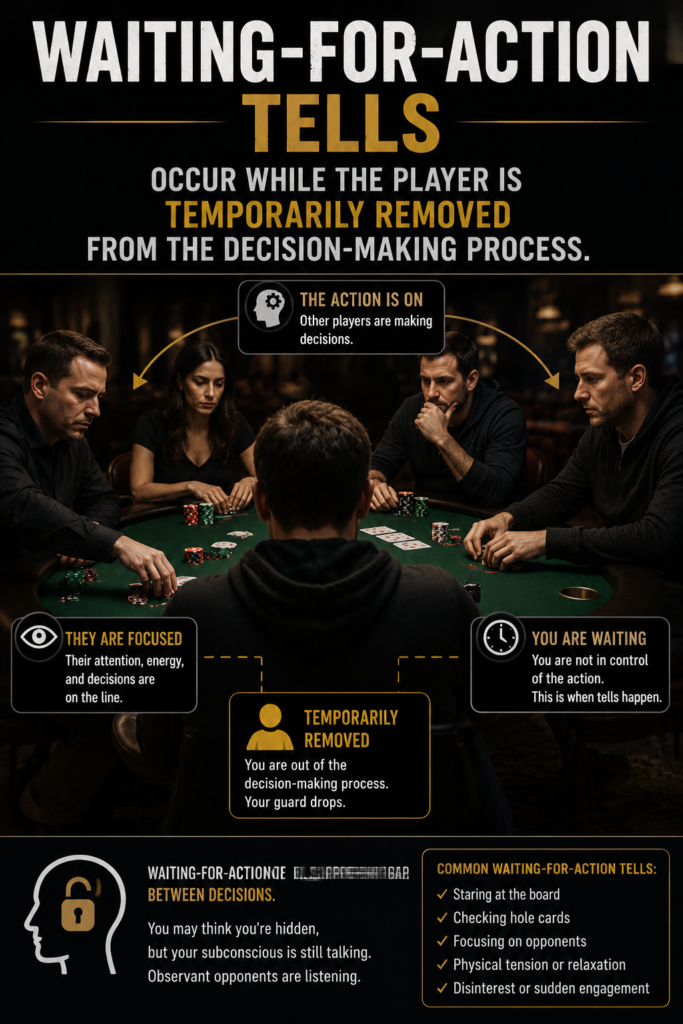
Unlike during action tells, which occur while a player is actively making a decision, waiting-for-action tells occur while the player is temporarily removed from the decision-making process. Although the player remains involved in the hand, the immediate pressure of acting has been transferred to someone else. As a result, thoughts and emotions sometimes begin influencing behavior in ways the player neither recognizes nor intends.
One reason Waiting For Action Poker Tells can be valuable is that they often reveal a player’s comfort level in the situation. A player who feels uncertain may become interested in gathering information from an opponent. A player who feels confident may become less interested in what an opponent is about to do. Neither behavior reveals specific cards, but both may provide clues about a player’s emotional state.
WHAT WAITING-FOR-ACTION TELLS REVEAL
That distinction is important because poker tells do not tell us exactly what hand an opponent is holding. Instead, they help us understand how a player feels about the hand. Confidence, uncertainty, concern, anticipation, and comfort can all influence behavior, and those emotional states often become visible long before the cards are revealed.
The articles in this category examine a variety of Waiting For Action Poker Tells that may indicate either strength or weakness. Some involve players who become unusually interested in their opponents. Others involve players who appear surprisingly relaxed or unconcerned. Taken together, these behaviors illustrate an important principle of poker psychology: meaningful information often appears when players are doing nothing more than waiting for someone else to make a decision.
WHY WAITING FOR ACTION POKER TELLS OCCUR
EMOTIONS INFLUENCE BEHAVIOR
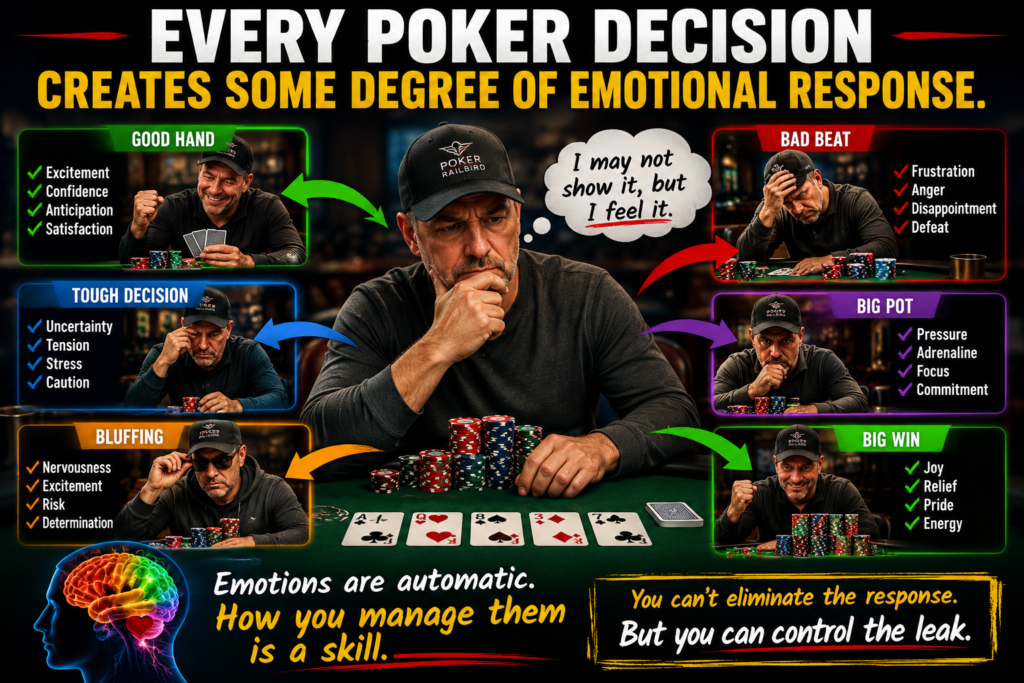
Every poker decision creates some degree of emotional response. Sometimes that response is obvious, such as frustration after a bad beat or excitement after making a strong hand. More often, however, the emotions involved are subtle and largely unnoticed by the player experiencing them.
A player holding a marginal hand may feel uncertain about where he stands. Another player may feel confident after connecting strongly with the board. A third player may be anticipating a difficult decision while trying to determine what an opponent is likely to do next. Although these emotional states differ significantly, they share one important characteristic: each has the potential to influence behavior.
The influence is rarely intentional. Most players do not consciously decide to stare at an opponent, avoid eye contact, study their cards repeatedly, or become distracted by activity elsewhere in the room. Instead, these behaviors often emerge naturally from the player’s emotional state. Confidence, uncertainty, concern, anticipation, and comfort all have the ability to alter how a player behaves while waiting for action.
As a result, players frequently reveal information without realizing they are doing so.
BEHAVIOR CREATES INFORAMTION
One of the reasons Waiting For Action Poker Tells can be so valuable is that they often occur during moments when players are no longer focused on controlling their own behavior. The immediate pressure of making a decision has either not arrived yet or passed, and attention shifts elsewhere. Some players become interested in gathering information from an opponent. Others become comfortable and lose interest in the action entirely. Still others become focused on protecting a hand they perceive as vulnerable.
These emotional responses can produce observable changes in behavior.
A player who normally pays little attention to opponents may suddenly become interested in every movement they make. A player who is usually attentive may appear surprisingly relaxed and disengaged. Another player may begin studying his hole cards or staring at newly dealt board cards longer than normal. None of these actions reveal specific cards, but each may reveal something about the player’s level of confidence, uncertainty, or concern.
This principle forms the foundation of Waiting For Action Poker Tells. The tells themselves may vary, but the underlying process remains remarkably consistent. Emotions influence behavior, behavior creates information, and observant players learn to recognize those changes when they occur.
WAITING FOR ACTION TELLS OF WEAKNESS
One of the most common themes found throughout Waiting For Action Poker Tells is uncertainty.
When players are unsure about the strength of their hand, concerned about what an opponent may do, or seeking information that might help them make a future decision, that uncertainty often influences behavior. Rather than remaining focused on their own actions, players frequently become interested in gathering information from the people around them.
As a result, many Waiting For Action Poker Tells Of Weakness involve increased attention. Players study opponents more closely, focus on aspects of the hand that concern them, or exhibit behaviors that reflect discomfort with the situation. Although these tells do not reveal specific cards, they may provide insight into a player’s level of confidence and overall comfort with the hand.
The following articles examine five common Waiting For Action Tells Of Weakness found in live poker.
WAITING-FOR-ACTION POKER TELLS: WEAKNESS - ARTICLES
The following articles examine the most common waiting-for-action poker tells that indicate weakness in live, full-ring cash games. Each behavior appears before a player is required to act and reflects how that player expects to respond if pressure arrives.
These tells should be used as confirming signals, not standalone reasons to act. Each article explains what the behavior looks like, why it occurs, and the conditions under which it is reliable, or should be discounted entirely.
LOOKING AT YOU!
WHY THE "LOOKING AT YOU" POKER tELL IS COMMON - AND COMMONLY MISUSED
The “looking at you” poker tell occurs when a player repeatedly watches an opponent while waiting to see whether a bet will be made. Contrary to popular belief, this behavior most often signals weakness, not strength.
When players hold strong hands, they rarely need information. When players hold weak or marginal hands, they seek it. Increased eye contact reflects uncertainty and anticipation rather than confidence.
This tell appears before action is required, making it a classic waiting-for-action tell. It gains reliability in multiway pots and against players who are not yet committed to the hand. Used correctly, it serves as a confirming signal that resistance is unlikely, never as a standalone reason to act.
DEFENSIVE CHIP HANDLING IN POKER
WHY "READY TO CALL" ALMOST ALWAYS MEANS WEAKNESS
Defensive chip handling occurs when a player begins touching, counting, or hovering over chips before they are required to act. This behavior reflects anticipation of a bet, not preparation to initiate action.
Contrary to common misinterpretation, defensive chip handling is rarely a sign of confidence. It is a preparatory response from players holding weak or marginal hands who are bracing for pressure rather than planning aggression.
This tell appears during waiting-for-action moments and gains reliability when paired with timing and betting context. When used correctly, it helps confirm that a player is preparing to respond, not raise, and that forward resistance is unlikely.
INDICATING A FOLD
A WAITING-FOR-ACTION POKER TELL OF WEAKNESS
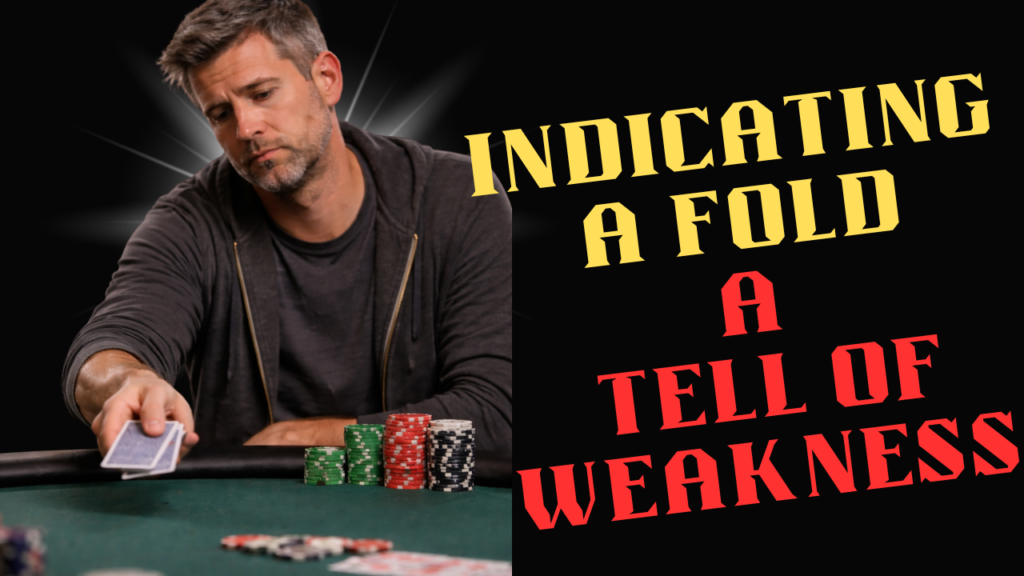
The indicating a fold poker tell occurs when a player subtly disengages before action reaches them, signaling that they have already accepted a likely fold. This behavior appears before a bet is made, not as part of a folding motion, and reflects a mental exit from the decision tree rather than an actual action.
Players who believe their decision is already made often stop protecting information. Cards may be lifted slightly, held loosely, or positioned for an easy muck while the player waits to see whether pressure arrives. This tell is not about emotion or nervousness; it is about premature resolution.
Indicating a fold is a classic waiting-for-action tell of weakness. It is most reliable in multiway pots and situations where the player has time to disengage while anticipating aggression. Used correctly, it serves as a confirming signal that resistance is unlikely—never as a standalone reason to act, and always alongside betting action, position, and context.
STARING AT BAD BOARD CARDS
A TELL HIDDEN IN PLAIN SIGHT
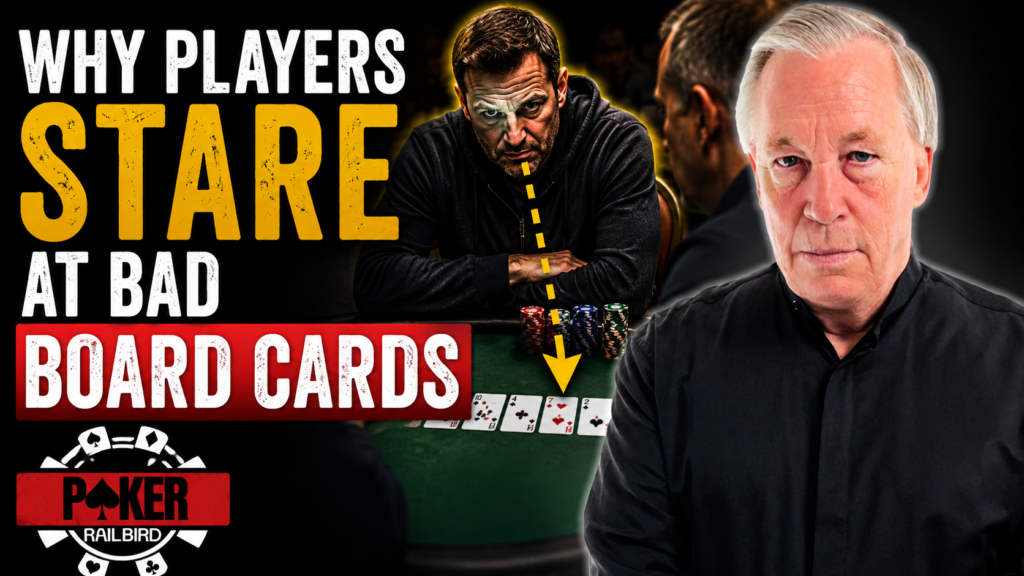
Staring at bad board cards is one of the more subtle poker tells you may encounter at the table.
When the flop, turn, or river is dealt, every player receives new information at the same time. Some players glance at the board and quickly shift their attention elsewhere. Others remain focused on the cards for several extra seconds, as if they are still searching for something they hoped to find.
At first glance, this behavior may seem insignificant. After all, every player needs to look at the board. Yet many experienced observers have noticed that some players tend to remain fixated on the board when the new card does not help their hand.
LOOKING AT YOUR HOLE CARDS
A TELL MOST PLAYERS MISS
Looking at your hole cards may seem like one of the simplest actions in poker, yet information often begins flowing around the table long before the first bet is made.
Information often begins flowing around the table before the action ever starts. As the dealer distributes the cards, many players are already looking at individual cards as they arrive, then looking again once both cards have been dealt. During those first few moments, reactions begin to appear, habits emerge, and subtle clues can sometimes reveal more than the player intended.
WAITING FOR ACTIONS TELLS OF STRENGTH
While uncertainty often causes players to seek information, confidence frequently produces the opposite effect.
Players who feel comfortable with the strength of their hand generally have less need to gather information from opponents. Decisions become easier, concern diminishes, and attention often shifts away from the action itself. Rather than carefully studying every movement and reaction, some players become noticeably less interested in what their opponents are about to do.
For that reason, many Waiting For Action Tells Of Strength involve reduced attention rather than increased attention. A player who feels confident may appear relaxed, unconcerned, or even distracted. Although these behaviors do not reveal specific cards, they can sometimes provide insight into a player’s level of comfort with the hand.
The following articles examine Waiting For Action Tells Of Strength found in live poker.
LOOKING AWAY FROM YOU
One of the most common waiting-for-action tells associated with strength occurs when a player suddenly appears less interested in an opponent’s decision. Rather than maintaining eye contact, studying reactions, or closely following the action, the player directs attention elsewhere.
At first glance, the behavior may seem unusual. A strong hand would appear to create a reason for increased attention, not less. In practice, however, strong hands often reduce uncertainty. As confidence increases, the need to gather additional information frequently declines. At the same time, many players who connect strongly with a board prefer not to draw attention to themselves, causing them to appear relaxed, indifferent, or unconcerned.
THE DISAPPOINTED PLAYER TELL
WHY STRONG HANDS SOMETIMES LOOK WEAK
Most poker players naturally associate disappointment with weakness. At the poker table, however, appearances can be deceptive. A player who looks discouraged while waiting for action may not be unhappy at all. In some situations, that behavior can actually indicate considerable strength.
In this article and companion video, we examine the Disappointed Player Tell, a common waiting-for-action tell of strength, and explain why some players appear weak when they’re actually hoping opponents continue putting money into the pot. We also discuss the difference between deliberate deception and instinctive behavior, along with why this tell should always be interpreted within the context of a player’s baseline and other corroborating evidence.
LOOKING AWAY FROM GOOD CARDS
A POKER TELL OF STRENGTH
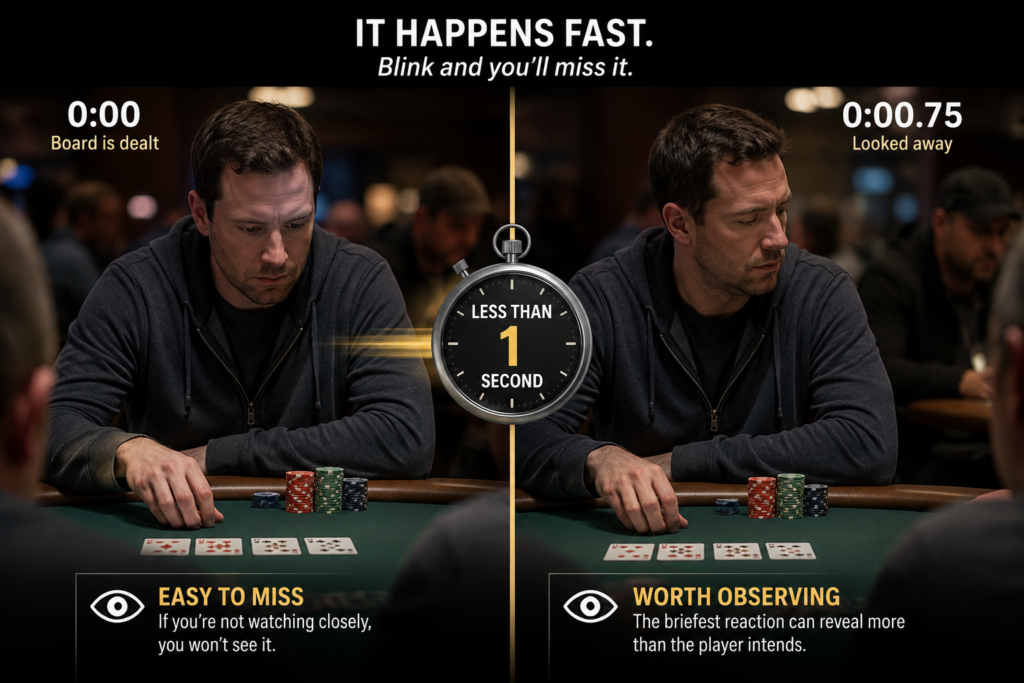
Looking Away From Good Cards is a subtle poker tell that often surprises players because it seems to contradict common sense. Most people assume that when someone makes a strong hand, they’ll continue looking at the cards that created it. Yet, in some cases, the opposite occurs. A player who has just improved to a powerful holding may instinctively look away from the board almost immediately.
The behavior usually lasts only a second, making it easy to miss unless you’re already observing your opponents as the community cards are dealt. Like all poker tells, it should never be interpreted in isolation. However, when it appears alongside other evidence, it can provide another useful clue about the strength of an opponent’s hand.
UNUSUAL BEHAVIOR EARLY IN A HAND
A POKER TELL OF STRENGTH
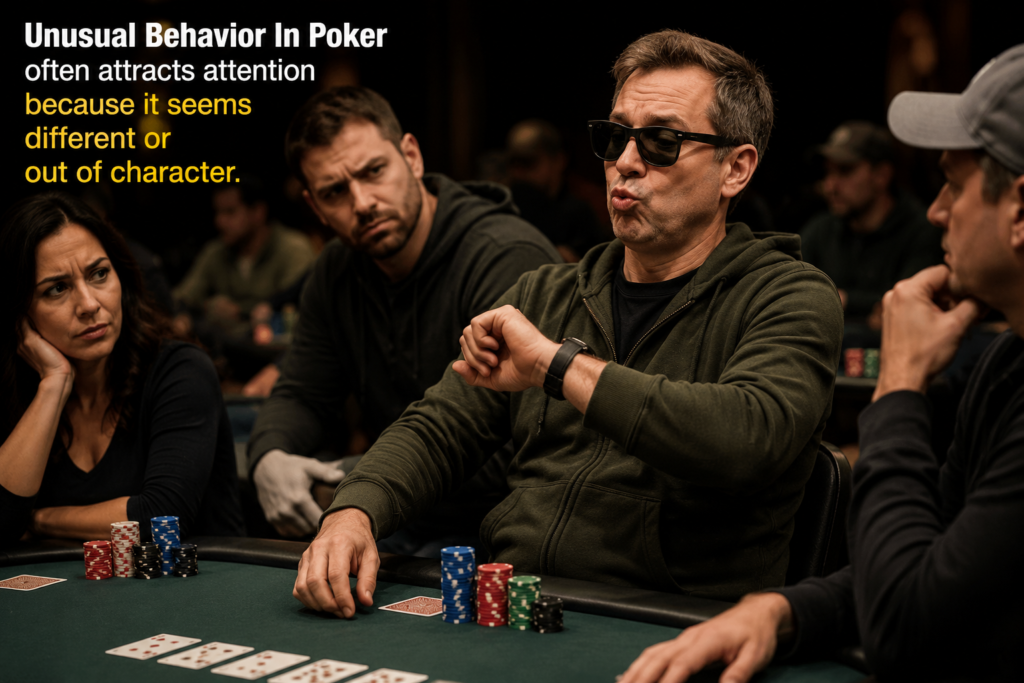
Unusual Behavior In Poker often attracts attention because it seems different or out of character. While any unexpected change in behavior can be worth noticing, the timing of that change is equally important. When a player’s behavior changes during the early stages of a hand, before much action has taken place, it may provide useful information about how they’ve connected with the hand.
This tell isn’t defined by any one specific action. Instead, it refers to a noticeable change from a player’s established baseline. That change might be becoming unusually quiet, unusually talkative, unusually serious, or displaying some other unexpected behavior. The specific action is less important than the fact that the player’s behavior has changed.
PRE-LOADING CHIPS IN POKER
A POKER TELL OF STRENGTH
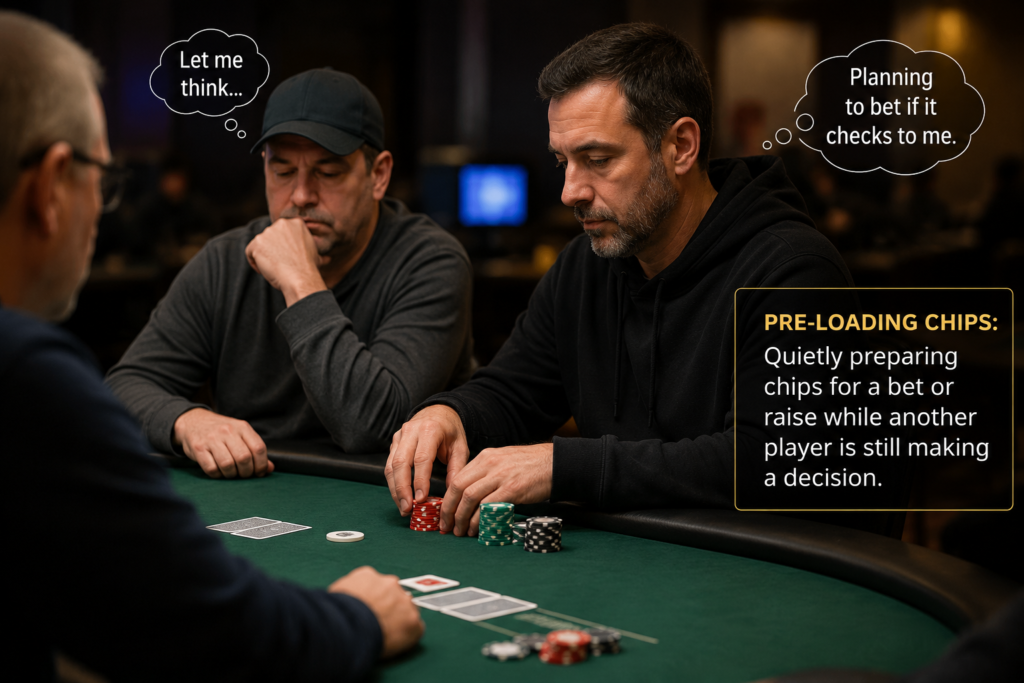
Some poker tells occur only after a player acts. Others appear before the action ever reaches them. One of the more subtle examples is pre-loading chips, the habit of quietly preparing chips for a bet or raise while another player is still making a decision.
In many cases, this isn’t a deliberate attempt to reveal information. Instead, it reflects something more important: the player has already decided what they’re going to do. Their hands simply begin preparing before it’s officially their turn to act. As with all poker tells, this behavior should never be viewed in isolation, but when it represents a consistent pattern, it can provide valuable insight into an opponent’s intentions.
RELAXED EYES IN POKER
A POKER TELLS OF STRENGTH
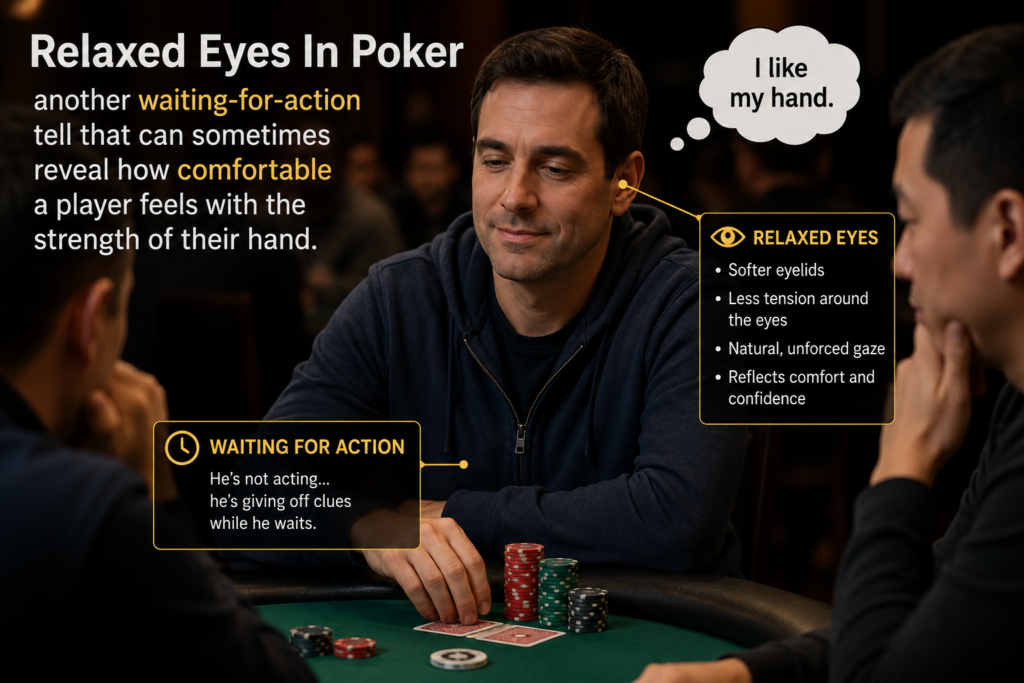
Relaxed Eyes In Poker is another waiting-for-action tell that can sometimes reveal how comfortable a player feels with the strength of their hand. While this tell is rarely obvious, experienced live players occasionally notice subtle changes in the muscles around a player’s eyes as they wait for the action to reach them.
Unlike many physical tells, the important observation isn’t where a player is looking. Instead, it’s how relaxed or tense their eyes appear while they’re waiting to act. Although these changes are often subtle, they can become meaningful when compared to that player’s normal behavior over the course of a session.
THE IMPORTANCE OF BEHAVIORAL VARIANCE
POKER TELLS ARE VARIANCES TO BASELINE BEHAVIOR

One of the most common misconceptions about poker tells is the belief that certain behaviors always mean the same thing. Players often hear that looking away indicates strength, staring at an opponent indicates weakness, or studying board cards suggests concern. While those observations may occasionally be correct, the reality is far more complicated.
The behavior itself is rarely the most important piece of information.
What matters is whether the behavior represents a change.
Every player develops habits. Some players avoid eye contact in every hand they play. Others constantly study opponents regardless of whether they are strong or weak. Some repeatedly check their hole cards, while others rarely look at them after the initial glance. When a behavior occurs consistently, it becomes part of that player’s baseline.
The value of a poker tell often emerges when a player behaves differently than normal.
A player who routinely ignores opponents but suddenly becomes intensely interested in a particular decision may be revealing information. Likewise, a player who normally studies every action at the table but suddenly appears relaxed and disengaged may also be revealing information. In both situations, the change is often more meaningful than the behavior itself.
CORRELATION CREATES RELIABILITY
This principle is one of the reasons correlation is so important when interpreting poker tells.
A single observation may be interesting, but repeated observations that produce similar results are far more valuable. Over time, patterns begin to develop. Those patterns help distinguish meaningful behaviors from random actions that have no connection to hand strength.
This is why experienced observers rarely rely on a single tell. Instead, they look for consistency across multiple situations. They compare current behavior to previous behavior. They identify deviations from established patterns. Most importantly, they view physical behavior as one piece of a larger puzzle rather than a standalone answer.
The tells discussed throughout this category should be viewed through that lens. Whether a player is looking at an opponent, looking away, staring at board cards, handling chips defensively, or repeatedly checking hole cards, the critical question remains the same:
Is this behavior normal for this player, or is something different happening?
The answer to that question often determines whether a tell has value at all.
HOW TO AVOID DISPLAYING WAITING FOR ACTION TELLS
STANDARDIZATION REDUCES INFORMATION LEAKAGE
Many players attempt to eliminate poker tells by focusing on deception. They try to appear strong when weak, weak when strong, relaxed when nervous, or indifferent when excited. While those approaches may occasionally work, they create a significant problem: they require players to continually alter their behavior.
Most poker tells originate from behavioral changes.
A player who suddenly becomes interested in an opponent, repeatedly checks his hole cards, stares at board cards, or loses interest in the action is often revealing information because his behavior differs from what opponents have observed previously. The information does not come from the action itself. It comes from the change.
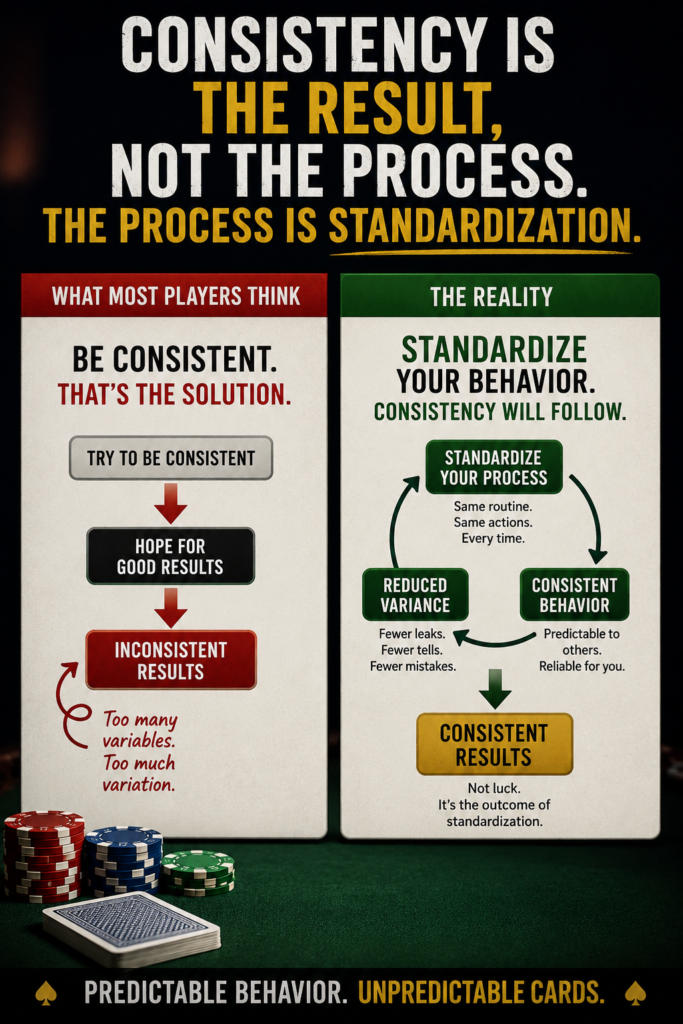
This is why poker tells are fundamentally a behavioral variance problem.
Many players believe the solution is consistency, but consistency is actually the result rather than the process. The process is standardization.
In business, manufacturing, aviation, medicine, and countless other professions, predictable outcomes are achieved through standardized procedures. People are trained to follow the same process every time because variation creates mistakes, inefficiencies, and unintended consequences.
Poker is no different.
The more a player’s behavior changes from hand to hand, the more opportunities opponents have to identify patterns and draw conclusions. The more standardized that behavior becomes, the fewer opportunities exist for information to leak through unintended actions.
For that reason, the most effective defense against poker tells is not deception.
It is behavioral standardization.
DEVELOP A COMPLETE BEHAVIORAL ROUTINE
Standardization is most effective when it extends beyond a single action.
Many players focus on controlling one aspect of their behavior while allowing countless others to vary from hand to hand. They may use the same betting motion every time yet alter their posture, eye placement, chip handling, verbal behavior, or reactions to the outcome of a hand. Although these changes often appear insignificant, they can create opportunities for observant opponents to identify meaningful patterns.
For that reason, standardization should be applied to every aspect of a player’s behavior.

The way chips are handled, the way bets are placed, the way cards are protected, the position of the hands, eye placement, posture, verbal interactions, tipping procedures, and even reactions after a hand has concluded should follow the same routine whenever possible. Every action represents a potential source of information. The more those actions vary, the more opportunities opponents have to draw conclusions.
Many experienced players develop routines that govern virtually every action they take at the table. Rather than deciding how to behave in a particular situation, they simply follow the same process every hand regardless of the cards they hold. Over time, standardization reduces behavioral variance and makes physical reads significantly more difficult.
The objective is not to become emotionless, robotic, or deceptive.
The objective is to become predictable in your behavior and unpredictable in your cards.
When opponents cannot distinguish between strong hands, weak hands, bluffs, and value bets based on physical behavior, much of the information they are attempting to gather simply no longer exists.
CONCLUSION
Waiting For Action Poker Tells can provide valuable insight into how players feel about a hand. Some players become unusually interested in their opponents when uncertainty increases. Others become surprisingly relaxed and disengaged when confidence replaces uncertainty. Although the specific behaviors may differ, the underlying principle remains remarkably consistent: emotions influence behavior, and behavior creates information.
That does not mean every unusual action should be interpreted as a tell. The most reliable observations rarely come from isolated behaviors. They come from recognizing patterns, establishing baselines, and identifying meaningful deviations from normal behavior. A player who suddenly behaves differently may be revealing far more information than a player who simply exhibits a particular action.
At the same time, understanding how these tells develop can help improve your own game. The best defense against poker tells is not deception. It is consistency. Players who develop disciplined routines and minimize unnecessary behavioral variance create fewer opportunities for opponents to identify meaningful changes in behavior.
As you work through the articles in this category, focus less on memorizing individual tells and more on understanding the process that creates them. The behaviors themselves may vary from player to player, but the relationship between emotion, behavior, and information remains the same.
The objective is not to determine an opponent’s exact hand. The objective is to recognize when a player’s behavior changes and to understand what that change may reveal about his level of confidence, uncertainty, or comfort with the situation.