
THE RAMPAGE EFFECT IN POKER
The Rampage Effect in Poker isn’t about one player. It’s about a mindset that’s reshaping the modern game, a collision between mathematics, ego, and media.
In the YouTube era, poker isn’t just played; it’s performed. Cameras have changed what many players chase. Once upon a time, the measure of skill was long-term profit; today, it’s often short-term visibility. The algorithm rewards volatility, not discipline, and some players have adjusted their strategy accordingly.
In this new environment, a certain archetype has emerged, the high-variance showman.
He plays fast, loose, and fearless. He’s often talented, sometimes brilliant, but rarely patient. Every decision carries a second motive: the hand itself and the highlight reel. The table becomes a stage, and poker becomes content.

It’s easy to dismiss this as entertainment. But beneath the surface, the Rampage Effect reveals something deeper, a psychological and mathematical conflict that defines modern poker. What happens when the desire for attention overtakes the pursuit of accuracy? What happens when a game built on EV becomes a game built on ego validation?
That’s what we’re about to explore.
THE RAMPAGE EFFECT
Rampage didn’t just rise through poker; he rose through YouTube, through story, and through the algorithm itself. His ascent is more than a personal journey; it’s a cultural one.
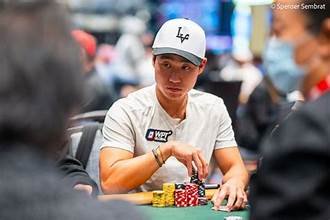
Poker has always mirrored the culture of its time. Every generation reshapes the game in its own image. And today’s image, loud, fast, and unfiltered, has a name: The Rampage Effect.
Ethan “Rampage” Yau didn’t just rise through poker; he rose through YouTube, through story, and through the algorithm itself. His ascent is more than a personal journey; it’s a cultural one. It represents a fundamental shift in what poker rewards, what players value, and how the game is now consumed.
To understand how we got here, to a world where poker hands trend faster than tournament results, we have to step back and look at how the game itself evolved.
FROM MONEYMAKER TO THE METAGAME ERA
Poker’s modern landscape didn’t appear overnight. It evolved through distinct eras, each defined by what players valued most: luck, logic, or legacy.
The Moneymaker boom of 2003 unleashed poker’s romantic age, when every kitchen-table dreamer saw themselves on ESPN. The game was raw, personality-driven, and emotional. Players like Moneymaker, Hellmuth, and Negreanu became cultural icons not because of their solver charts, but because of their stories. Poker was theater then, and the audience loved it.
By the late 2000s, that romantic wave gave way to the classical counterrevolution, a cold, data-driven correction. The rise of online play, tracking software, and solvers redefined poker as a science. Suddenly, the language of emotion gave way to equations. Players chased equilibrium, not inspiration. The emphasis shifted from intuition to optimization, from the feel of the game to the formula behind it.

Then came the 2020s, the Metagame Era, when those two worlds collided. Technology democratized information, while platforms like YouTube, Twitch, and X turned players into brands. The pursuit of Quality, Pirsig’s “right way to do a thing,” fractured into two paths: the pursuit of mathematical truth and the pursuit of narrative truth.
That collision produced players like Ethan “Rampage” Yau, who didn’t just play poker; he performed it. Rampage isn’t a symptom of poker’s evolution; he’s the culmination of it. He embodies a generation fluent in both solvers and storytelling, as comfortable with range analysis as they are with thumbnail design.
The classical player seeks precision; the romantic player seeks connection.
Rampage understood both, and leveraged the balance to redefine what poker means in the digital age.
OBSERVABLE PATTERNS: WHAT VIEWERS ACTUALLY SEE

At first glance, the Rampage Effect looks like simple aggression, fearless betting, wild swings, and a willingness to risk stacks at any moment. But underneath, it’s a blend of calculated theater and selective math.
The audience sees big bluffs, monster pots, and instant rebuys. They don’t see the thousands of untelevised hands that bankroll those moments, or the silent arithmetic that tells a disciplined player when to stop. What we’re witnessing, more often than not, is variance weaponized for viewership.
The camera captures the illusion of control. It shows a player three-betting light and winning, but not the dozens of times the same move fails off-camera. It glorifies the comeback story and the bold hero call, while ignoring the reality that every “hero” who plays long enough eventually gets crushed by math.
Yet the Rampage Effect thrives because it mirrors what the audience wants to believe, that poker is about courage over calculation, instinct over logic, emotion over process. The irony is that even the most extreme styles are, in a sense, predictable. The performative nature of these plays follows patterns: timing, table image, emotional state, and narrative opportunity.
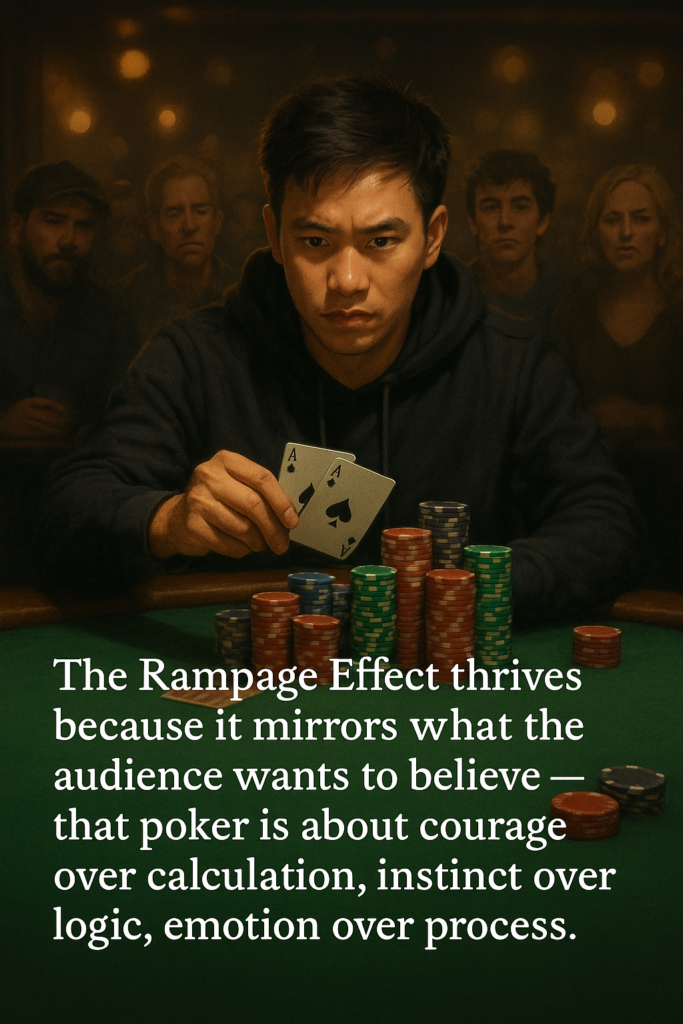
Every player influenced by this phenomenon begins to internalize the same rhythm, fast preflop decisions, loose postflop calls, and a fixation on redemption arcs. It’s poker as story, not poker as science.
case study: chaos with calculation
Behind every viral bluff and highlight-reel call lies the same foundation that built poker from the beginning: math. And that’s where the real story of The Rampage Effect begins: at the intersection of EV and ego.
If the Moneymaker boom made poker famous, and solvers made it technical, Rampage made it cinematic. He plays poker the way social media consumes it: fast, fearless, and unfiltered. But beneath the chaos is calculation.
Rampage’s table image is built on volatility, yet that volatility is curated. Watch closely and you’ll see a player who understands both equity and entertainment value, who knows exactly when the math justifies the move and when the moment justifies the camera.
Let’s break down one representative hand, a moment that captures the essence of The Rampage Effect.
the hand
Rampage sits in a $10/$25 live-streamed cash game with about $12,000 behind. Two players limp; he raises to $125 on the button with K♦ T♦, a speculative but visually exciting hand for the stream. Both blinds call.
Flop: T♣ 5♦ 3♠ ( $375 pot )
Both blinds check. Rampage bets $150, standard. Small blind folds. The big blind, a tight-aggressive reg, check-raises to $450.
Most players would call. Rampage pauses, then raises again, to $1,200.
Range logic: He recognizes the check-raiser’s range is capped, no sets or overpairs would likely slow-play here in this pool. He leverages his table image to apply maximum pressure, turning top pair with a backdoor flush draw into a bluff-catcher / semi-bluff hybrid.
Turn: 8♥ ( $2,775 pot )
Villain checks. Rampage fires $1,800. The pressure compounds.
Villain folds, showing A♠ 5♠. Rampage flashes the K♦ and drags the pot to a chorus of disbelief and chat-box emojis.
THE ANALYSIS
It looks wild, but it isn’t random. Rampage correctly identified:
- A capped opponent range (no nutted hands).
- A board texture favoring late-position aggression.
- His image equity, opponents expect him to bluff more than theory dictates, making his value hands get paid and his bluffs fold equity.
This is metagame mastery in action: using the perception of chaos as a weapon.
In classical terms, Rampage played the hand as an equation of risk vs. reward, his raise size balanced pot odds, and stack leverage.
In romantic terms, he played it as performance, a moment designed to electrify the audience, reinforce his brand, and keep his table image alive for future profit.
It’s not luck, and it’s not recklessness. It’s the intersection of strategy and story, where one hand becomes both a mathematical exercise and a content moment.
The “Rampage style” isn’t just about aggression; it’s about narrative control. He manufactures situations where his range looks absurd, then capitalizes when opponents overreact. It’s a calculated blend of exploitation and showmanship, the modern evolution of poker’s eternal balance between logic and legend.
THE MATH BEHIND THE MADNESS: WHERE EV MEETS EGO
Beneath the highlight reels and viral bluffs lies the unbending truth of poker: mathematics doesn’t bend to charisma.
The laws of probability are indifferent to image, personality, or audience size. Yet, the Rampage Effect thrives precisely because many players mistake variance for validation.
From an Expected Value (EV) perspective, this style often collapses under scrutiny. The loose-aggressive model popularized online depends on two variables aligning, run good and table fear. Without both, the foundation cracks. Over hundreds of sessions, the deviation from equilibrium becomes unsustainable.
Let’s look at the math that never makes it to YouTube:
PRE-FLOP LOOSENESS
CONTINUATION BETTING FREQUENCY
COMBO DRAW AGGRESSION
BANKROLL EXPOSURE
Widening ranges beyond GTO equilibrium might create action, but it inflates variance and decreases positional profitability.
Excessive c-bets against multiway callers lead to negative EV when fold equity collapses.
Misreading implied odds in inflated pots creates what I call reverse EV traps, hands that look powerful but have diminishing real equity when raised and re-raised.
Aggressive frequency increases session volatility, often doubling perceived win rate in highlight form but cutting long-term ROI in half.
In short, this style trades mathematical discipline for emotional payoff. It converts poker from a data-driven pursuit into a dopamine-driven one.
Each flashy bluff or risky call becomes less about pot odds and more about psychological validation, a need to be seen winning, not just be winning.
Ironically, the math doesn’t just expose the flaws in this approach; it explains the appeal. Risk-taking triggers the same neurological reward centers as success itself. The brain releases dopamine during anticipation, not outcome, meaning the feeling of gambling becomes its own reward. That’s why so many copy this playstyle despite its statistical inefficiency: it feels good to risk, even when it isn’t profitable.
FROM PROFIT TO PROFILE: THE NEW CURRENCY OF MODERN POKER
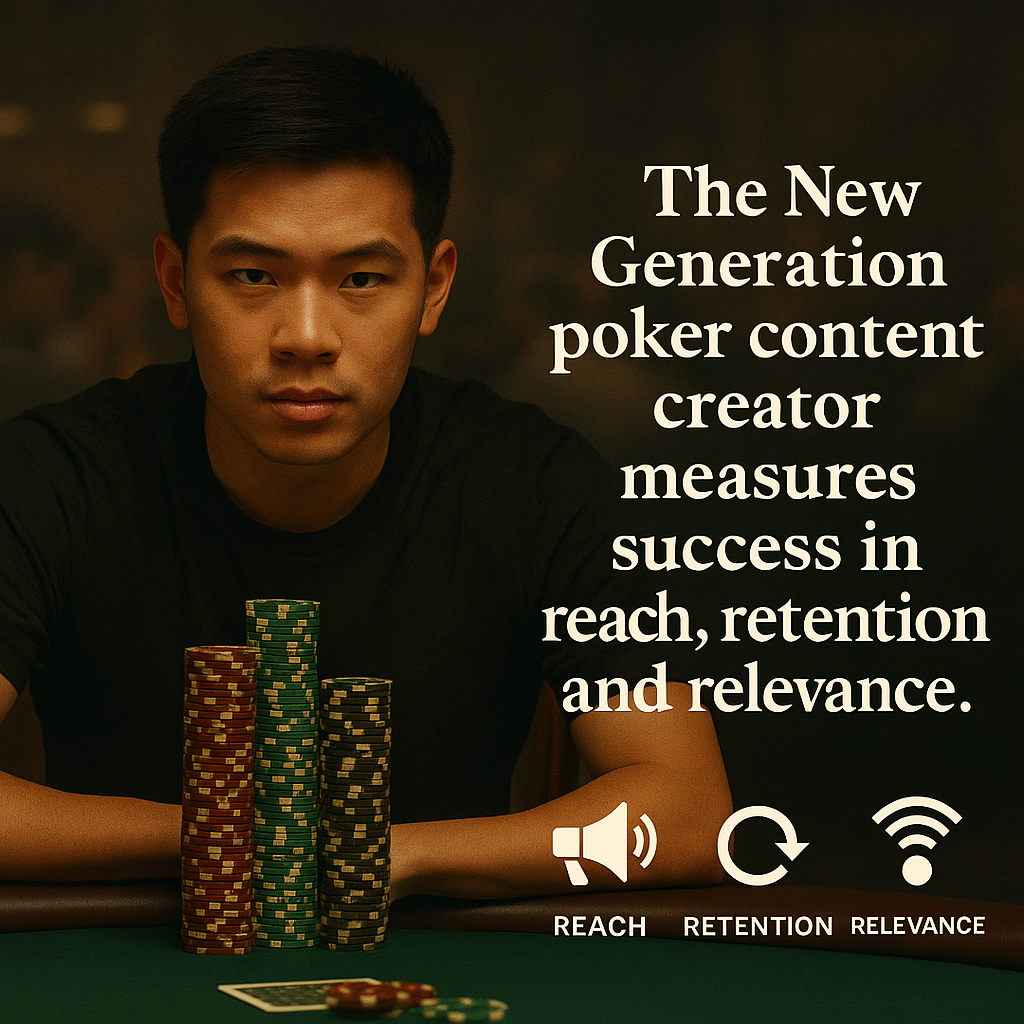
Poker has always been about profit, at least, it used to be. The classical player measured success in dollars won, graphs trending upward, and bankrolls built through consistency. But the new generation poker creator? They measure success in reach, retention, and relevance. The algorithm, not the ledger, has become the scoreboard.
In this new ecosystem, visibility is value. A content creator player’s most profitable session might not happen at the table, but in the upload queue. The Rampage Effect isn’t simply about aggressive play; it’s about a new kind of equity: attention equity.
Let’s put it in perspective.
During the 2000s, the most respected metric in poker was ROI. By the 2010s, it became EV, expected value per decision. Today, it’s EV plus SEO (Search Engine Optimal) — expected value plus search visibility. The modern content creator player optimizes for both, consciously or not.
Data tells the story.
- Average live-stream viewership for poker content has grown over 400% in five years.
- Meanwhile, mid-stakes cash game participation has declined by nearly half.
- Sponsorships and content deals often outpace live earnings by 3-to-1 ratios for top creators.
The meaning is clear: poker’s center of gravity has shifted. The game’s economy is no longer just transactional; it’s experiential. Rampage didn’t cause that shift; he recognized it early and built his career on it.
In the traditional sense, the classical player pursues EV, the mathematically correct decision.
The modern content creator player pursues EVE Expected Value of Exposure.
The best of them, like Rampage, manage both, turning range advantage into narrative advantage. Each hand, each vlog, each reaction shot builds a brand that outlasts any single session.
Profit still matters, but in today’s game, it’s no longer the only measure of mastery. In the digital metagame, profile is profit.
SIDEBAR: THE PSYCHOLOGY OF SPECTACLE - WHY WE IDOLIZE CHAOS
Poker players love to talk about logic, math, and discipline.
Yet, when the chips hit the felt, many are drawn not to precision, but to spectacle.
That’s why figures like Rampage attract millions of views.
His plays aren’t admired for being right; they’re admired for being alive.
Each all-in shove is a dopamine hit, a cinematic rush that makes poker feel heroic again.
For many fans, following him isn’t about learning to win, it’s about feeling like they could.
It’s risk without consequence, a chance to live the thrill of chaos from a safe distance.
Psychologically, it’s the same force that drives audiences toward action heroes and high-stakes thrillers.
We crave tension, release, and redemption, not quiet, calculated folds.
In this sense, the “Rampage Effect” isn’t just a poker phenomenon.
It’s a reflection of human nature’s preference for drama over discipline, for variance over virtue.
“Poker as performance,” Pirsig might say, “has replaced poker as process.”
the psychology of performance poker
ego, identity and the audience effect
If Section III showed what the Rampage Effect does to the math, this section explains why it happens.
Behind every high-variance, camera-facing content creator player lies a subtle transformation; poker ceases to be a contest of decisions and becomes a performance of self.
In psychology, this shift is known as the Audience Effect, the alteration of behavior when one believes they are being watched.
When a player knows their every move is being streamed, clipped, and analyzed, they begin to play for the audience rather than for the hand.
The focus shifts from maximizing Expected Value (EV) to maximizing Expected Validation (EVal), a different kind of currency altogether.
It’s not just ego. It’s identity.
These players often conflate their table image with their self-image. The more they win on camera, the more real that version of themselves becomes, confident, fearless, untouchable. But when the cards stop falling, the psychological recoil can be severe.
Many double down, chasing variance, trying to “win back” the persona the audience expects.
The Rampage Effect thrives in this environment because it rewards extremes.
In the old poker rooms, respect was earned quietly through consistency. In today’s ecosystem, attention is the real pot. You don’t have to win the session; you just have to win the algorithm.
And yet, there’s an unintended consequence.
As content creator players craft personas built on volatility, they lose what the best players never sacrifice: emotional equilibrium. The constant oscillation between adrenaline and frustration burns through focus, bankroll, and often self-belief. The math punishes them for it; the psychology traps them in it.
FROM ROI TO EVE - HOW POKER'S CONTENT CREATORS DEFINITION OF SUCCESS EVOLVED
Era | Dominant Metric | What It Measured | What It Rewarded | Representative Archetype |
2000s – The Boom Era | ROI (Return on Investment) | Tournament cashes, win rates | Discipline, volume, bankroll growth | The Grinder |
2010s – The Solver Era | EV (Expected Value) | Optimal play and decision accuracy | Precision, theory, data-driven discipline | The Technician |
2020s – The Metagame Era | EVE (Expected Value of Exposure) | Audience reach, brand strength, monetized attention | Personality, content creation, emotional connection | The Creator |
Interpretation:
Poker’s metric of success evolved from money to mastery, and now, to meaning.
Players once optimized for profit, then for perfection; today, they optimize for presence. The smartest among them merge all three.
Figure 1. Poker’s Shifting Metrics: ROI → EV → EVE
In today’s game, a single viral hand can generate more lifetime value than a month of winning sessions.
OPPONENT IMPACT: HOW THIS STYLE WARPS THE TABLE
The Rampage Effect doesn’t just affect the player; it reshapes the table itself.
High-volatility play creates emotional turbulence, distorting rational decision-making across the room.
In the short term, the entertainment style tilts the table.
Loose bluffs and wild variance trigger emotional contagion, that subtle, measurable shift where one player’s arousal level raises everyone else’s.
Pots swell beyond reason. Nits, frustrated or embarrassed by folding, start making reactive calls. Solid players loosen ranges. Even disciplined professionals must fight the urge to “fight back.”
Psychologists describe this as sympathetic synchronization, when the brain unconsciously mirrors the energy of others.
In poker, that synchronization is expensive.
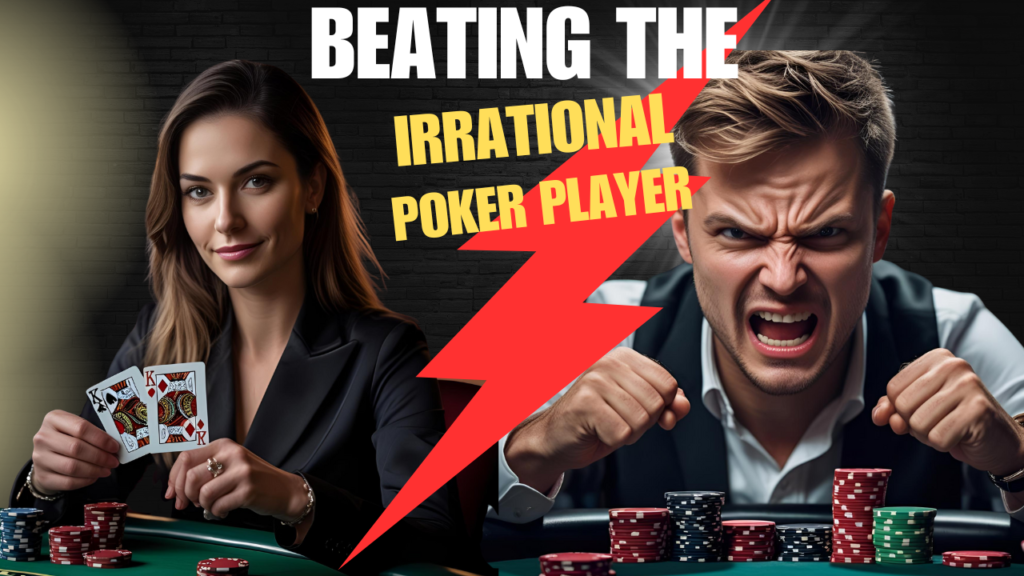
In the medium term, the smart regulars adapt.
They don’t try to out-crazy the chaos, they counter it.
They isolate the entertainer with dominating ranges, play more hands in position, and adopt under-bluff catching strategies designed to let the volatility implode on itself.
They turn the performer’s aggression into a self-funding trap, letting variance and ego do the work.
In this phase, discipline and patience regain control, but only for players who resist the psychological drag of matching speed with speed.
the long term effect
In the long term, the population adjusts.
The initial shock value of hyper-aggressive styles fades as data and experience accumulate. The audience may stay engaged, but the edge disappears.
Just as solvers solved the old exploitative leaks, players solve the performer’s patterns, timing tells, imbalance between showdowns and bluffs, overextended frequencies.
At that point, the only way to stay relevant is to push risk even further, deeper bluffs, bigger buy-ins, wilder emotional swings. The escalation becomes the brand.
But poker literature and behavioral research are clear:
The traits most strongly correlated with sustained success are emotional stability, discipline, and resilience under uncertainty, not volatility, not charisma, and not variance tolerance.
In a PubMed review of cognitive performance in risk-based tasks, self-regulated emotional control consistently outperformed impulsive risk-seeking behavior over large sample sizes.
Poker reflects the same truth. The players who last the longest aren’t the ones chasing heat; they’re the ones who master their internal thermostat.
The Rampage Effect style may electrify the table, but it corrodes the long-term EV of everyone involved — the performer most of all.
You don’t have to scroll YouTube to see the Rampage Effect at work, you can find it every night in live cash rooms across America.
At the Beau Rivage last week, I saw the theory come to life in a single, unforgettable session.
SIDEBAR: VARIANCES AS VALIDATION - THE CHAOS WE'VE CREATED
A couple of nights ago, at the Beau Rivage, I watched a player call a $65 preflop raise with 6♦3♠.
The flop came 6/6/9. He stacked the raiser, who held pocket Aces, for $1,200.
It didn’t stop there, 7/4, K/3, J/4, Q/3; the parade of statistical absurdity continued.
He won with them all. By midnight, he was up over $5,000 in a $1/$3 game.
This isn’t poker anymore; it’s roulette with a deck.
And the problem isn’t that luck smiled on him, it’s that everyone watching learned the wrong lesson.
The table didn’t see variance. They saw validation.
In their minds, his chaos became proof that any hand can win if you’re brave enough to play it.
That’s the new poker disease, variance as virtue.
A culture so addicted to highlights and heaters that probability itself has become optional.
And while the math will eventually catch up, it always does.
The psychological damage is already done.
Players now think discipline is weakness and delusion is courage.
The Rampage Effect isn’t just online anymore; it’s sitting in seat nine at your local casino.
SPONSOR LOGIC: WHY ATTENTION OFTEN BEATS ACCURACY

When a player like Rampage turns volatility into visibility, the market takes notice.
Brands don’t measure success in big blinds per hundred; they measure reach, engagement, and conversion.
In that economy, accuracy is secondary. Attention is the real currency.
Sponsorship logic is brutally simple:
- Reach expands brand awareness.
- Engagement drives clicks.
- Personality builds loyalty.
From a marketing perspective, a player who evokes emotion is more valuable than one who demonstrates equilibrium.
A single viral bluff, a meltdown, or a table celebration can deliver millions of impressions, far beyond what a technically correct hand ever will.
This phenomenon has roots in behavioral marketing and social psychology.
Studies published in ScienceDirect show that parasocial relationships, one-sided emotional bonds audiences form with public figures, dramatically increase purchasing intent and trust in associated brands.
When a viewer feels like they “know” the player, they’re more likely to buy what the player endorses, regardless of that player’s actual skill level or integrity.
In other words, the illusion of authenticity sells better than accuracy ever could.
That creates a paradox.
The more a player leans into personality-driven content, the less authentic their image often becomes.
Sponsors reward charisma and chaos, yet over-endorsement erodes the very authenticity that made the player marketable in the first place.
The result is an emotional treadmill: play bigger, act louder, stay visible, all while drifting further from the disciplined mindset that real mastery requires.
In the end, sponsorship logic doesn’t just distort poker; it distorts incentives.
It teaches rising players that fame is the metric, not excellence, and that in the attention economy, volatility isn’t a leak, it’s a feature.
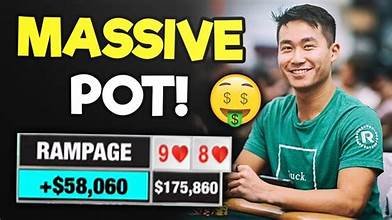
SIDEBAR: INSIDE THE MIND OF A MODERN POKER INFLUENCER
Is Rampage a narcissist, a strategist, or simply a shrewd entertainer?
The honest answer, he might be a little of all three.
From what can be observed publicly, his play and persona display high confidence, risk tolerance, and an appetite for chaos, the psychological cocktail of an excitement-driven personality type.
But in today’s attention economy, that’s not dysfunction, it’s design.
Volatility sells.
Aggression engages.
And the ability to turn variance into viral content has become its own form of currency.
He isn’t selling poker mastery.
He’s selling a feeling that poker can be conquered through boldness, not balance; that winning big and losing bigger is somehow proof of greatness.
The real magic isn’t on the felt, it’s in the feedback loop.
Every wild hand generates a reaction, every reaction feeds the algorithm, and every algorithm amplifies the myth.
For many fans, that myth is irresistible.
It validates risk-taking and redefines success as visibility.
It’s not about EV anymore; it’s about identity.
And in the digital age, identity often beats accuracy, at least for a while.
THE HIDDEN COST
WHAT THE RAMPAGE EFFECT TEACHES US ABOUT REAL MASTERY
At first glance, the Rampage Effect looks like success — fame, sponsorships, fan engagement, highlight reels.
But beneath the noise lies the bill that variance always collects.
The cost isn’t just monetary; it’s psychological.
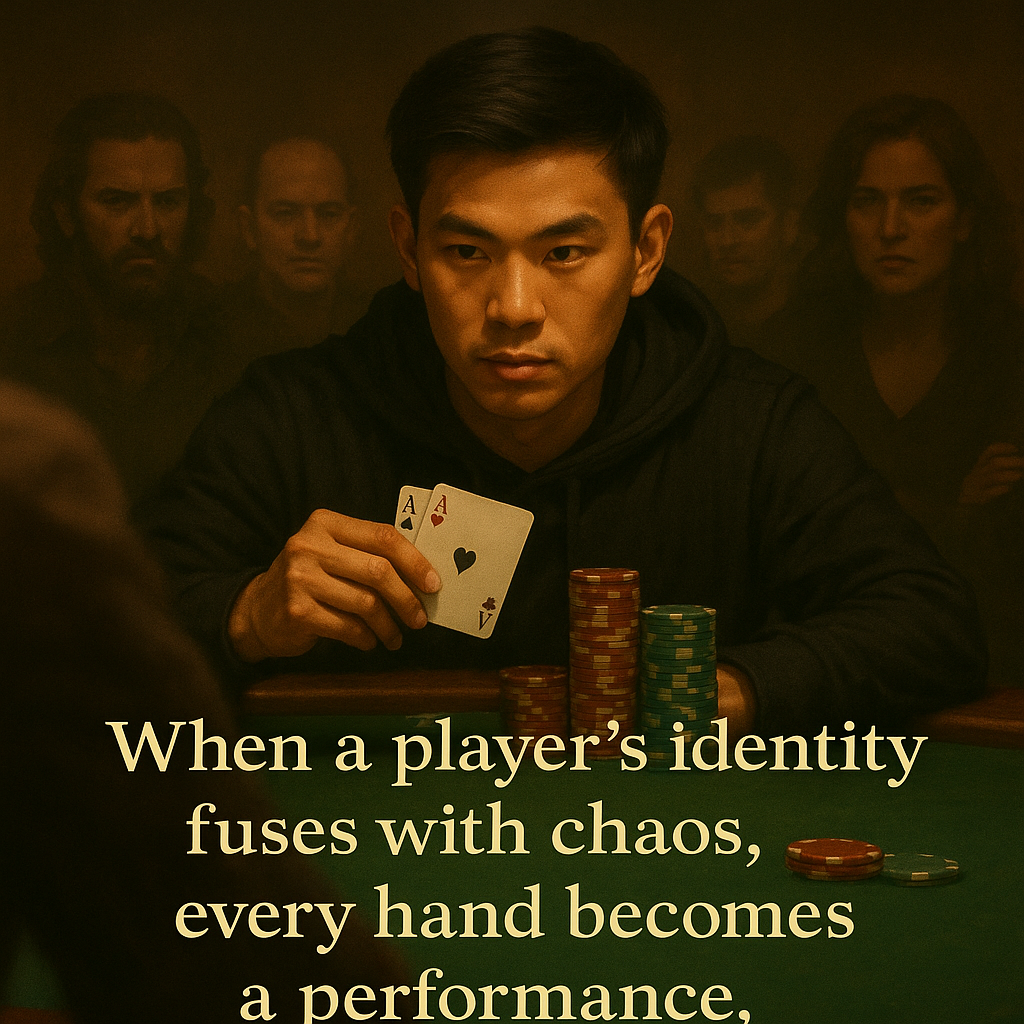
When a player’s identity fuses with chaos, every hand becomes a performance.
Variance is no longer statistical, it’s emotional.
The wins inflate self-belief, the losses attack self-worth, and the cycle tightens until poker becomes less about strategy and more about self-maintenance.
Over time, even talent becomes secondary to persona management.
You can’t study when you’re performing. You can’t reflect when you’re broadcasting.
And you can’t master the game when the game you’re playing is no longer poker, but attention economics.
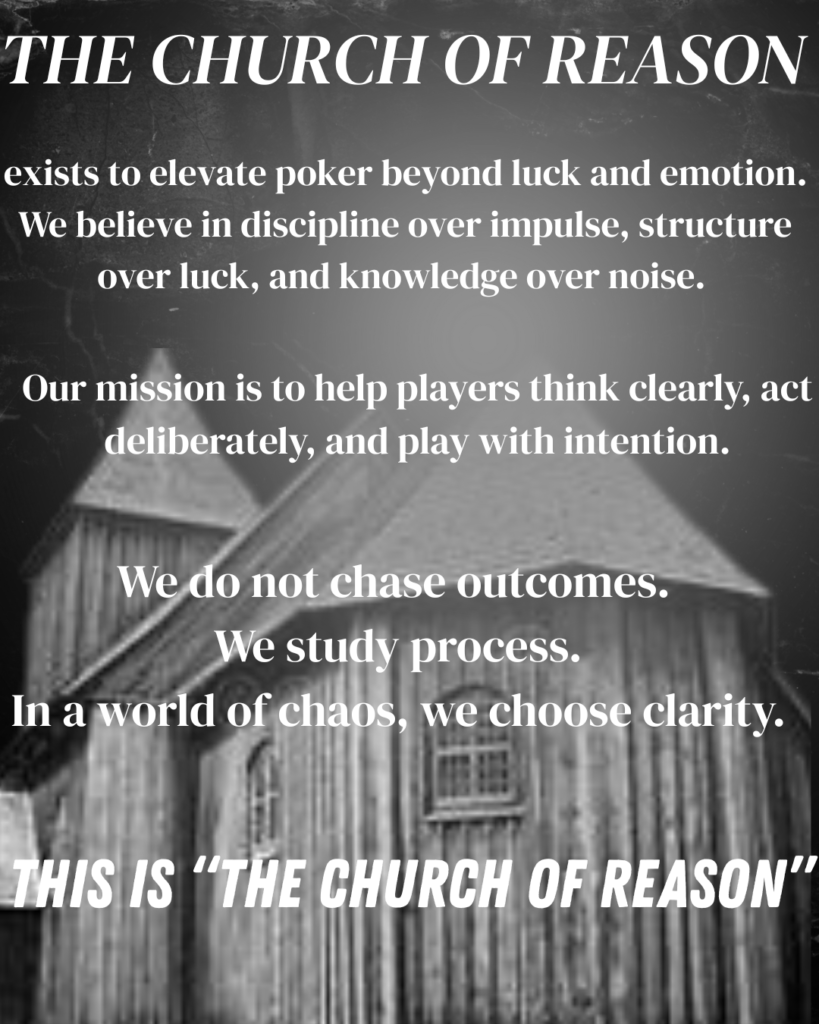
This is where the discipline of the Church of Reason re-enters the conversation.
Mastery in poker, as in any craft, demands alignment between action and understanding.
It asks the player to choose clarity over chaos, to value truth over trend.
It’s not asceticism; it’s precision. It’s the freedom that comes from being unmoved by the crowd.
Real mastery isn’t the absence of emotion, it’s the ability to control it.
It’s the quiet table presence of the professional who folds a winning hand because the math says so.
It’s the calm correction after a misstep instead of the performative outburst.
It’s understanding that poker, at its highest level, is not about spectacle but sincerity, a personal conversation with uncertainty.
In the end, the Rampage Effect teaches us a paradox:
You can win the crowd and lose the game.
Or you can lose the crowd and finally start playing to win.
THE CHURCH OF REASON: RE-CENTERING ON FIRST PRINCIPLES
When noise becomes the game, the only rational response is to return to first principles.
The Church of Reason was never about suppressing emotion; it’s about separating truth from spectacle.
In poker, that means grounding every decision in math, discipline, and self-awareness.
Without that triad, even brilliance decays into noise.
Mastery isn’t about being fearless; it’s about being measured.
The formula is simple, though rarely followed:
Mastery = Math + Discipline + Self-Awareness.
- Math defines reality. The numbers don’t bend for ego or audience.
- Discipline keeps you inside the lines long enough to see patterns emerge.
- Self-awareness exposes the leaks you can’t see in others.
.
Spectacle without structure might attract followers, but it never sustains profit.
In the end, even chaos submits to arithmetic.
PRACTICAL COUNTERS: TURNING INSIGHT INTO EDGE
For players facing the modern showman, the influencer who weaponizes variance, here’s how to bring reason back to the table:
BUILD AN EXPLOIT SHEET
USE POSITION + CONDENSED VALUE
THROTTLE BLUFF FREQUENCY
TRACK EMOTIONAL LEAKAGE - YOUR OWN FIRST
Track who folds to 3-bets, who can’t resist hero calls, and who over-stabs dry boards.
Emotional players are predictable once quantified.
Don’t out-bluff the bluffer; out-position them.
Play tighter from early seats, expand only when your positional advantage compounds EV.
Against call-happy pools, bluffing is charity. Let them pay to see second-best hands.
Exploit over-confidence, not variance.
Every tilt reaction you suppress is an edge preserved.
The disciplined player doesn’t resist emotion; they regulate it.
To think clearly in a chaotic game is the highest act of discipline.
That’s the essence of the Church of Reason and the true opposite of the Rampage Effect.
HOW LONG CAN THEY SURVIVE?
THE FRAGILE FUTURE OF PERFORMANCE POKER
In the short term, spectacle sells. But poker is not a short-term game. The very mechanics of the game, probability, variance, and long-run expectation, expose pretenders over time. And that’s where the cracks in the “content-creator era” are already starting to show.
According to PokerNews, as of July 16, 2025, Ethan “Rampage” Yau, the face of this movement, has lost $352,213 so far in 2025, with the majority of those losses coming from cash games. His net hourly rate currently stands at –$848.61, and he’s averaging a $3,133 loss per session.
(Source: PokerNews – Ethan “Rampage” Yau 2025 Earnings Report)
Those are not the numbers of a sustainable poker career. They’re the numbers of a content business that happens to use poker as its stage. The Rampage Effect thrives on volatility because volatility is good for clicks. But volatility destroys bankrolls.
Contrast that with players like Phil Hellmuth and Phil Ivey, two of the most enduring professionals in the game.
- Hellmuth’s annual poker earnings continue to range between $1 million and $3 million.
- Ivey’s annual results fall in roughly the $1 million to $2 million range.
Both players have stood the test of decades because their foundation isn’t performance, it’s precision. They rely on patience, probability, and process. They aren’t chasing attention; they’re chasing edges.
Rampage, by contrast, is chasing engagement metrics, reach, retention, and relevance. His financial model depends on followers, not fundamentals. That’s not poker as competition; that’s poker as content. And content doesn’t pay when the cards go cold.
When the sponsorships dry up, the affiliate clicks fade, and the algorithm shifts, what remains?
In poker, fame doesn’t cash out, skill does.
So how long can they survive?
As long as the audience keeps rewarding spectacle. But when the spotlight fades and the noise dies down, poker returns to what it has always been: a game of math, patience, and discipline.
And in that quiet, skill, not style, always wins.
.
CONCLUSION: POKER DEOSN'T REWARD ATTENTION - IT REWARDS ACCURACY
In today’s poker world, the algorithm amplifies variance, but the ledger always reconciles it.
You can game the system for clicks, but not for profit.
In the long run, every bluff, every tilt, every ego-driven shove finds its balance in the math.
Attention is temporary. Accuracy is eternal.
The players who survive aren’t the ones who entertain; they’re the ones who adapt without abandoning reason.
The spotlight fades, but the edge endures, built one correct decision at a time.
If your goal is profit, aim your game at expected value, not applause.
Let the showmen play for the crowd; play for the truth that the numbers don’t lie.
In the end, poker doesn’t reward flash, it rewards form.
It doesn’t reward emotion; it rewards execution.
And it doesn’t reward attention; it rewards accuracy.
And while we may analyze public play to learn from its patterns, our purpose isn’t to judge.
It’s to refine, to turn every mistake, whether ours or theirs, into understanding.
That’s the essence of the Church of Reason, and the antidote to the Rampage Effect.